





Legal AI works well in logistics because contracting is high volume, time sensitive, and directly tied to operations. The same liability, service level, insurance, and termination issues appear again and again, making review, comparison, and drafting ideal for automation.
This guide compares the best legal AI tools for logistics in 2026 and explains how to assess whether a platform fits your contracts, workflows, and risk profile.
Note: If your logistics team is reviewing the same liability caps, service level terms, and insurance clauses across hundreds of carrier and supplier agreements, that is exactly the repetitive, work LEGALFLY was built to handle. Playbook-driven review, bulk contract analysis, and sensitive data anonymised before any AI sees it. Book a demo to see how it works on your contracts.
What is legal AI for logistics contract review?
You can use legal AI to analyse contracts to identify risk, highlight deviations from standard positions, and support faster, more consistent decision-making. It is often used on carrier agreements, warehousing contracts, freight forwarding terms, supplier agreements, and outsourcing arrangements.
In practice, logistics teams use legal AI to review drafts, compare versions across negotiation rounds, flag non-standard liability and insurance positions, and apply approved fallback language. It can also extract key terms and obligations across large contract sets for renewals, audits, and compliance exercises.
When implemented well, legal AI reduces manual review time, improves consistency across regions and counterparties, and gives legal teams better control over risk without becoming a bottleneck for operations.
Read more: Can AI review legal contracts? Everything you need to know
LEGALFLY (best overall for logistics legal workflows)
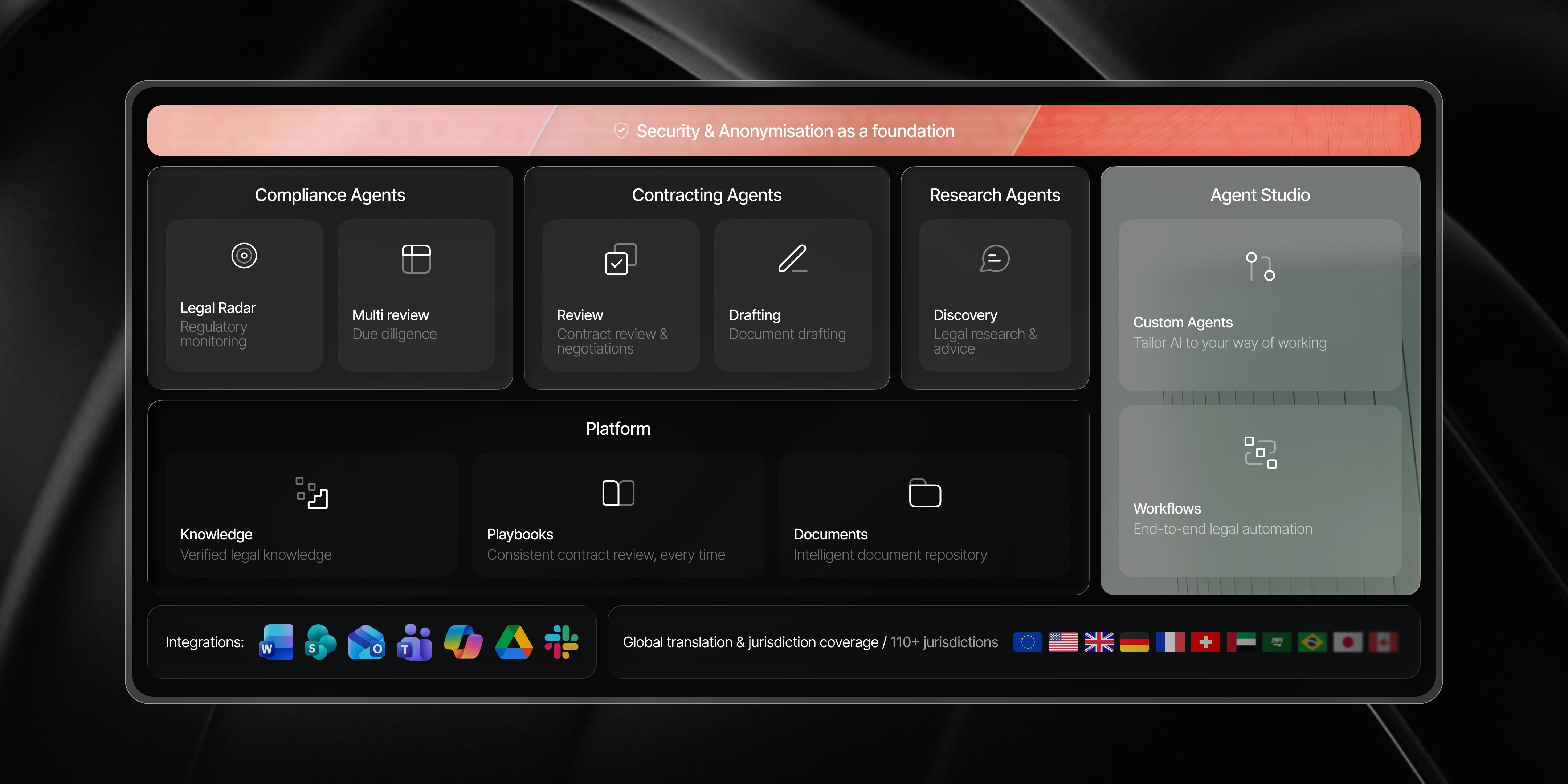
LEGALFLY is the only legal AI platform that anonymises documents before processing. In logistics, this is useful. Contracts contain customer data, routes, sites, pricing, and operational detail. Pre-processing anonymisation allows you to use AI on live contracts without exposing sensitive information.
LEGALFLY is built for high-volume, operational legal work. It is a top contract review software. LEGALFLY can review carrier agreements, warehousing terms, supplier contracts, and outsourcing arrangements while keeping liability and insurance positions consistent.
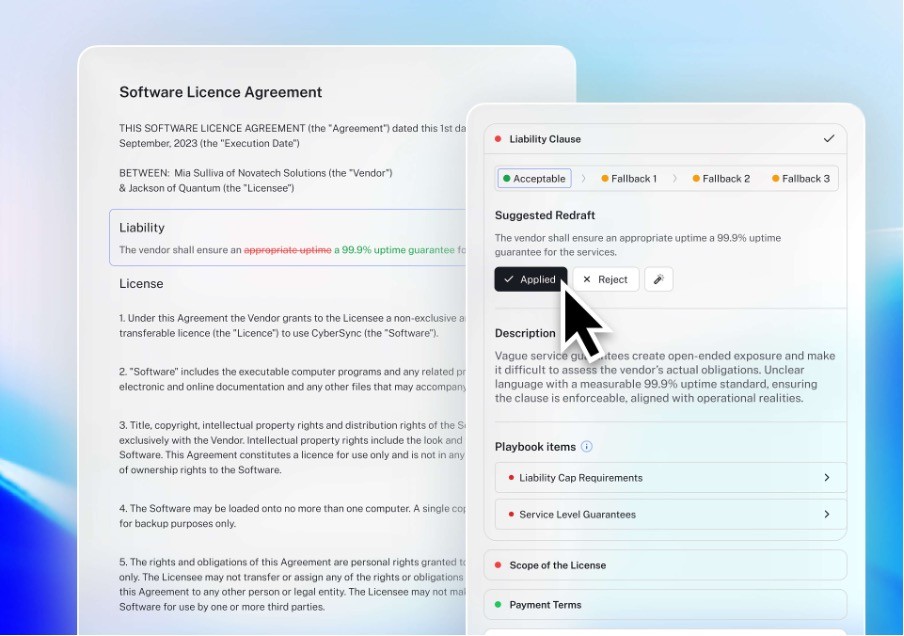
Playbooks apply approved rules and fallback language. This allows non-legal teams to run a first pass review without drifting from approved legal standards. Multi-document review supports bulk extraction and portfolio checks. Audit trails link outputs back to source text.
The platform is fully available inside Word, and integrates with SharePoint, Slack, Outlook, Copilot and Teams, fitting existing document control and version discipline.
Read more: The 9 best AI contract review software tools for 2026
Most teams using LEGALFLY cut their contract review time in half within a few weeks of onboarding. Book a short demo to see how it works for your business.
Pros: anonymisation by design, playbooks, bulk review, audit trails, Microsoft native
Cons: initial playbook setup required for best results
Read more: See how global logistics company ECS are using LEGALFLY
A contract review workflow: step by step
Contracts arrive constantly. They route to different reviewers, get revised, escalated, and approved. Without automation, manual handoffs slow everything down. Agent Studio runs the entire workflow automatically while your team retains control. Here's how.
Step 1: contract intake
A request comes in from email, Slack, or Teams, or is entered manually. No one has to open a new tool or start a separate process.
Step 2: triage
LEGALFLY reads the request and routes it based on contract type, department, or risk level. A high-value carrier agreement follows a different path than a standard NDA, without anyone manually deciding that.
Step 3: review agent
The assigned agent runs the task, contract review, multi-document analysis, or research, using your playbooks and approved fallback language.
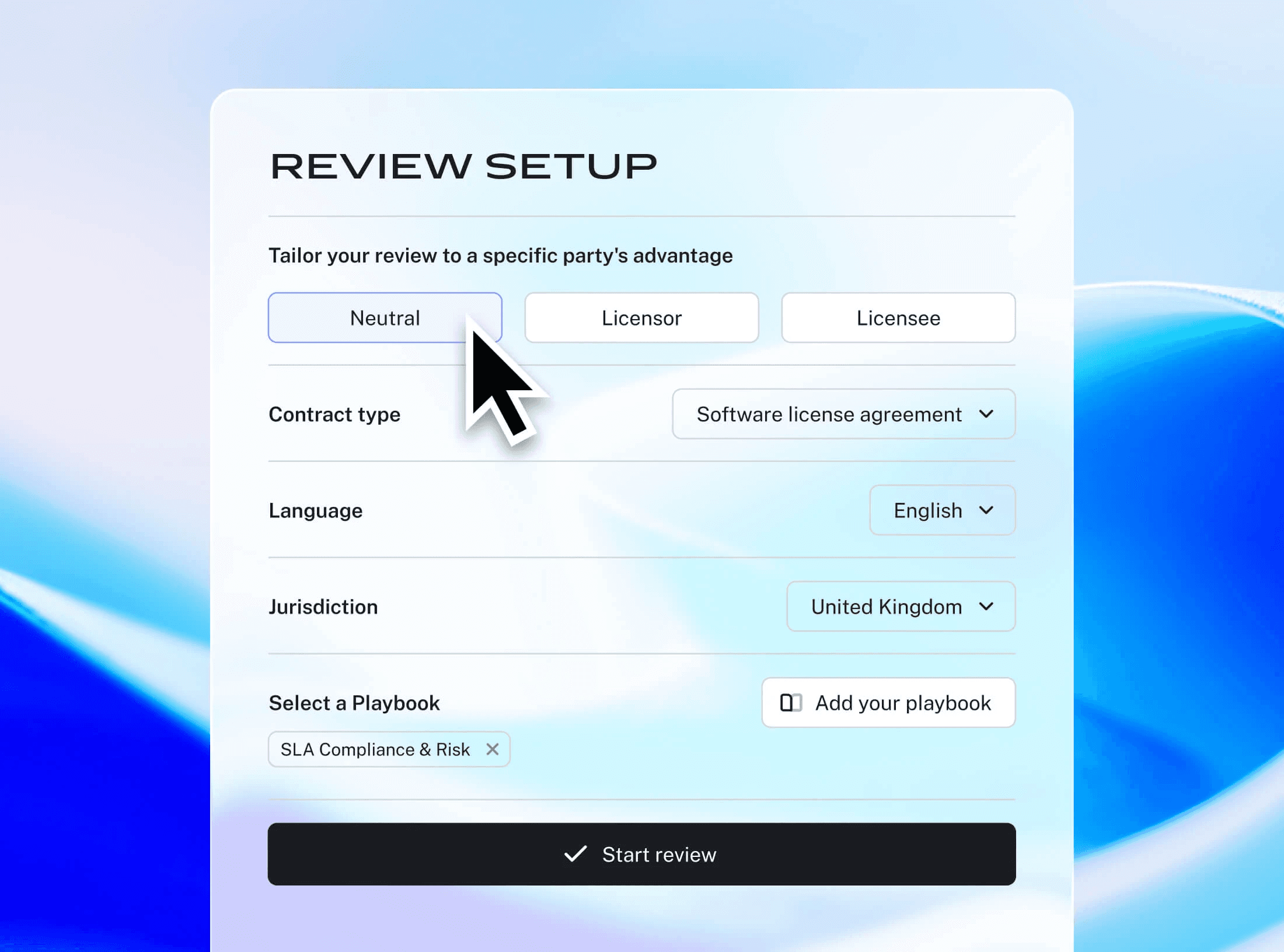
Step 4: legal approval
Results come back to a human for final sign-off. Nothing moves forward without that check.
Step 5: notify finance / notify requester
Once approved, the relevant stakeholders are notified automatically, so finance and the original requester both know the outcome without anyone chasing it down.
If your legal team is still reviewing carrier and supplier contracts one agreement at a time, liability and insurance terms will keep drifting across your portfolio with every new negotiation. LEGALFLY applies your playbooks automatically across every review, so positions stay consistent whether one person runs it or ten, and sensitive contract data never reaches an AI model unprotected. Book a demo to see how it works on your own contracts.
Best for: high-volume logistics contracts where sensitive data protection and consistent playbook enforcement both matter
Harvey (general legal AI for research and drafting)
Harvey is used for legal research, document analysis, and drafting. It supports question answering, document summarisation, clause analysis, and generation of legal text. It is used by in-house legal teams and law firms to draft memos, prepare first drafts of contracts, review documents, and respond to internal legal queries. Compare Harvey and LEGALFLY.
Pros: legal research, drafting, document analysis
Cons: no workflow control, no playbooks, no bulk review, no logistics-specific structure
See more Harvey AI alternatives.
Best for: legal research and drafting support across legal teams and law firms, not logistics-specific workflows
Kira by Litera (clause extraction and portfolio analysis)
Kira is a contract analysis platform focused on clause identification and extraction across large document sets. It uses machine learning models trained on legal clauses to tag and extract provisions from contracts.
In logistics teams, Kira is used for bulk analysis of supplier contracts, legacy agreements, and large contract estates. It does not provide drafting tools, negotiation tracking, playbooks, or workflow enforcement.
Pros: bulk clause extraction, portfolio analysis
Cons: no drafting, no negotiation support, no workflow control
Best for: extracting clauses across large legacy contract portfolios, not active review or drafting
Luminance (contract analytics and compliance programmes)
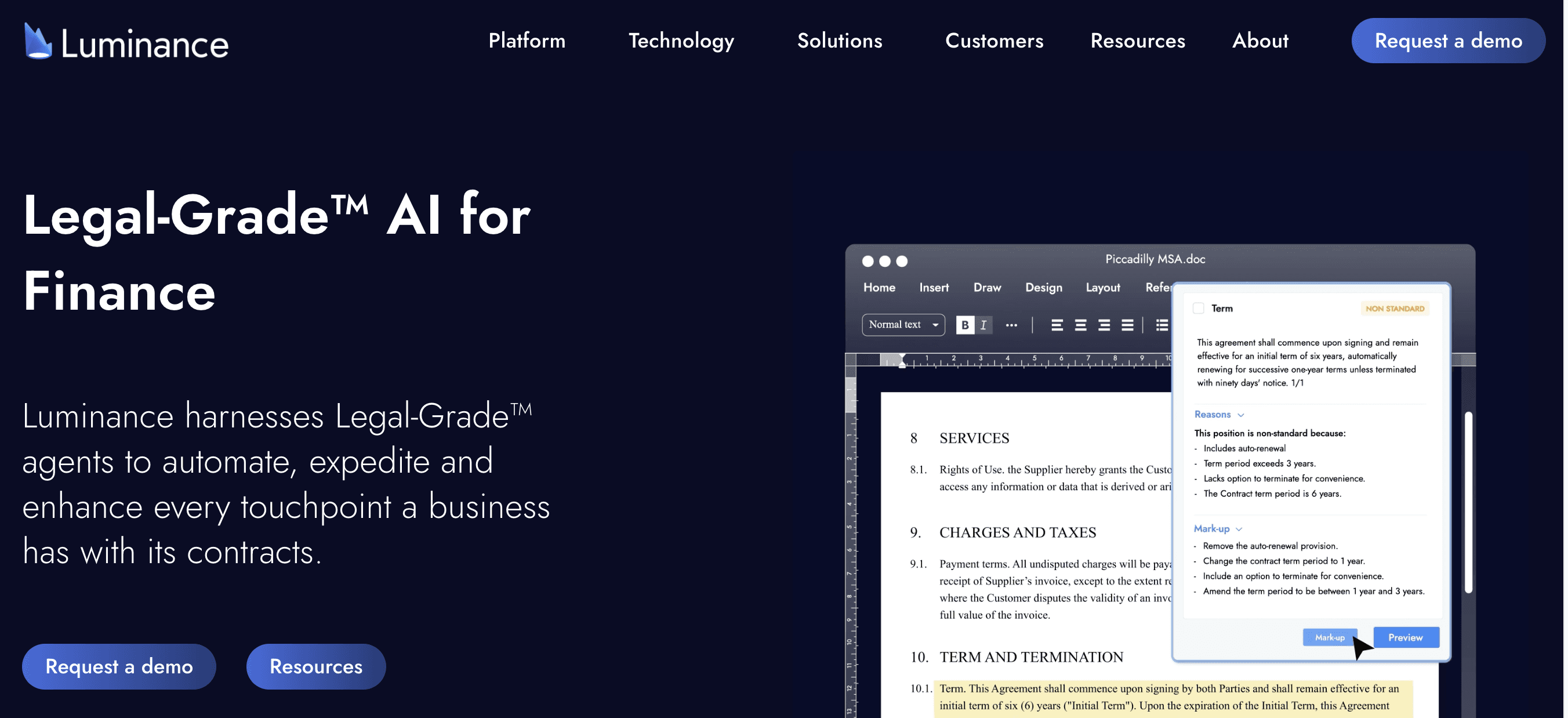
Luminance is a contract intelligence platform used to analyse, categorise, and monitor contracts across large repositories. It supports contract review, search, and compliance analysis. It is used by enterprises to gain visibility across contract estates and support large review exercises.
Luminance requires configuration to handle specific contract structures, clause patterns, and industry terminology. In logistics teams, Luminance is used for contract estate visibility and compliance programmes.
Pros: contract analytics, search, large-scale reviews
Cons: configuration required, limited transaction workflow support
Best for: contract estate visibility and compliance programmes across large repositories
LexCheck (rule-based contract review)
LexCheck is a contract review platform that evaluates contracts against historical redlines and predefined rules. It identifies deviations from standard positions and suggests edits based on past behaviour. In logistics teams, LexCheck is used for vendor, supplier, and operational agreements with repeat structures.
LexCheck does not provide regulatory mapping, bulk portfolio review, or negotiation tracking.
Pros: fast first-pass review, consistency enforcement
Cons: limited support for complex liability structures and cross-border variation
Best for: fast first-pass review of repeat, structurally similar vendor and supplier agreements
LegalOn (playbook-based contract review)
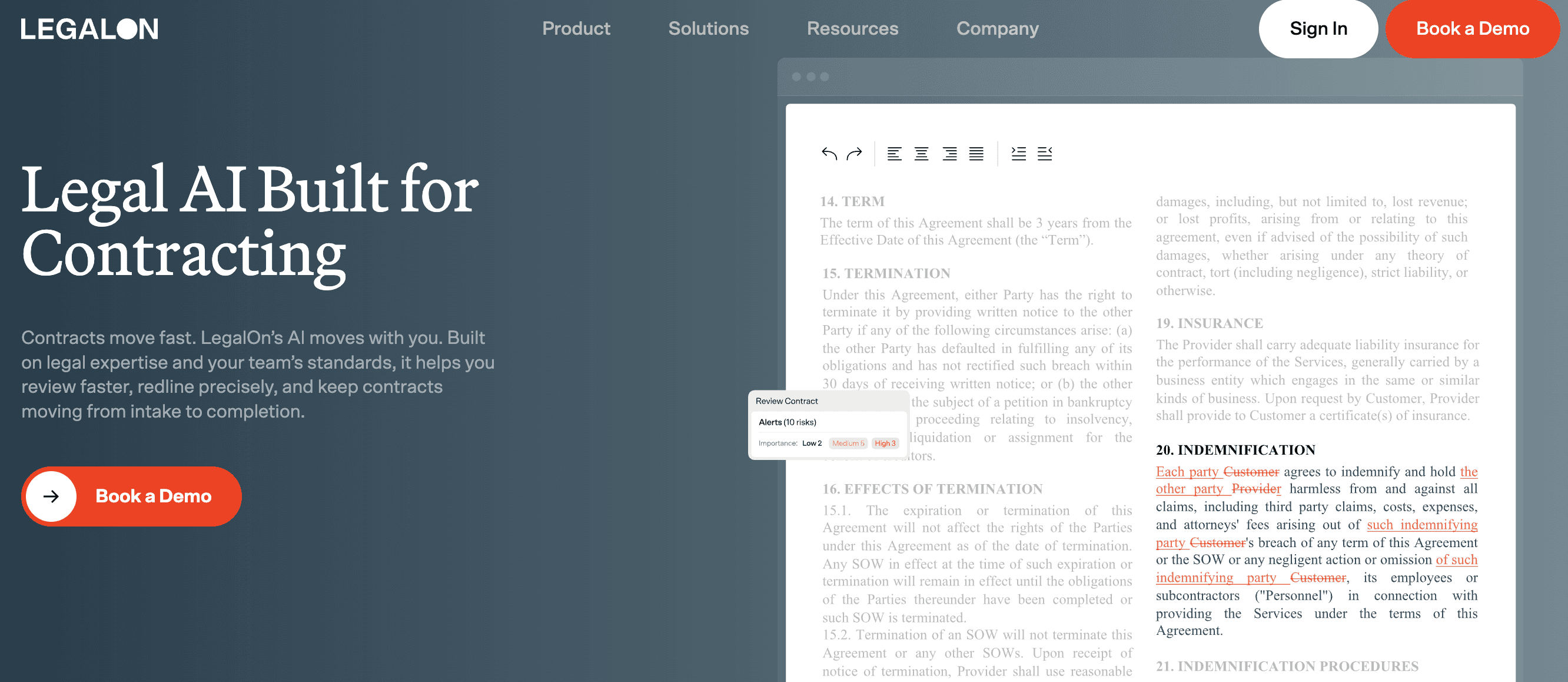
LegalOn is a contract review platform that uses predefined playbooks to review and annotate contracts. It supports intake workflows and standardisation. In logistics teams, LegalOn is used for standard operational agreements. It does not provide multi-document review, regulatory mapping, or negotiation tracking.
Pros: playbook-based review, intake workflows
Cons: limited depth for complex logistics contracts
Best for: standardised, routine contract review using predefined playbooks
Spellbook (Word-based drafting assistant)
Spellbook is an AI drafting assistant that operates inside Microsoft Word. It generates and rewrites contract language and flags potential issues. It is used by individual lawyers to speed up drafting and editing. Spellbook does not provide workflow control, bulk review, or regulatory mapping.
Pros: drafting inside Word, clause generation
Cons: no governance, no scale features
If this is a deal-breaker for you, explore other Spellbook alternatives.
Best for: individual legal professionals drafting and editing contracts inside Word
ContractPodAI, now Leah (contract lifecycle management)
ContractPodAI is a contract lifecycle management platform. It supports contract creation, storage, workflow automation, and reporting.
In logistics teams, ContractPodAI is used for contract administration and workflow management.
ContractPodAI focuses on process automation rather than legal reasoning or clause analysis.
Pros: CLM workflows, repository management
Cons: limited legal depth, limited clause reasoning
Best for: contract lifecycle administration and repository management, not legal reasoning or clause analysis
How to choose the best legal AI for logistics
Several tools can support parts of logistics legal work. The most useful will support high volume contracting, enforce standards, protect sensitive data, and produce audit ready outputs that operations teams can use. Here’s how to evaluate platforms.
Step 1: define the contract types and the workflow
Start with the agreements that create the most risk and the most volume.
Ask:
Which contracts take up the most time? Carrier terms, warehousing, SLAs, supplier contracts, subcontractor terms.
Who touches them first? Legal only, or procurement and operations.
Where do delays happen? Redlines, approvals, version control, missing fallback positions.
Read more: The LEGALFLY guide to AI for legal documents: How and where to use it
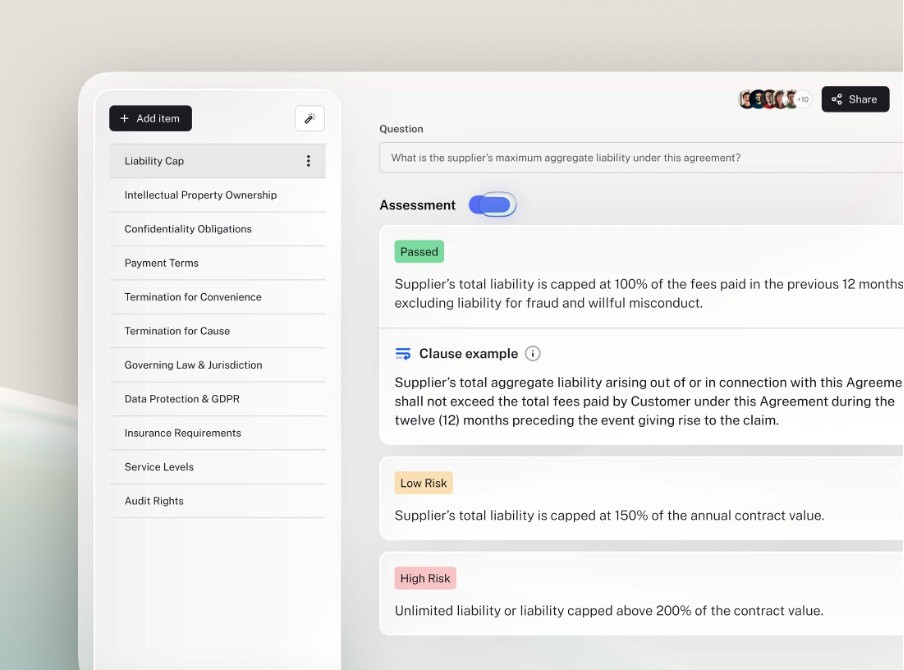
Step 2: test playbooks and guardrails
Logistics teams need repeatable positions across regions and counterparties.
Ask:
Can the tool apply approved positions and fallback clauses?
Does it flag deviations clearly, with reasons and source text?
Can non legal users run a safe first pass using legal approved rules?
Step 3: evaluate depth and quality of the legal review
Logistics contracts contain liability caps, indemnities, exclusions, insurance requirements, service levels, penalties, force majeure clauses, and subcontracting provisions.
Ask:
Does the tool identify changes to liability, indemnity, and exclusion clauses?
Does it flag missing protections and non-standard positions?
Does it handle service levels, penalties, force majeure, and subcontracting terms accurately?
Are all findings linked to the exact clause text for review and audit?
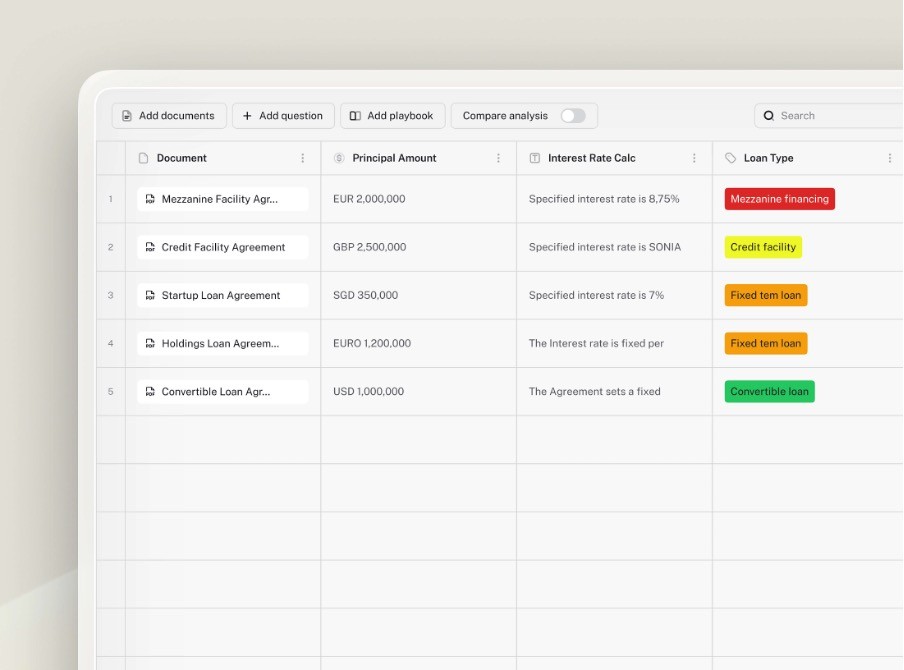
Step 4: check bulk review and extraction
Logistics organisations often need portfolio views for supplier programmes, renewals, and compliance exercises.
Ask:
Can it extract key terms, dates, obligations, and risk positions across hundreds of contracts?
Can it highlight outliers, missing clauses, and non standard positions?
Can it produce exports for reporting and audit?
Step 5: confirm data handling and security
Logistics contracts often include customer details, routes, sites, and pricing.
Ask:
How is sensitive data handled?
Can it run in your environment or meet enterprise deployment requirements?
Are outputs traceable and auditable, with clear data ownership?
Step 6: confirm workflow fit
Adoption fails when tools sit outside established workflows.
Ask:
Does it work in the programmes you review contract and manage your contracts in today? E.g. Word, Google Drive, SharePoint
Does it respect permissions and version control?
Can it produce a clean issues report for stakeholders?
Compare the best legal AI platforms for logistics
Platform | Contract review | Regulatory mapping | Bulk / portfolio review | Anonymisation of sensitive data | Integrations | Logistics specific fit |
LEGALFLY | Yes – clause-aware, structured | Yes – mapped to contracts | Yes – multi-document | Yes – anonymised before processing | Word, SharePoint, Teams, Outlook, Copilot, Slack | High |
Harvey | Yes – general analysis | No | Yes | No | Word, Outlook, SharePoint | Low |
Kira Litera | No – extraction only | No | Yes – strong | No | No | Medium (bulk only) |
Luminance | Yes – general review | Limited | Yes | No | Word, Outlook, Salesforce, SharePoint | Medium |
LexCheck | Yes – repeat contracts only | No | No | No | Word add in | Low |
LegalOn | Yes – standard contracts | Limited | Limited | No | Word plugin | Low to Medium |
Spellbook | Yes | No | No | No | Word only | Low |
Contract PodAI (Leah) | Yes – via CLM | Limited | Yes | No | CRM, document repository | Medium |
Final verdict: the best legal AI for logistics contract review and drafting
Logistics contracts are high volume, time sensitive, and operationally critical, but the same liability, insurance, service level, termination, and subcontracting issues appear across hundreds of agreements. When positions drift, the impact shows up quickly in claims, disputes, and margin pressure.
LEGALFLY is built for that environment.
It applies playbooks to enforce approved positions, supports bulk review across contract sets, and links every output back to source text so decisions remain defensible. It runs inside Word and offers an array of integrations, fitting existing document control and approval workflows.
It is also the only legal AI platform that anonymises documents before processing. For logistics teams handling customer data, pricing, routes, and site information, this means you can use AI on live contracts without exposing sensitive data.
For organisations that need to move faster without increasing exposure, LEGALFLY is the strongest option. Schedule your demo today.
FAQs about legal AI for logistics contracts
How does legal AI help with logistics contract drafting?
Legal AI accelerates drafting by suggesting clauses, rewriting sections, and applying approved language. Strong platforms also enforce playbooks and flag deviations from standard positions.
Can legal AI support global logistics contracts and jurisdictions?
Some platforms can. Look for jurisdiction handling, multilingual support, and the ability to apply jurisdiction specific playbooks. Global operations require consistency with local adaptation.
Is legal AI compliant with logistics and supply chain regulations?
Compliance depends on the platform and deployment. Look for audit trails, traceable outputs, secure data handling, and features that support regulatory monitoring and reporting.
Can AI review transportation and freight contracts accurately?
Accuracy varies. Test liability clauses, service levels, claims windows, subcontracting terms, and insurance language on real contracts. Require source linked outputs and clear reasoning.
How much does legal AI software for logistics cost?
Most platforms use subscription pricing. Cost depends on users, features, and deployment model. Enterprise deployments cost more but include security and governance requirements.
How long does it take to implement legal AI in a logistics organisation?
Implementation time depends on playbook setup, integrations, and governance. Basic drafting tools start quickly. Platforms with guardrails and enterprise deployment take longer but scale further.
Note: We carried out this research in Q1 2026. If something is incorrect, feel free to contact us.