






Agent Studio for Legal Workflow Automation
End-to-end legal automation, with a human always in control
Agent Studio for Legal Workflow Automation
End-to-end legal automation, with a human always in control
Built for enterprise legal complexity, Agent Studio lets you automate entire legal workflows from intake to approval.
Built for enterprise legal complexity, Agent Studio lets you automate entire legal workflows from intake to approval.

Legal work doesn't stop at the task.
Most legal AI tools automate one task at a time. Agent Studio automates the entire workflow and the tasks inside it, built around your organization's logic, playbooks, and approval flows. Work moves automatically. Legal stays in control.
Most legal AI tools automate one task at a time. Agent Studio automates the entire workflow and the tasks inside it, built around your organization's logic, playbooks, and approval flows. Work moves automatically. Legal stays in control.
How does it work?
How does it work?
Keep legal work moving, consistently
Keep legal work moving, consistently

Watch a 1-minute walkthrough
See how Agent Studios helps teams move requests from intake to approval.
Built for regulated enterprises
Private-by-design
Secure environments, optional single tenancy and on-prem deployment
Governed outputs
Playbook enforcement, approvals and role-based access
Auditable actions
Transparant reasoning, source links and full activity logs
Legal Workflow Automation FAQ.
Legal Workflow Automation FAQ.
Got questions? We’ve got answers.

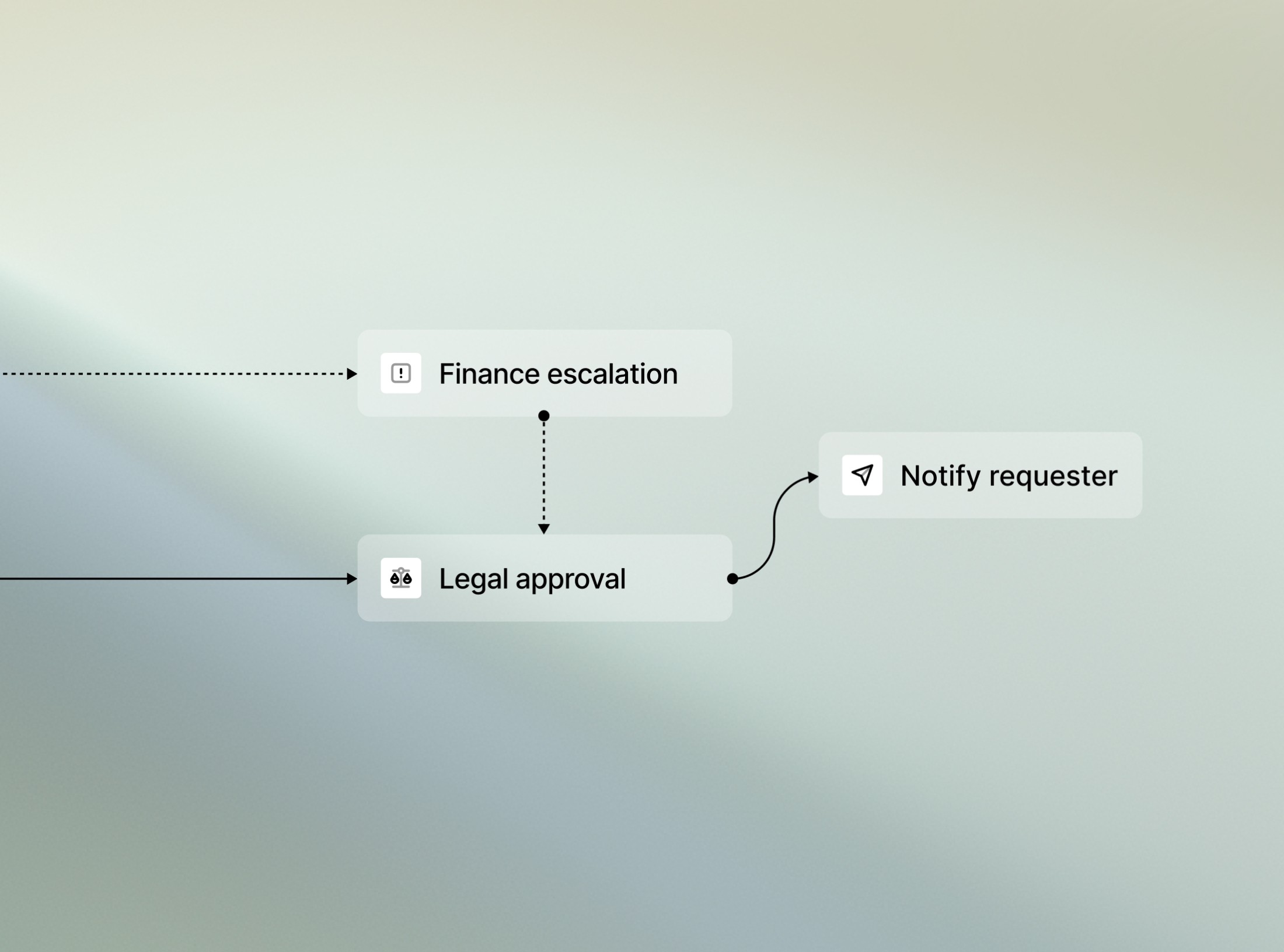
Legal workflow automation moves a legal request through its full process without manual coordination at each step: capturing the request, routing it to the right agent or person, escalating when it crosses a risk threshold, collecting approvals and notifying whoever needs to know. It differs from task automation, which speeds up a single step and leaves the coordination around it manual.
Workflows start from email, Slack or Microsoft Teams, from a webhook connected to another system, from a Legal Radar regulatory update, or manually inside the platform. The point is that legal requests already arrive through the channels the business uses, so the workflow begins where the request does rather than requiring someone to re-enter it.
No. Workflows are configured rather than coded: you choose which agent handles each task, set the routing rules by contract type, department or risk level, and define where approval is needed. LEGALFLY's legal engineering team supports the first build, and most teams start with a single workflow such as NDA turnaround or vendor review before extending to others.
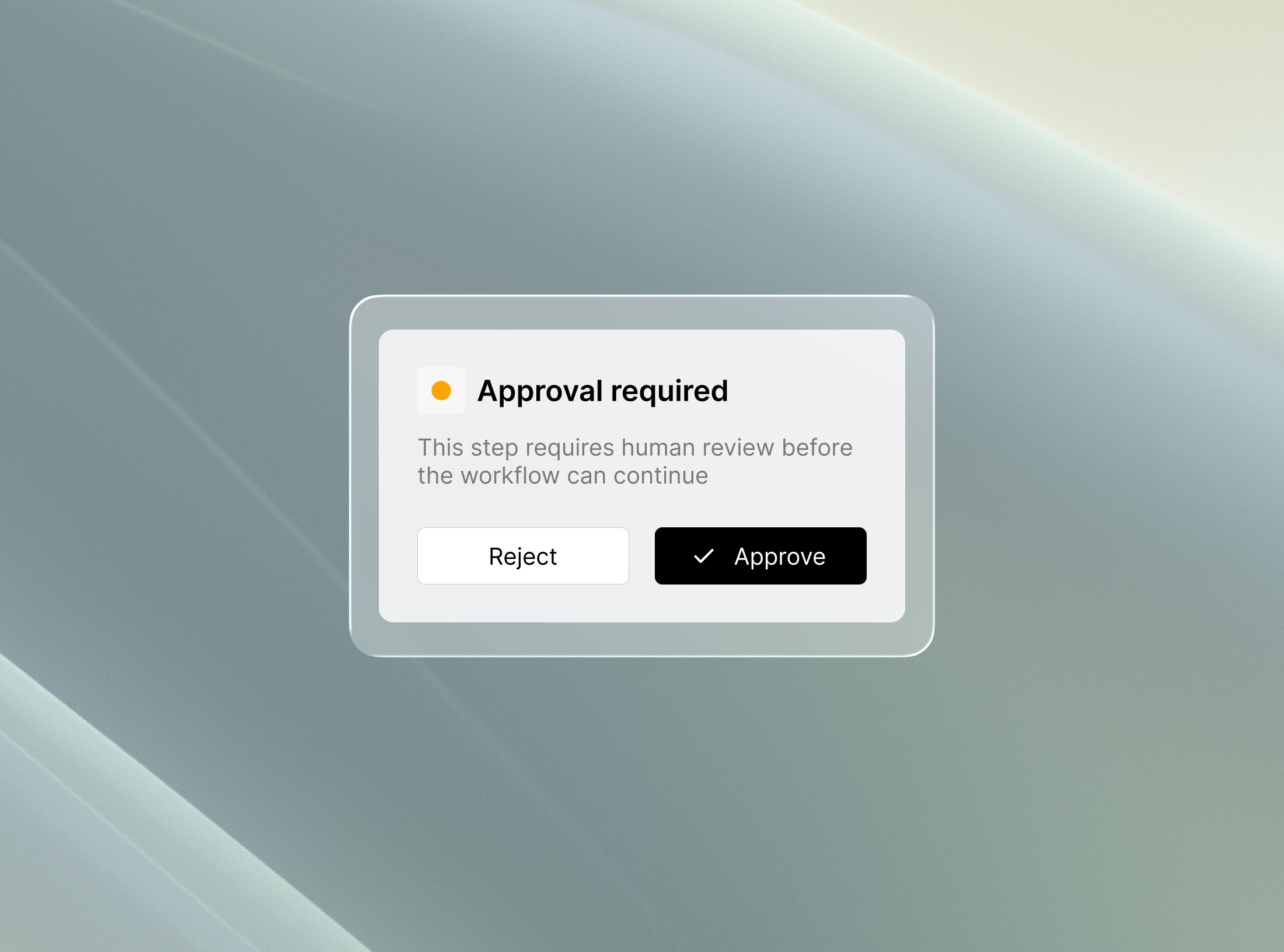
Yes, by design. Approval and review steps are set wherever a decision is needed, and nothing passes those points without a person. Anything that falls outside the parameters legal defined routes back automatically rather than proceeding. Every action is logged with transparent reasoning and source links, so what the workflow did and why is auditable after the fact.
The guardrails are legal's own. Procurement, compliance, HR and sales work inside the playbooks legal wrote, with the same approved positions, fallback language and escalation thresholds applied to their work as to legal's own. Anything outside standard parameters routes to legal automatically. In practice the alternative is worse: when legal is the bottleneck, business teams work around it with tools nobody has approved.
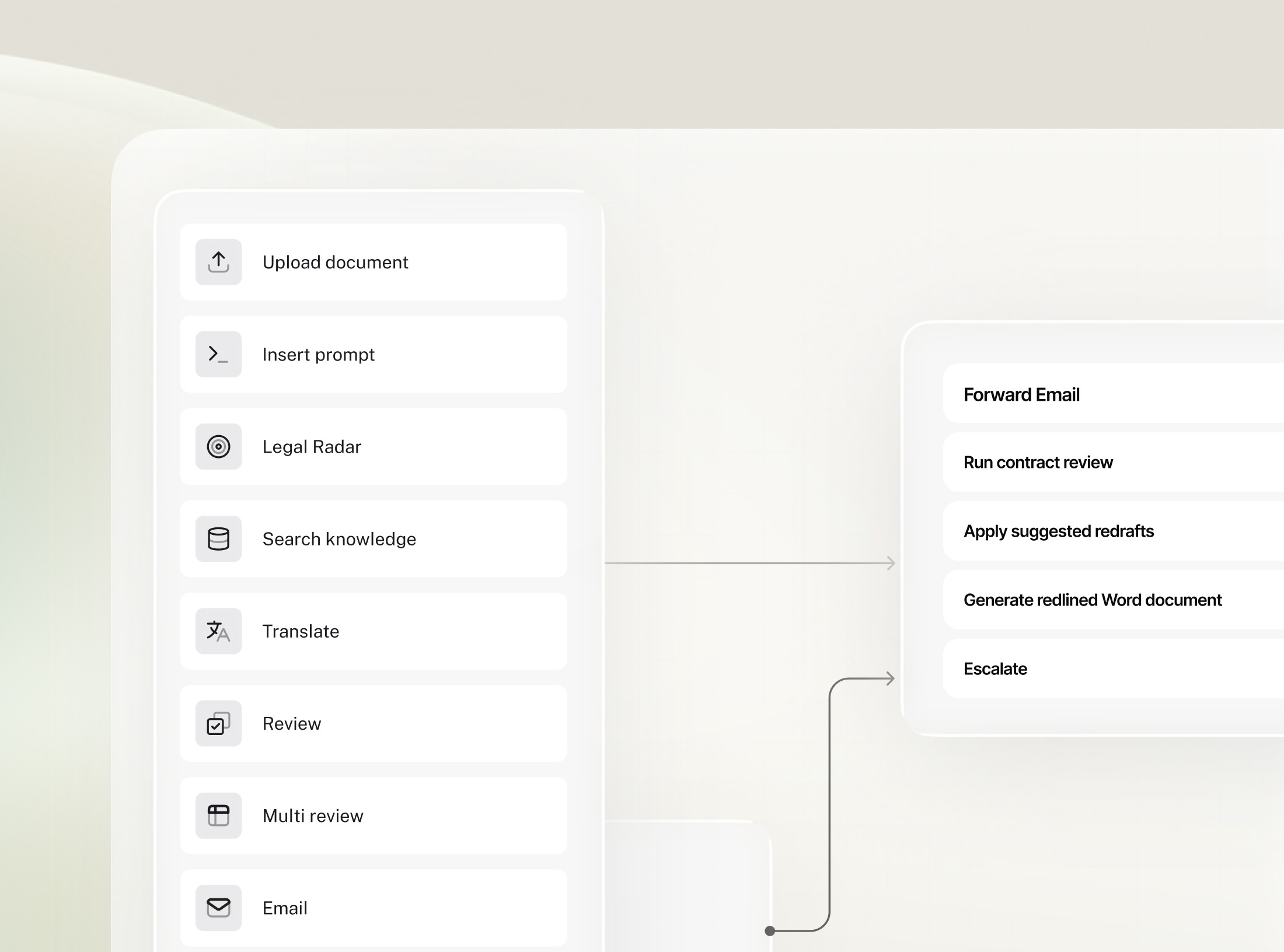
Most legal workflow automation platforms move work between people and leave the legal work itself manual, so the review still takes two hours, it just arrives in the right inbox sooner. Agent Studio chains LEGALFLY's agents into the workflow, so contract review, drafting, due diligence and research happen inside it, governed by the same playbooks that decide routing and escalation. Every document is anonymised before any AI processing begins, and workflows run inside Microsoft 365 rather than in a separate system.
Legal workflow automation moves a legal request through its full process without manual coordination at each step: capturing the request, routing it to the right agent or person, escalating when it crosses a risk threshold, collecting approvals and notifying whoever needs to know. It differs from task automation, which speeds up a single step and leaves the coordination around it manual.
Workflows start from email, Slack or Microsoft Teams, from a webhook connected to another system, from a Legal Radar regulatory update, or manually inside the platform. The point is that legal requests already arrive through the channels the business uses, so the workflow begins where the request does rather than requiring someone to re-enter it.
No. Workflows are configured rather than coded: you choose which agent handles each task, set the routing rules by contract type, department or risk level, and define where approval is needed. LEGALFLY's legal engineering team supports the first build, and most teams start with a single workflow such as NDA turnaround or vendor review before extending to others.
Yes, by design. Approval and review steps are set wherever a decision is needed, and nothing passes those points without a person. Anything that falls outside the parameters legal defined routes back automatically rather than proceeding. Every action is logged with transparent reasoning and source links, so what the workflow did and why is auditable after the fact.
The guardrails are legal's own. Procurement, compliance, HR and sales work inside the playbooks legal wrote, with the same approved positions, fallback language and escalation thresholds applied to their work as to legal's own. Anything outside standard parameters routes to legal automatically. In practice the alternative is worse: when legal is the bottleneck, business teams work around it with tools nobody has approved.
Most legal workflow automation platforms move work between people and leave the legal work itself manual, so the review still takes two hours, it just arrives in the right inbox sooner. Agent Studio chains LEGALFLY's agents into the workflow, so contract review, drafting, due diligence and research happen inside it, governed by the same playbooks that decide routing and escalation. Every document is anonymised before any AI processing begins, and workflows run inside Microsoft 365 rather than in a separate system.
From request to outcome
Learn how LEGALFLY routes, executes and governs legal work end-to-end, across every team, jurisdiction and workflow.

From request to outcome
Learn how LEGALFLY routes, executes and governs legal work end-to-end, across every team, jurisdiction and workflow.
From request to outcome
Learn how LEGALFLY routes, executes and governs legal work end-to-end, across every team, jurisdiction and workflow.
To find out how LEGALFLY could work for you, schedule a call with one of our experts.