





A lawyer at Harringey LBC cited cases in court that didn't exist. A partner at a firm acting for National Qatar Bank did the same. In both instances, the source was an AI tool that hallucinated, generating plausible-sounding citations with enough legal detail to pass an initial read.
Neither lawyer intended to mislead. Both faced serious professional consequences.
If your team is using AI for legal research, or evaluating whether to, the question isn't whether AI can speed up the work. It clearly can. The question is whether the tool you choose is grounded in verified sources, transparent about its reasoning, and safe for the sensitive data that passes through it.
This guide covers the eight best AI tools for legal research in 2026. For each one, we've looked at where it draws its information, how it handles confidentiality, and what type of team it's actually built for, so you can make the right call.
Note: Legal research that used to take hours can now take minutes. LEGALFLY pulls from 500+ verified legal sources across 35+ jurisdictions, all with full source transparency and sensitive data protected. Book a demo to see it in action.
The best AI tools for legal research in 2026
The best platforms go beyond search: they surface relevant case law, interpret statutory language across jurisdictions, and connect research directly to the document you are working on. These are the tools worth knowing. We'll start with the one we know best, our own.
1. LEGALFLY
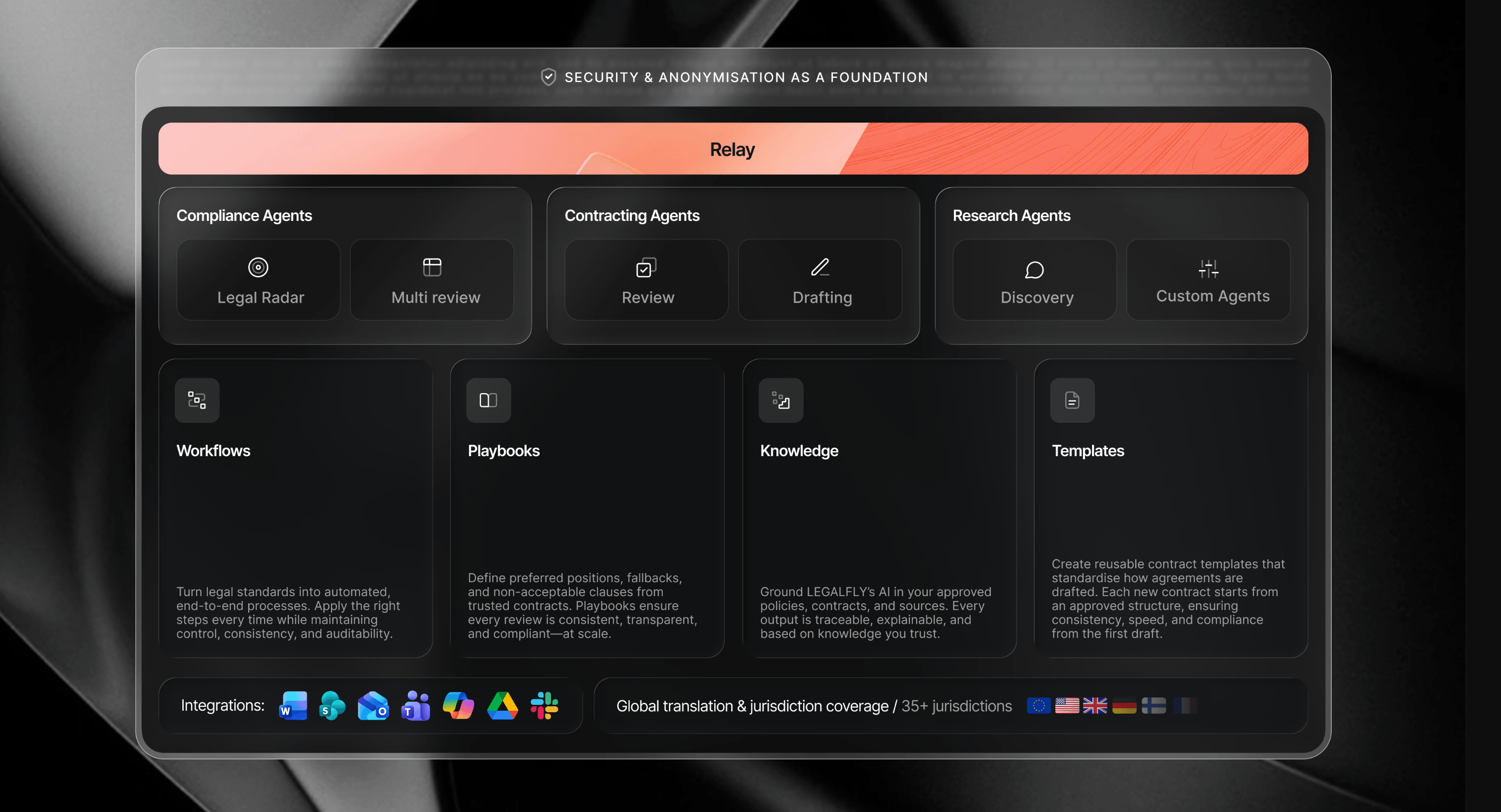
Most AI tools can find information quickly. The harder problem is knowing whether you can trust what they find, and whether your confidential data is safe while they're finding it. LEGALFLY is built around both. It's a research, drafting, and contract review platform designed specifically for in-house legal teams, with privacy-first architecture and sources you can actually verify.
Trusted by SAP, Lufthansa, AXA, and KPMG, it's the only legal AI platform to anonymise all sensitive data before any processing begins.
Interested in exploring how LEGALFLY can transform your legal research? Book a demo with one of our experts.
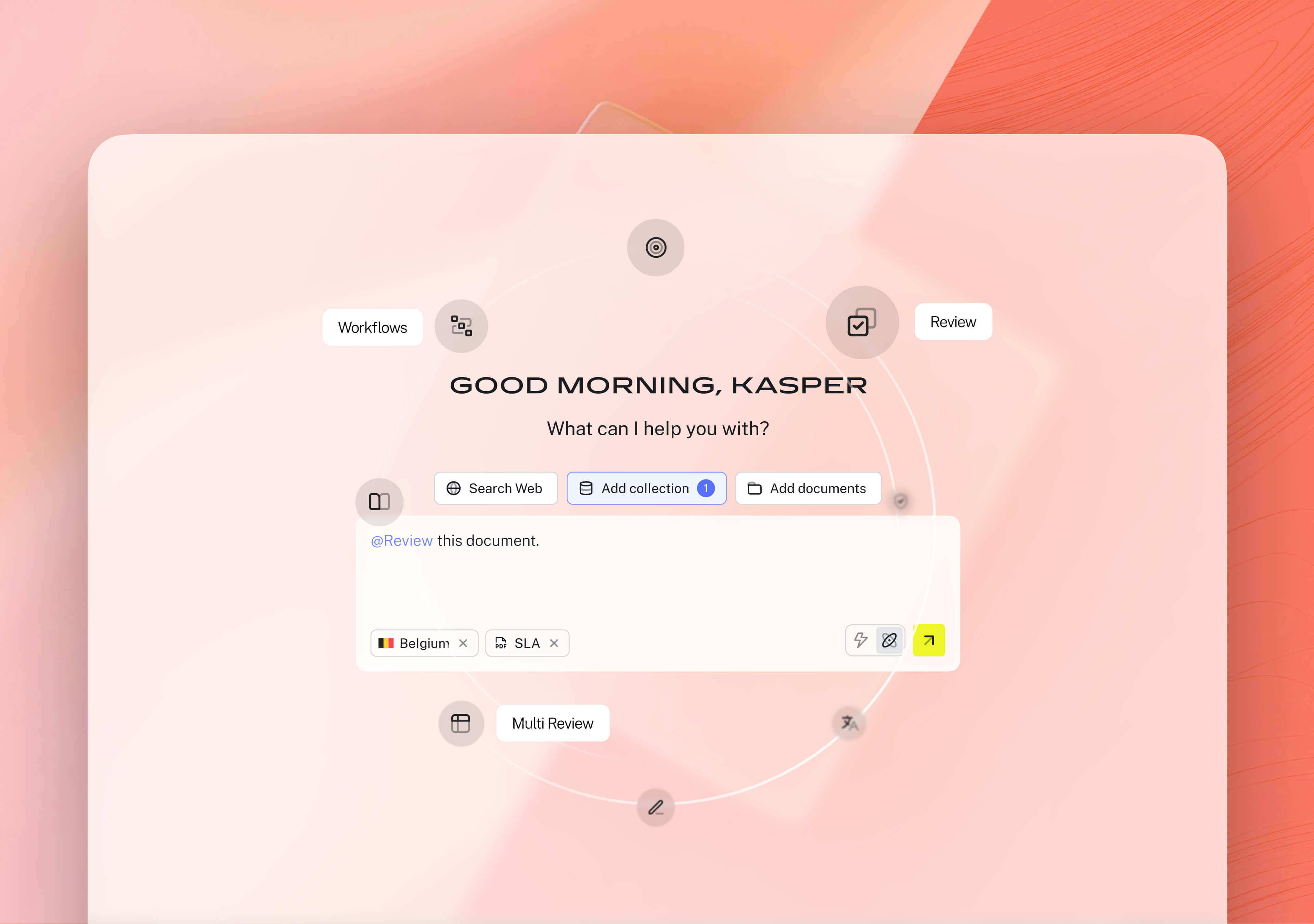
Why LEGALFLY ranks #1 for in-house legal research
LEGALFLY is built around three problems that matter most to in-house legal teams doing serious research: whether the sources can be trusted, whether the reasoning is visible, and whether the platform works across the jurisdictions your contracts actually touch.
Customer reviews
LegalFly is great! With LegalFly, we are able to automate manual processes that take a lot of time. That enables us to shift our focus from reading to controlling!
— Pjotr M. | ERP Controller - Capterra
The ability to obtain information about the legal situation in specific countries, but also the ability to access general information in "worldwide" mode. Simple and logical structure and quickly accessible.
— Joelle B. | Small Business - G2
Key features
LEGALFLY is built around three problems that matter most to in-house legal teams doing serious research: whether the sources can be trusted, whether the reasoning is visible, and whether the platform works across the jurisdictions your contracts actually touch. Here's how it addresses each.
Generic AI pulls from the internet. LEGALFLY pulls from verified legal sources
Most general-purpose AI tools have no way to distinguish a reliable legal source from an unreliable one. LEGALFLY integrates directly with 500+ official sources as well as legal publishers like FromCounsel, drawing insights from verified legal texts and barrister-written commentary.
Its pre-built knowledge collections tap into case law, statutes, regulatory materials, and legislation across 60+ jurisdictions, so answers are grounded in sources your team can stand behind.
Most teams using LEGALFLY cut their contract review time in half within a few weeks of onboarding. Book a short demo to see how it works for your business.
You can see exactly how it reached its answer
With most AI tools, you get an answer. With LEGALFLY, you get the reasoning behind it. The platform displays each step of its analysis in real time, with every source clickable and verifiable. That transparency matters when a research output is going to inform a board decision or a regulatory submission.
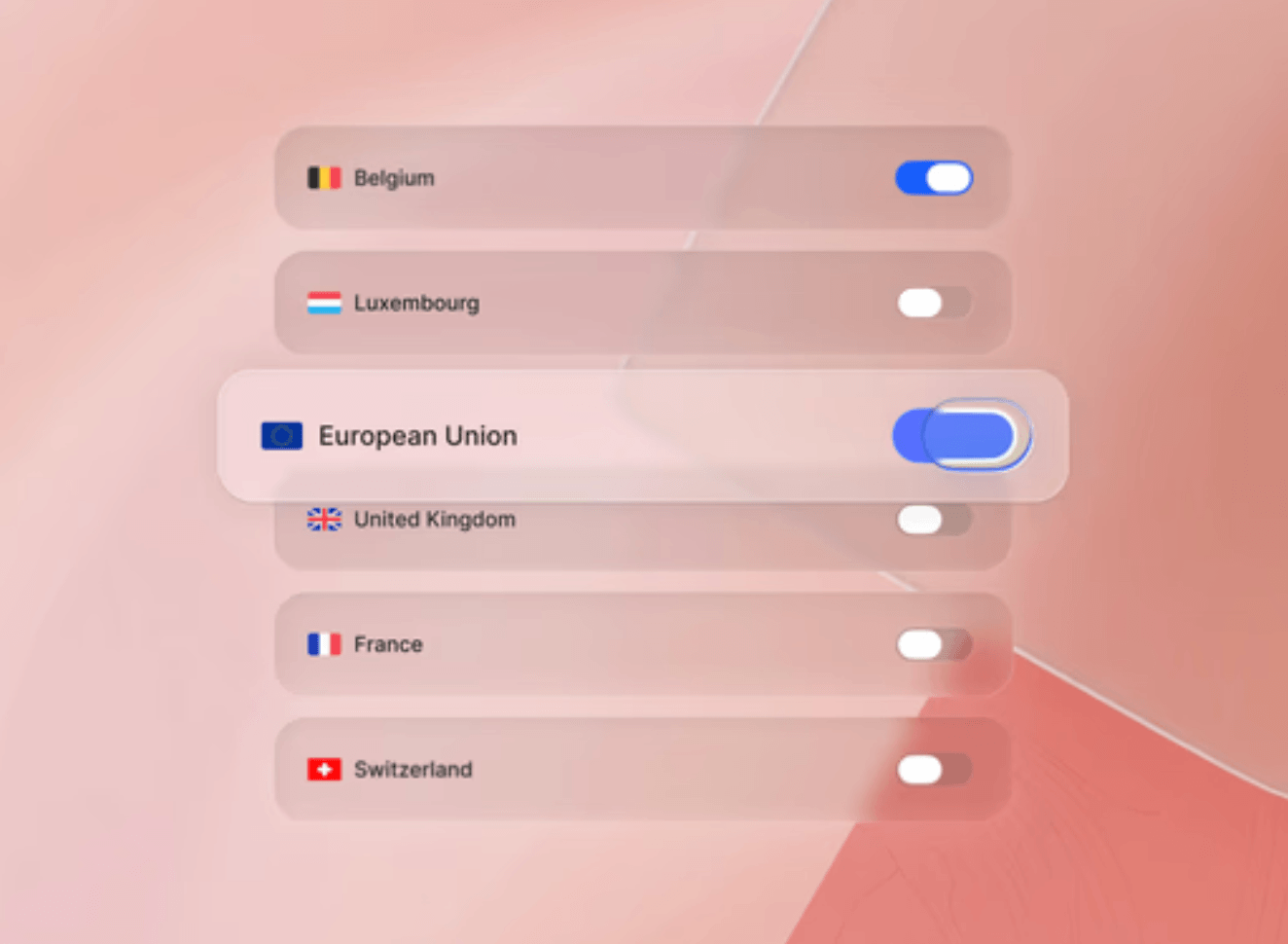
Your research crosses borders. Your tool should too.
If your team works across multiple jurisdictions, a tool trained primarily on US or UK law will create blind spots you won't always catch. LEGALFLY supports 60+ jurisdictions and draws from 500+ official legal sources, adapting its analysis to the governing law and regulatory environment relevant to each query.
Regulatory changes arrive in your inbox, not buried in a search
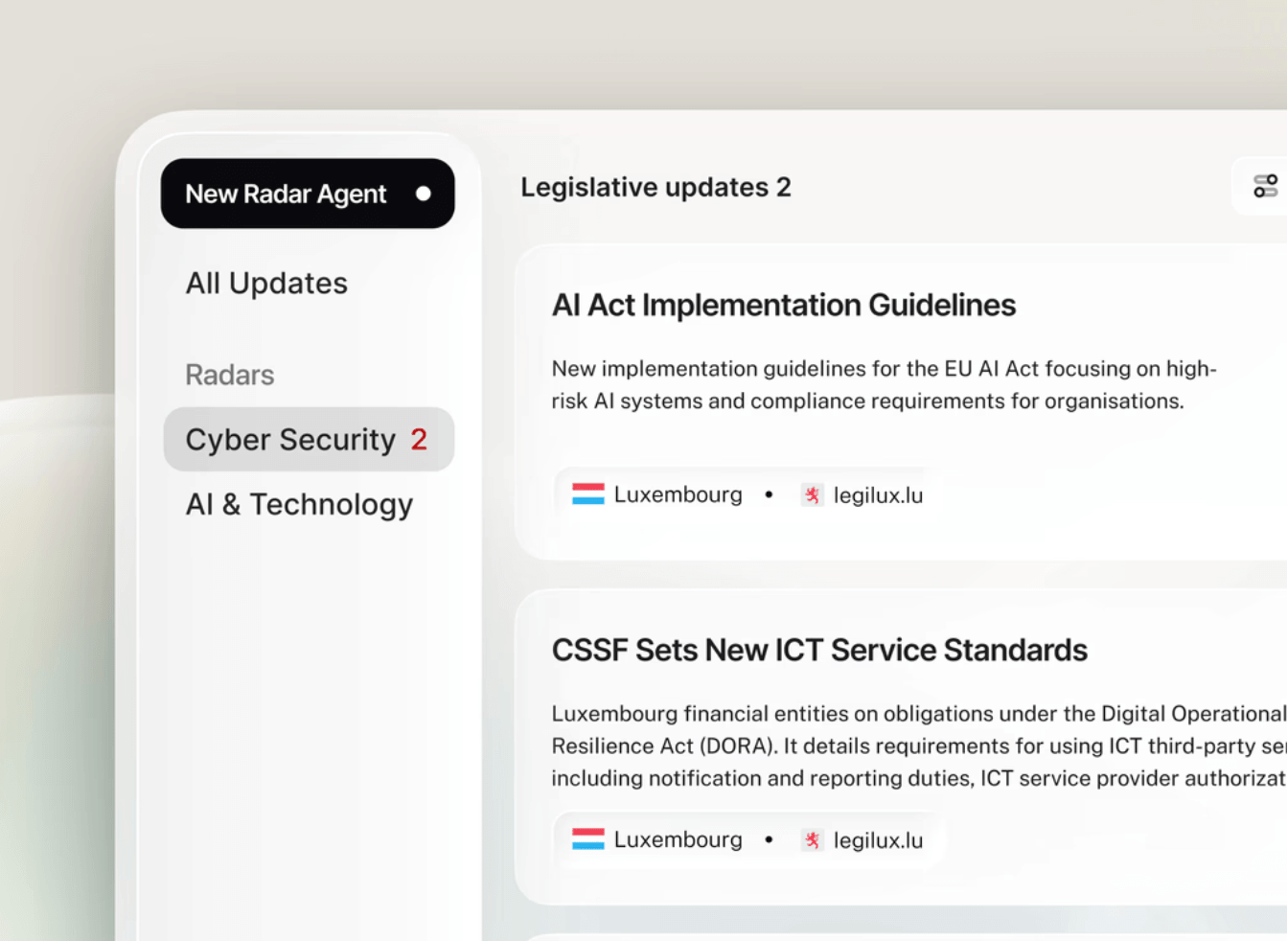
Keeping pace with regulatory updates across multiple markets is one of the most time-consuming parts of in-house legal work.
LEGALFLY's Legal Radar agent monitors legislative and regulatory developments across your chosen jurisdictions, delivers tailored alerts, and includes a business impact assessment, so your team knows what changed and why it matters, without having to go looking for it.
Your client data is protected before it reaches any AI model
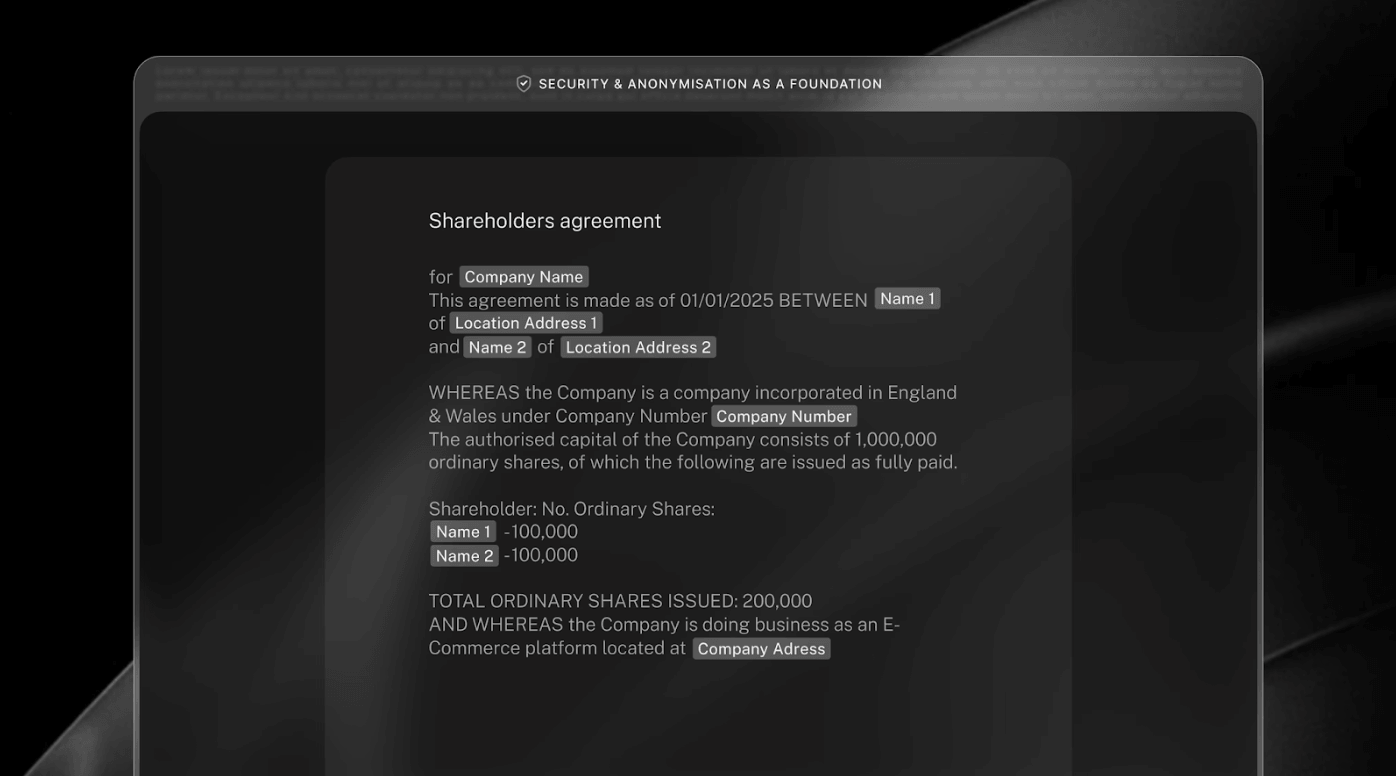
LEGALFLY automatically strips personal identifiers and sensitive data from documents before any processing takes place. This isn't a setting you need to configure, it's built into the architecture.
For teams in regulated industries handling confidential counterparty information, that distinction matters. LEGALFLY is ISO 27001 and SOC 2 Type II certified, with on-premises deployment available for teams with strict data residency requirements.
Works inside the tools your team already uses
LEGALFLY integrates natively with Microsoft Word, Teams, SharePoint, Outlook, Copilot, Slack, and Google Drive. Your team doesn't need to change how they work, the platform fits around existing workflows rather than replacing them.
Best for: In-house legal, compliance, and procurement teams at regulated enterprises needing secure, multi-jurisdictional research with verifiable sources.
Strength in research: Combines verified publisher integrations, transparent reasoning, jurisdiction-aware knowledge collections, and proactive regulatory monitoring in one privacy-first platform.
If your team handles research across multiple jurisdictions and needs to be certain your sources are verified and your client data protected, book a personalised demo to see how LEGALFLY's knowledge collections and Legal Radar work in practice.
Step-by-step: Running a legal research query with LEGALFLY
Here's how LEGALFLY helps in-house legal teams move from a research question to a verified, audit-ready answer:
1. Define your research question
Start by entering your query in plain language, no Boolean operators or keyword juggling required. For example: "What are the change of control notification requirements under German competition law for a mid-size acquisition?"
2. Select your jurisdiction and knowledge sources
Choose the jurisdiction or jurisdictions relevant to your query. LEGALFLY draws from official legal sources, publisher integrations, and pre-built knowledge collections specific to that jurisdiction, so the answer is grounded in the right legal framework from the start.
3. Add your internal knowledge
If your team has internal policies, precedents, or approved positions relevant to the question, LEGALFLY can incorporate these through its knowledge integration with SharePoint and other systems. The AI reflects your organisation's standards, not just general legal principles.
4. Run the research
LEGALFLY analyses your query against verified sources in real time. It surfaces relevant case law, statutes, and regulatory materials, and displays each step of its reasoning as it works, so you can follow the logic rather than just receive a conclusion.
5. Verify the sources
Every source cited is clickable. Your team can review the underlying material directly, cross-reference findings, and satisfy themselves that the output is grounded before it's used to inform a decision.
6. Set up ongoing monitoring with Legal Radar
If the query relates to a regulatory area that's likely to evolve, set up a Legal Radar alert. LEGALFLY will monitor for legislative and regulatory updates in your chosen jurisdictions and deliver business impact assessments directly to your inbox, keeping your team ahead of changes without manual tracking.
7. Export or share your findings
Research outputs can be exported into your existing workflow, into Word, Teams, or your preferred document environment, ready to inform a memo, a board briefing, or a regulatory submission.
LEGALFLY does more than research
LEGALFLY covers your full legal workflow in a single privacy-first platform — contract review, drafting, due diligence, compliance monitoring, and legal research. Contracts are reviewed clause by clause against your playbooks in Microsoft Word, with redlines and plain-language explanations for every suggested change. Review time drops from around two hours to 15 minutes for standard agreements.
If you're also evaluating your team's drafting stack, see how LEGALFLY compares against the top legal writing tools available today.
For non-legal teams, Discovery enables instant answers to legal questions and self-service on routine contract queries, without sensitive data leaving a controlled environment.
Cut contract review time from 2 hours to 15 minutes
LEGALFLY reduces contract review time by 87.5%, moving from around 2 hours per standard agreement to just 15 minutes. This isn't incremental improvement, it's fundamental workflow restructuring. Agristo, a food processing company managing 1,300 employees and complex multi-jurisdictional vendor agreements, achieved 8X faster contract review within days of deployment, eliminating bottlenecks that had slowed growth and decision-making.
Your legal team reviews contracts clause by clause against 120+ playbooks inside Microsoft Word, with redlines and plain-language explanations for every suggested change. The result: less time on repetitive legal tasks, more time on strategy. Read more here.
Book a demo to see how LEGALFLY works for your team.
—
2. Lex Machina
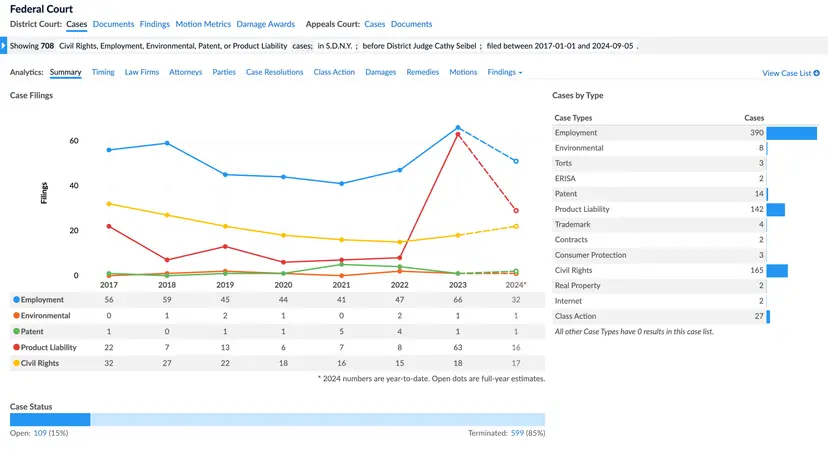
Lex Machina specialises in litigation analytics, making it a useful tool for firms focusing on dispute resolution. Its data-driven approach to understanding case trends and courtroom dynamics helps users gain a competitive edge.
Lex Machina is best suited for litigation-focused law firms looking to use data analytics for strategic planning and outcome prediction. It emphasises litigation analytics rather than transactional legal work.
Key features
Litigation analytics: Lex Machina provides in-depth analytics on case outcomes and trends, enabling legal professionals to craft effective litigation strategies.
Insights into legal entities: The platform offers comprehensive data on opposing counsel and judges, assisting in understanding courtroom dynamics.
Intuitive dashboards: The platform has user-friendly dashboards that enable quick interpretation of complex data.
Pros & Cons
Lex Machina stands out for its specialisation in litigation and curated and well-organised court data. However, its content is focused mostly on U.S. federal and state litigation and it is not designed for general legal research beyond litigation.
Best for: Litigation-focused law firms seeking data-driven case strategy and outcome prediction.
—
3. Paxton AI
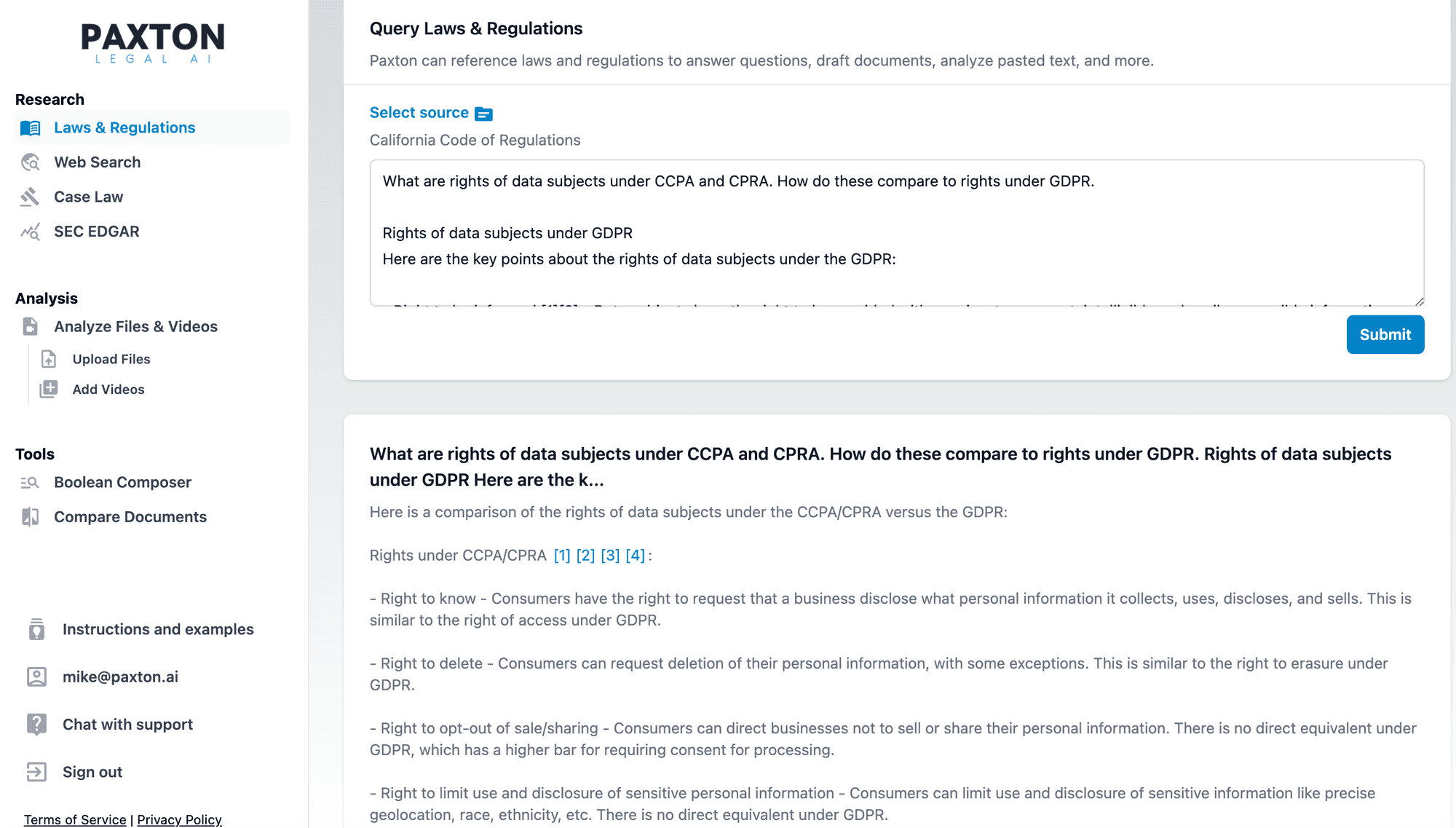
This legal research platform provides access to a database of US federal and state laws and regulations.
Key features
Query builder: Refine searches through follow-up questions to narrow issues and improve relevance.
Document upload: Users can upload documents for AI analysis, receiving insights and summaries that simplify case preparation and review.
Filters & jurisdictions: narrow searches by court, jurisdiction or practice area.
Pros and Cons
Paxton AI is well suited for exploratory research and early issue spotting, but it is less authoritative in its citations. Verification against primary sources is typically required.
Best for: Individual lawyers and solo practitioners needing AI-assisted legal research, document drafting, and analysis across multiple practice areas.
—
4. Blue J Legal
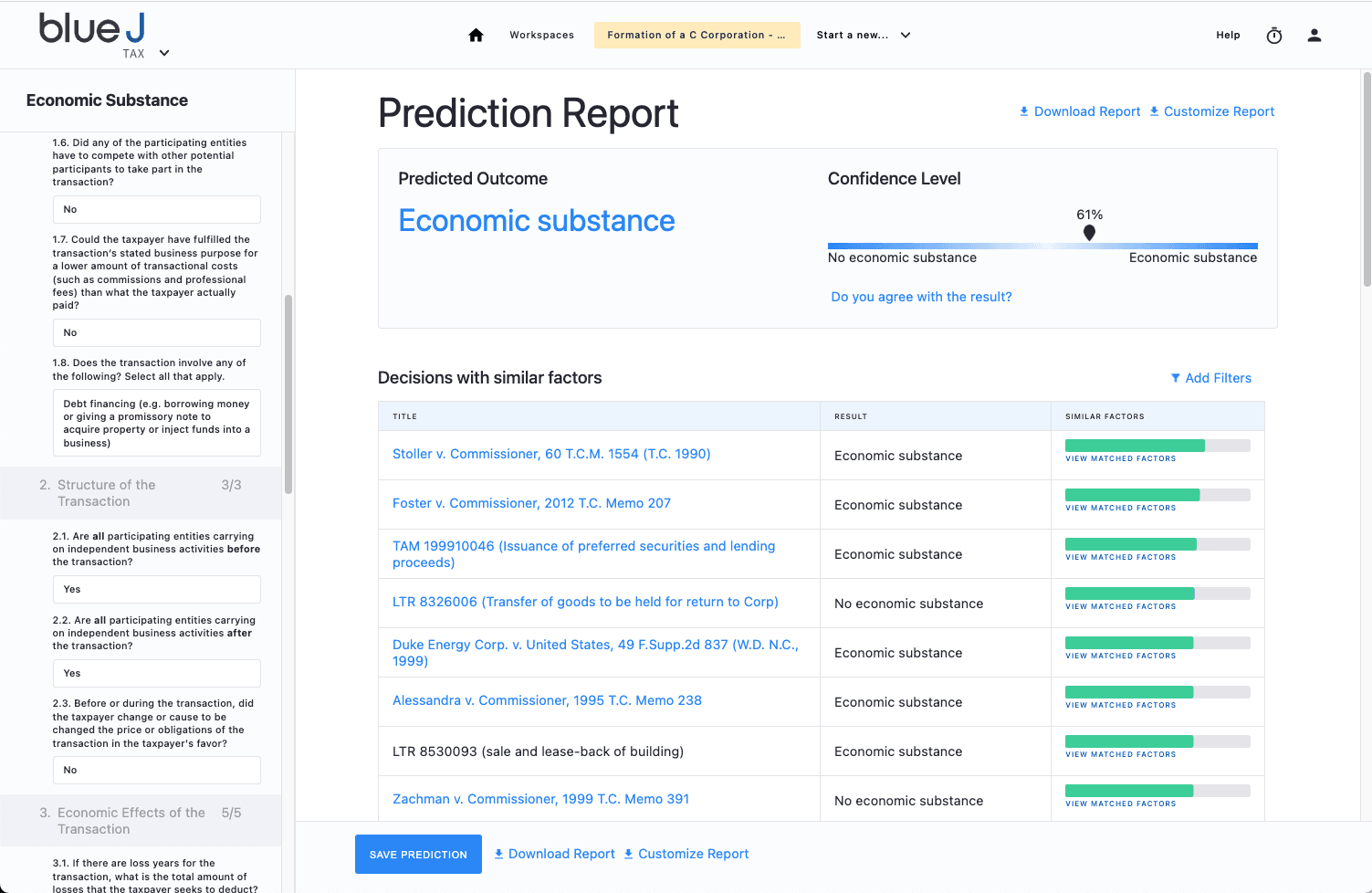
Blue J Legal is a strong option for tax law and employment scenarios. Its niche focus makes it a good choice for firms with specialised practices.
Key features
Predictive tax law insights: Blue J Legal offers predictive analytics specifically tailored to tax law, helping with the forecasting legal outcomes.
Scenario analysis: The platform enables analysis of various legal scenarios to inform decision-making.
Interactive dashboards: Visualise trends and case comparisons.
Pros & cons
Blue J Legal is highly specialised in tax law and employment areas, making it a clear winner if you are specifically focused on these areas. That said, it does not support legal drafting and has limited coverage for other areas of legal research. Learn more here.
Best for: Tax professionals, CPA firms, and legal teams specializing in tax law and employment law research.
—
5. Harvey AI
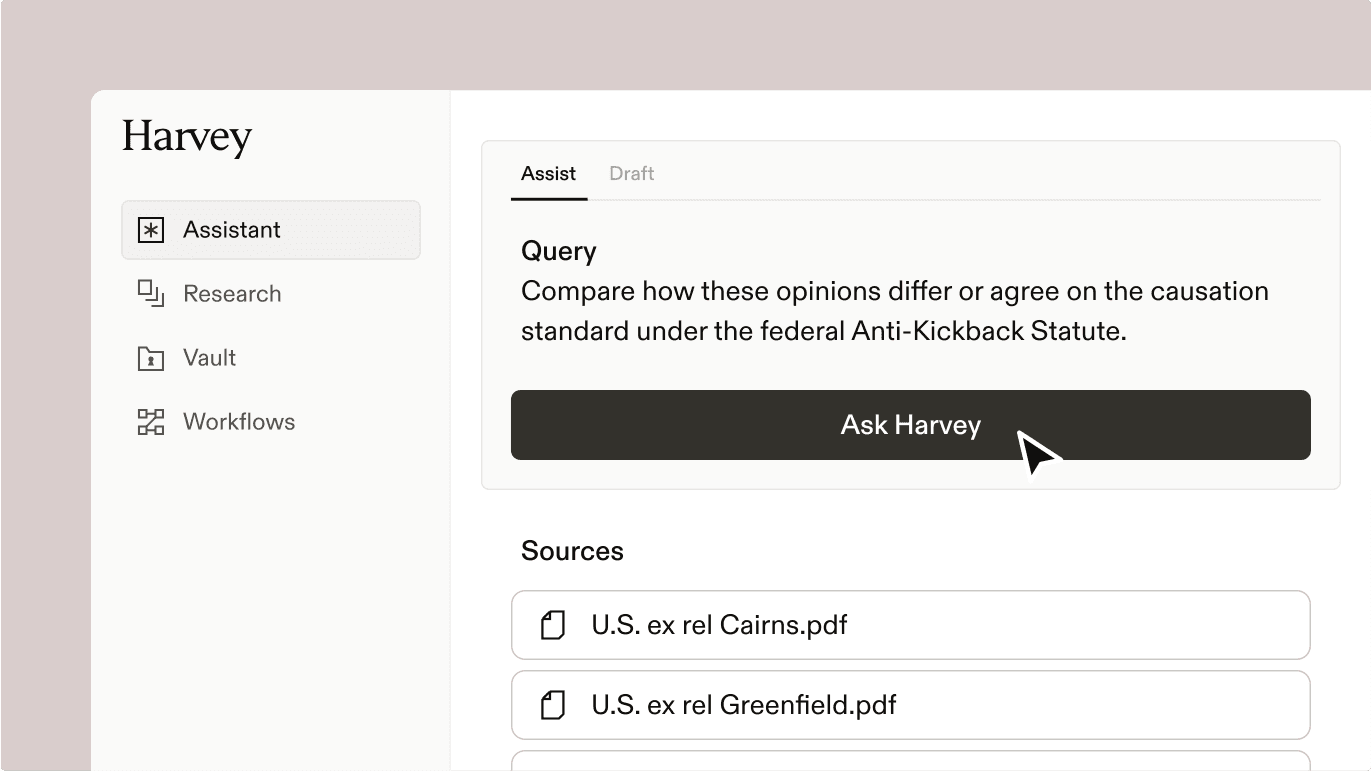
By automating contract analysis and supporting team collaboration, Harvey AI boosts efficiency and accuracy for high-volume legal operations. Harvey’s AI assistant allows prompt-based research to support legal tasks such as litigation.
Key features
Contract analysis: Harvey AI is a broad platform with functionality around contracting, due diligence, litigation, and compliance.
Internal knowledge vault: AI suggestions can be aligned with firm-specific templates and internal knowledge to maintain consistency
Data access controls: The platform includes role-based access controls, limiting data visibility to authorised personnel.
Compare the features of Harvey AI vs LEGALFLY.
Pros and Cons
Harvey is a flexible platform covering a range of different workflows. Its ‘Vault’ knowledge base helps the AI to provide contextual recommendations. However it has limited coverage for non-english jurisdictions and is less suitable for deep analytics. For firms weighing their options, there are several other Harvey AI options worth evaluating before committing to a platform.
Best for: Leading law firms and corporate legal teams requiring end-to-end legal workflows, contract analysis, and high-volume document processing.
—
6. Westlaw
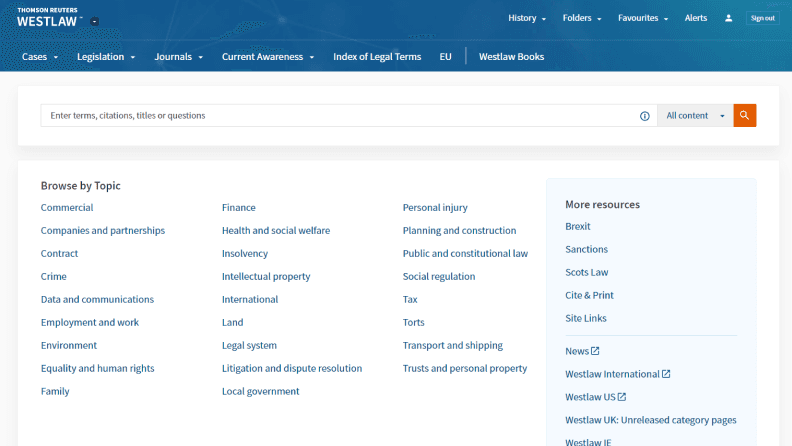
Westlaw, from Thomson Reuters, is an online legal research service with a database of legal resources to professionals worldwide. AI provides precise answers to legal research queries, accompanied by links to sources.
Key features
Legal resources: The platform has access to over 40,000 databases, including case law, statutes, regulations, legal journals, and more, facilitating thorough legal research.
Guidance: Westlaw provides curated insights, forms, and practice notes to assist with complex legal tasks, from litigation to transactional work.
KeyCite citation service: Automatically checks case authority for validity and provides citation history.
Pros & cons
Westlaw is regarded as one of the most comprehensive legal databases and is a highly reputable source. The cost is typically higher than other solutions in the market and the complex interface can create a barrier to adoption.
Best for: Law firms (including 80% of Am Law 100), corporate legal departments, and government agencies needing comprehensive legal research with litigation analytics.
—
7. Bloomberg Law
This legal research platform integrates primary and secondary legal content and analytics. It offers an array of legal materials, including case law, statutes, regulations, and legal analysis, within a single interface.
Key features
Integrated legal research platform: Bloomberg Law combines case law, statutes, regulations, and secondary sources in a single interface.
AI-driven litigation analytics: AI tools analyse case outcomes, precedents, and industry-specific trends, offering predictive insights that help legal professionals anticipate risks and opportunities.
Dockets and litigation tracking: It provides access to court dockets, filings, and litigation timelines.
Pros & cons
Bloomberg Law’s strengths lie in its litigation and regulatory coverage and its combination of news and data. Pricing can be prohibitive for smaller firms and teams AI features are an add on rather than the focus of the platform.
Best for: Law firms and in-house legal teams needing integrated legal research, business intelligence, litigation analytics, and workflow tools in one platform.
—
8. Lexis+ AI
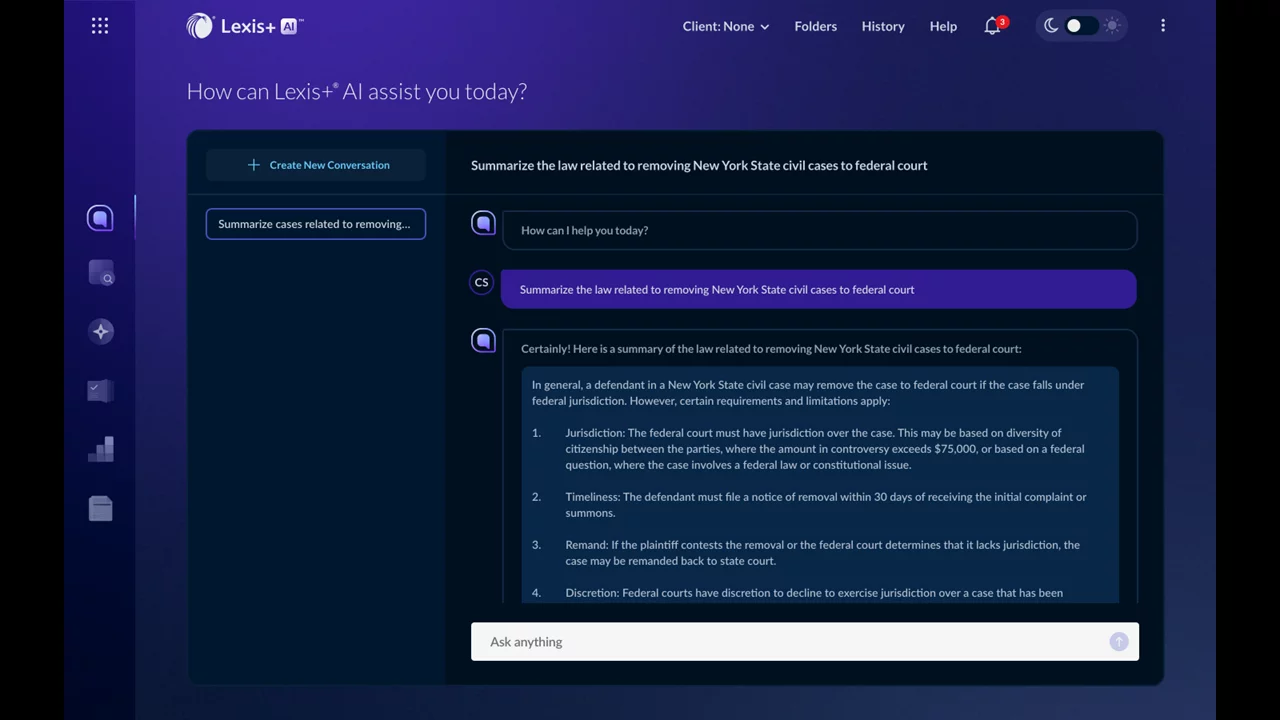
Lexis+ AI is the AI-enhanced version of the Lexis+ legal research platform. It integrates generative AI and advanced analytics into LexisNexis’ existing suite of legal research tools to help lawyers find, summarize, and analyse legal information.
Key features
AI search and summarisation: Prompt-based querying of cases statutes and other legal documents.
Drafting assistance: create briefs or memos, using research insights.
Integrated with Lexis+: AI features are offered within Lexis+ traditional research platform
Pros & cons
Lexis+ has a good reputation for authoritative content and AI features now assist with extracting relevant information from its databases. However, AI features are a basic add-on rather than being designed to comprehensively transform workflows.
Best for: Law firms and in-house legal teams requiring integrated legal research, AI-powered drafting, and end-to-end workflow automation with verified citations.
—
Best tools for legal research in 2026 at a glance
Name | Short description | Best for |
|---|---|---|
AI-powered legal research with anonymisation, multi-jurisdictional insights, and workflow integration. | Corporate legal teams needing secure, comprehensive research. | |
Lex Machina | Litigation analytics platform that uncovers case trends, judge and counsel data, and outcomes. | Litigation-focused law firms and strategic planning. |
Paxton AI | Legal research with query builder and document upload for AI-assisted insights. | Teams needing flexible search and document analysis. |
Blue J Legal | Predictive analytics focused on tax law and employment scenarios. | Specialists in tax and employment law research. |
Harvey AI | AI tool for contract analysis and broader legal research with workflow integration. | High-volume legal operations needing research and contract review. |
Thomson Reuters Westlaw | Comprehensive legal research service with AI-enhanced search and curated legal resources. | Deep, traditional research for litigation and complex legal questions. |
Bloomberg Law | Integrated legal research and analytics with AI search and predictive insights. | Professionals needing a broad, analytics-driven research platform. |
Lexis + AI | AI assistant within LexisNexis’ existing suite of legal research tools. | Law firms, specialists in litigation and existing customers of LexisNexis. |
How to choose the right AI tool for your legal research
Selecting the right AI tool begins with understanding your specific needs and priorities. Here are some factors to consider:
Legal needs: Different tools cater to different areas. If you specialise in litigation, opt for platforms with strong case law analytics. For corporate law, choose tools focused on contract review and compliance.
AI trained for legal: Choose a tool specifically designed for legal use to avoid errors like "hallucinations," where the AI generates false or irrelevant information. A platform trained within strict legal parameters ensures reliable, fact-based results tailored to legal practice.
Anonymisation: Confidentiality is non-negotiable in legal work. Opt for AI tools that anonymise client data by stripping identifiable information before processing.
Data control: Ensure the tool allows secure storage options like on-premise or private cloud environments. Full control over data storage reduces risks and boosts compliance.
Verified data: A reliable AI platform uses verified, up-to-date jurisdiction-specific data. Tools should make it easy to trace sources and validate recommendations against legal frameworks.
How is AI changing legal research in 2026?
Legal research is a daily task for any legal professional, supporting tasks from dispute resolution and litigation, to transactional work and policy development.
AI is transformative in its ability to find vital insights buried in documents or precedents, often in moments. This enables legal professionals to focus on higher-value tasks, such as strategy development and client counsel.
For a comprehensive overview of legal AI tools across contract review, drafting, compliance, and practice management workflows, see our guide to the best lawyer AI tools.
Some of the research tasks legal AI can help with include:
Document review and discovery: AI can process thousands of documents simultaneously, uncovering hidden connections, inconsistencies, and compliance issues. You can ask questions, highlight key information, and automate reviews using saved templates, significantly reducing time spent on discovery.
Analysis of case law and statutes: AI can analyse vast databases of case law and statutes in seconds. By using natural language processing (NLP), it can provide contextually accurate and relevant results, surpassing traditional keyword searches. This accelerates research, saving hours of manual work.
Real-time updates on legal precedents: AI ensures legal teams stay informed with live updates on rulings, amendments, and regulatory changes. Automated alerts tailored to specific jurisdictions or cases keep you ahead of developments.
Predictive analytics for outcome assessment: AI uses historical data to predict case outcomes, assess risks, and offer actionable insights. You can quickly prepare arguments, evaluate a case’s likelihood of success and tailor strategies based on data-driven predictions.
Precise insights: AI can deliver tailored analyses aligned with specific legal contexts, such as contract clauses, statutes, or multi-jurisdictional requirements. These enable more precise and efficient legal research, ensuring you have the information you need when you need it.
—
The final verdict
AI tools are transforming legal research by improving speed, accuracy, and depth of insight. The right solution can enhance workflows and deliver better outcomes for clients. As AI adoption grows, teams that use it will maintain a competitive edge. Book a demo today to experience the future of legal research with LEGALFLY.