





The way in-house legal teams work has changed. The volume of contracts, compliance obligations, and regulatory questions keeps growing, but headcount does not. Legal teams are under pressure to move faster, cover more ground, and still maintain the quality and control that their organisations depend on.
AI legal assistants are how the best in-house teams are responding to that pressure. Not by replacing legal judgment, but by handling the volume of routine work that consumes it. The tools below represent the leading options in 2026, what each does, who it is built for, and where it is most effective.
Note: If your team is spending hours on contract reviews that should take minutes, book a demo. We'll show you how LEGALFLY's playbook-driven review cuts that time by 87.5%, directly inside Microsoft Word, with every clause decision explained and traceable.
The best AI legal assistants in 2026
The tools below are the ones worth knowing. We start with the one we know best.
LEGALFLY: Best for: In-house legal, compliance, and procurement teams at regulated enterprises
Most in-house legal teams are not short of work. They are short of capacity. Contracts queue up. Compliance deadlines arrive. Business teams submit requests that need a legal eye but do not require a senior lawyer. The work that should take minutes takes hours, not because the team is slow, but because the volume of routine tasks leaves no room to move faster.
The problem compounds at scale. Inconsistent review standards drift between reviewers. Sensitive commercial data gets processed through generic AI tools because they are accessible and fast. Regulatory changes land and no one has capacity to assess what they mean for the contract portfolio.
Most teams using LEGALFLY cut their contract review time in half within a few weeks of onboarding. Book a short demo to see how it works for your business.
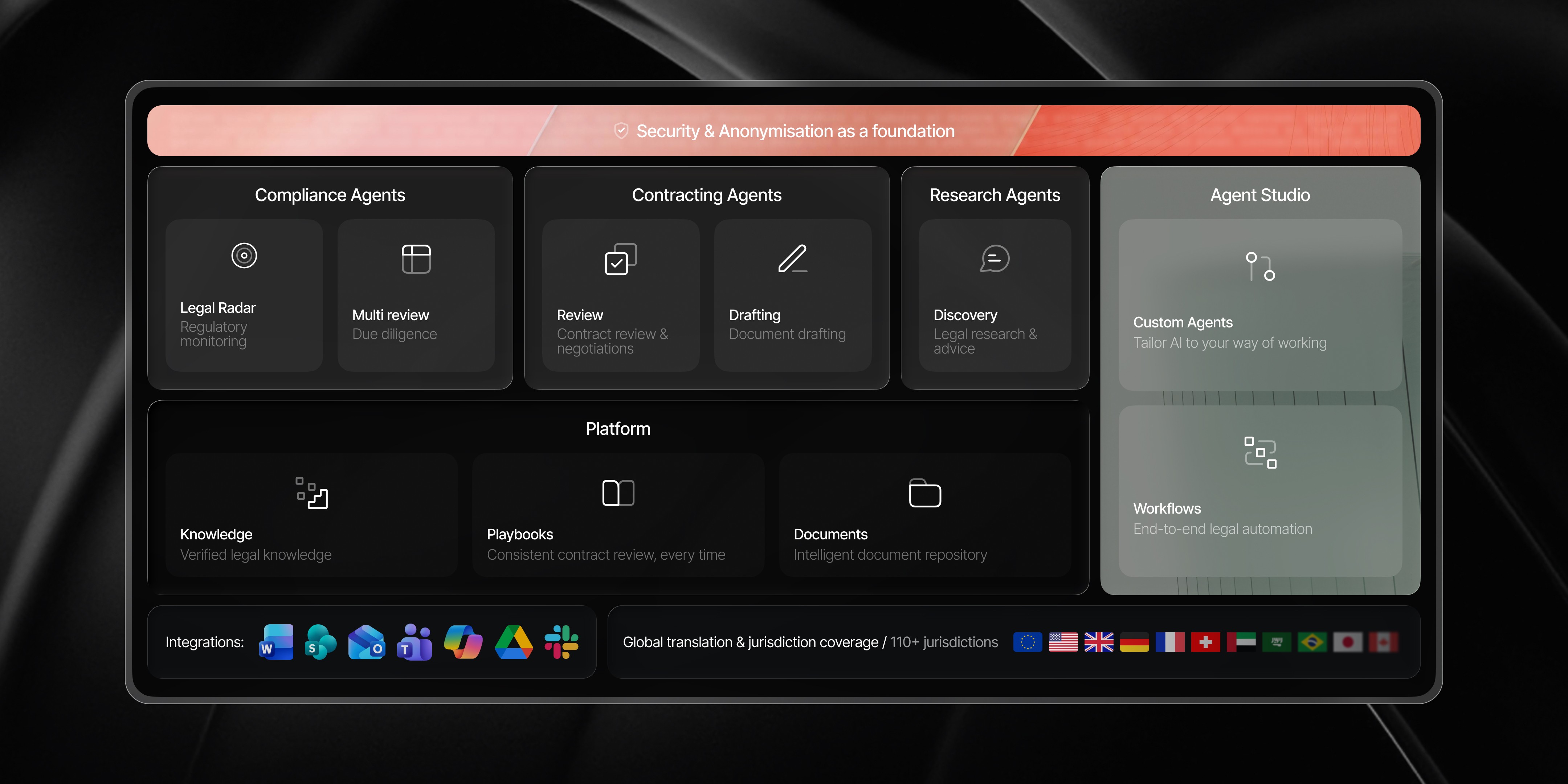
LEGALFLY is built for that operating reality. Trusted by in-house teams at SAP, KPMG, and AXA, it functions as a legal AI operating system, covering contract review, drafting, research, compliance, and workflow automation in a single platform designed for enterprise in-house use
Turn your legal standards into automated workflows
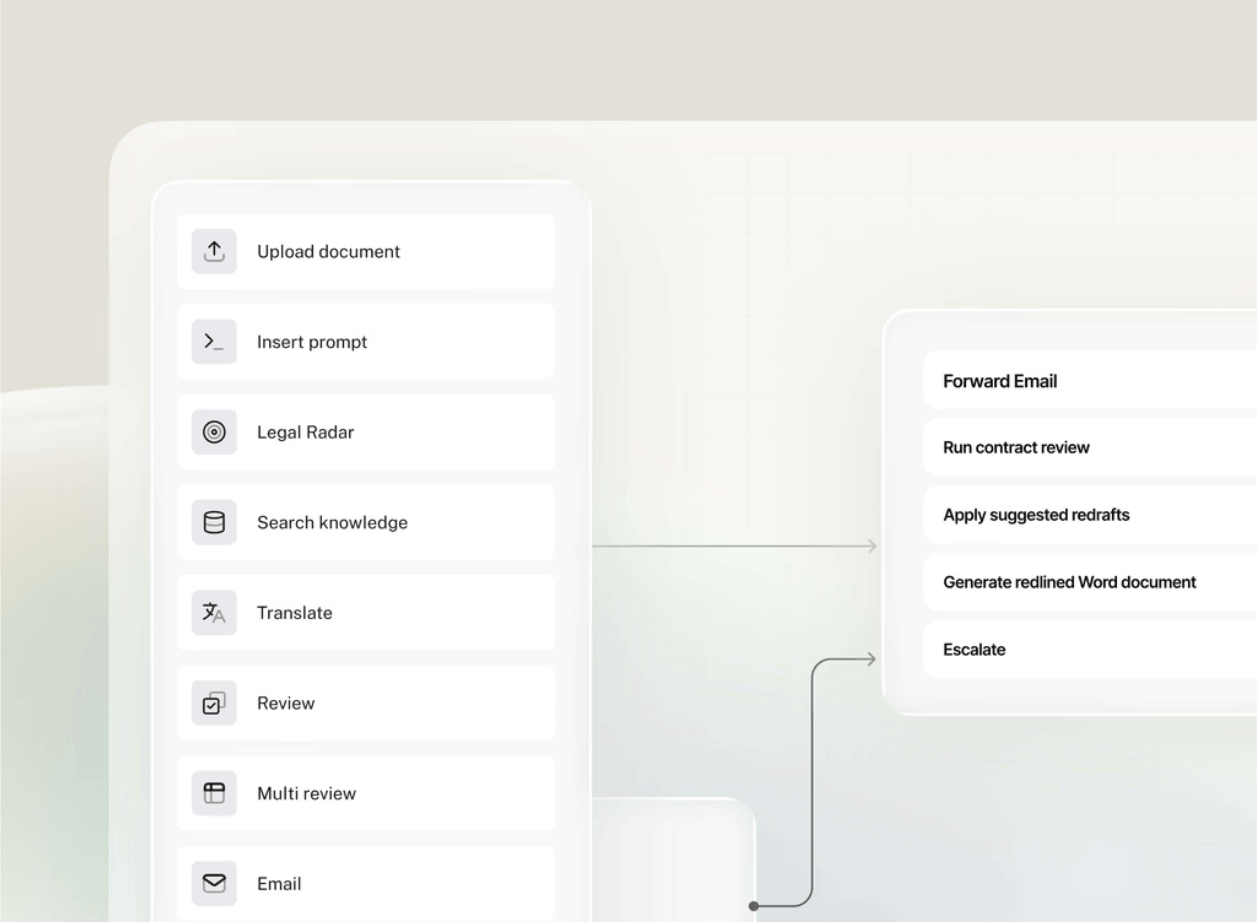
Every organisation has approved positions, acceptable liability caps, data handling requirements, fallback clauses, escalation rules. The problem is that these standards live in documents that not everyone reads consistently. LEGALFLY encodes them directly into the platform through Agent Studio, which lets legal teams build multi-step AI workflows tailored to their specific processes, with sign-off built in at every stage that requires it.
The result is not just faster work. It is work that consistently reflects your standards, whoever is doing it and however much pressure they are under.
Contract review in 15 minutes, not two hours
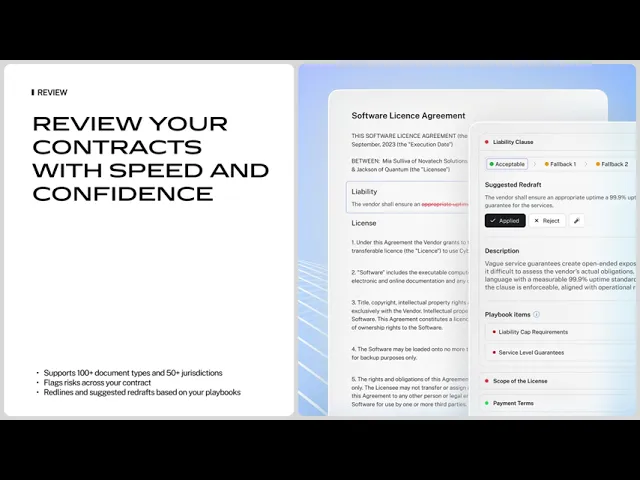
LEGALFLY's playbook-driven review analyses contracts clause by clause against your approved positions, flagging deviations, grading risks, and proposing redrafts in your organisation's approved language, all inside Microsoft Word. Review time drops from an average of two hours to 15 minutes, with every decision logged and traceable.
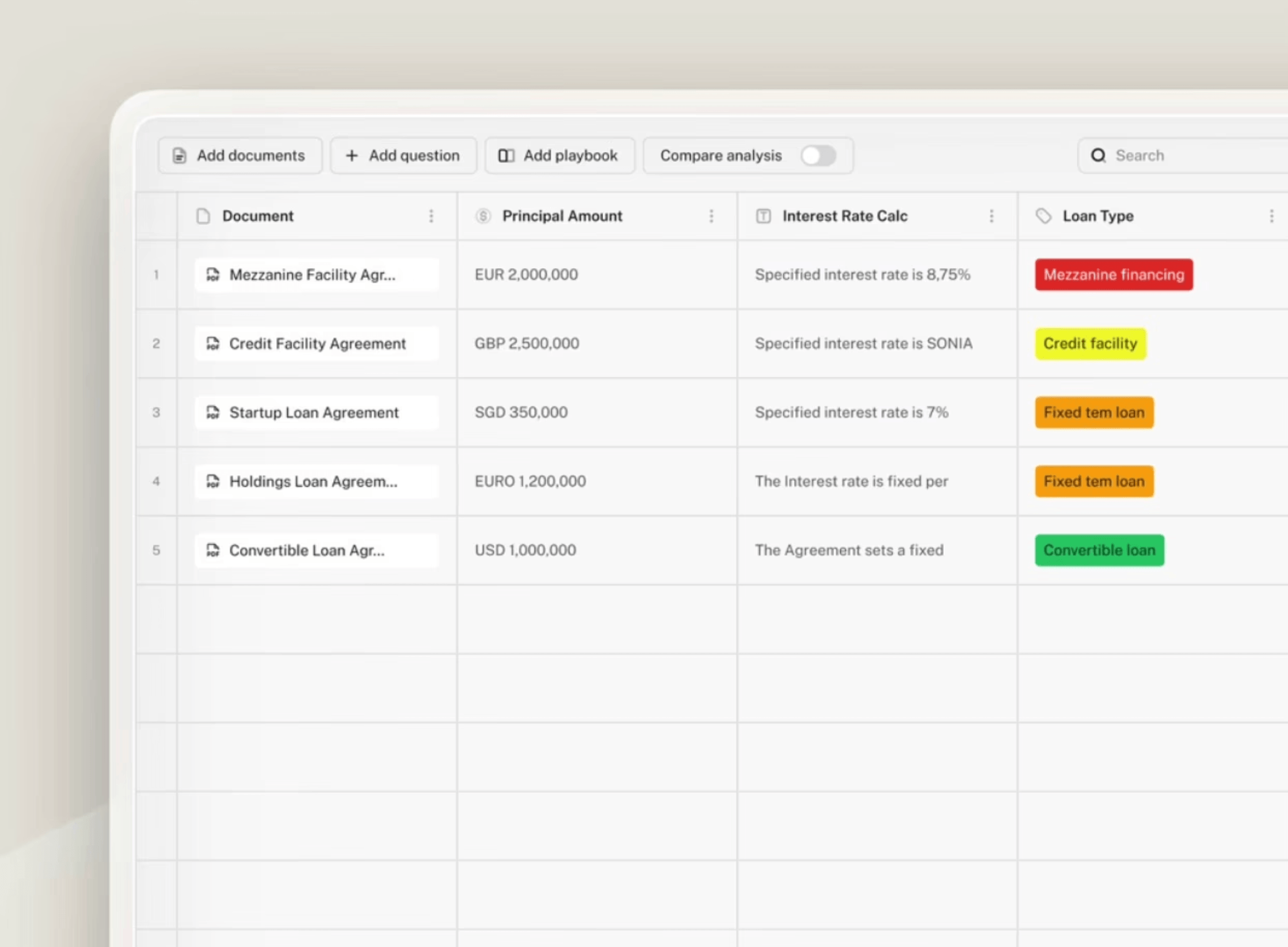
For high-volume document sets, regulatory compliance audits, portfolio reviews, M&A due diligence, the Multi-Review Agent processes hundreds of contracts simultaneously, applying the same checks at scale without proportional increases in legal resource.
See how in-house teams are cutting contract review from two hours to 15 minutes. Book a demo with one of our experts.
Non-legal teams self-serve without creating risk
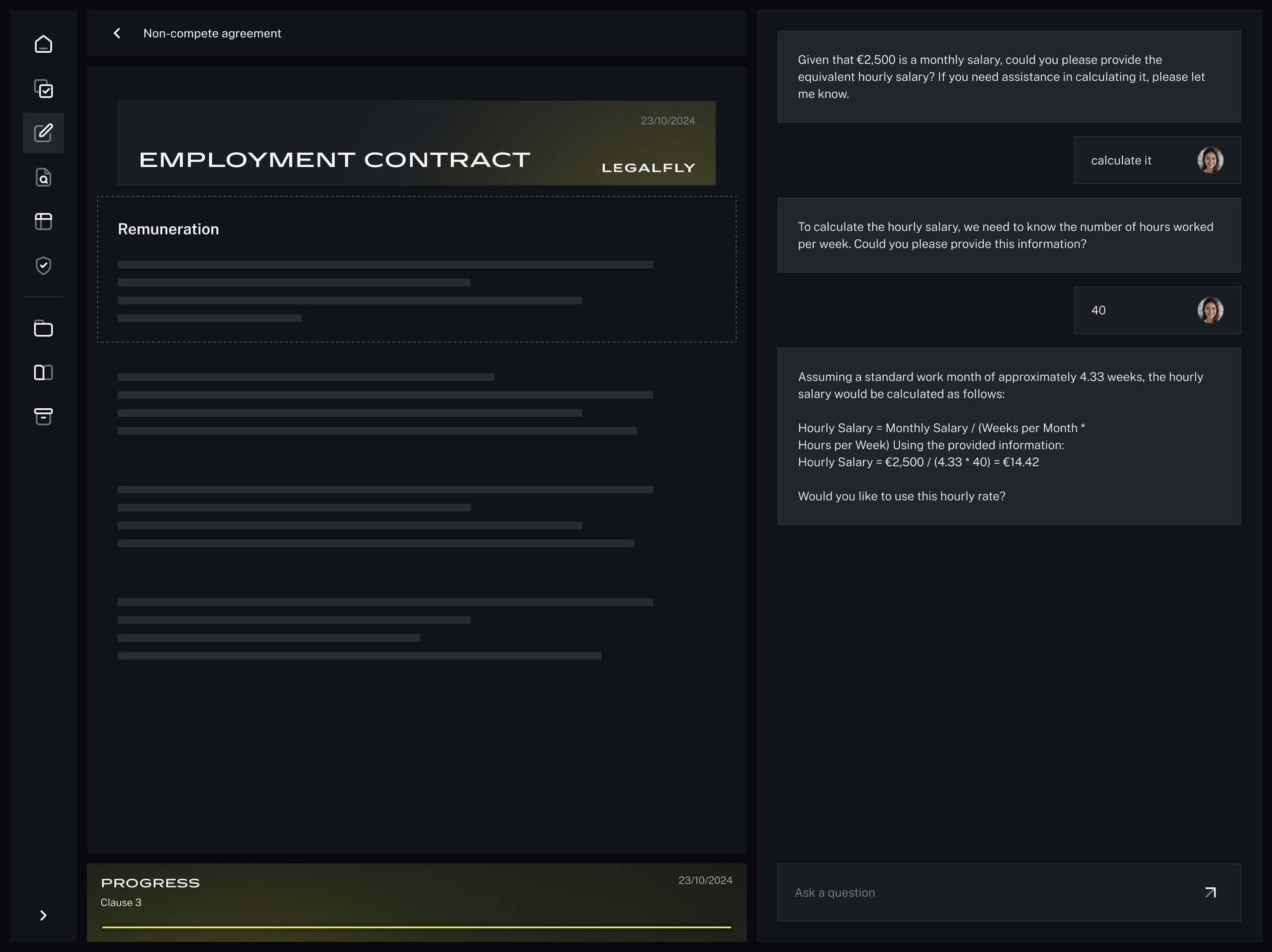
One of the most persistent drains on in-house legal capacity is fielding routine requests from procurement, sales, and operations teams who need approved contract language but lack the training to handle it. LEGALFLY solves this structurally. Business users generate and review routine agreements from pre-approved templates, within guardrails your team defines once. Legal sets the boundaries. The organisation moves within them. The bottleneck disappears.
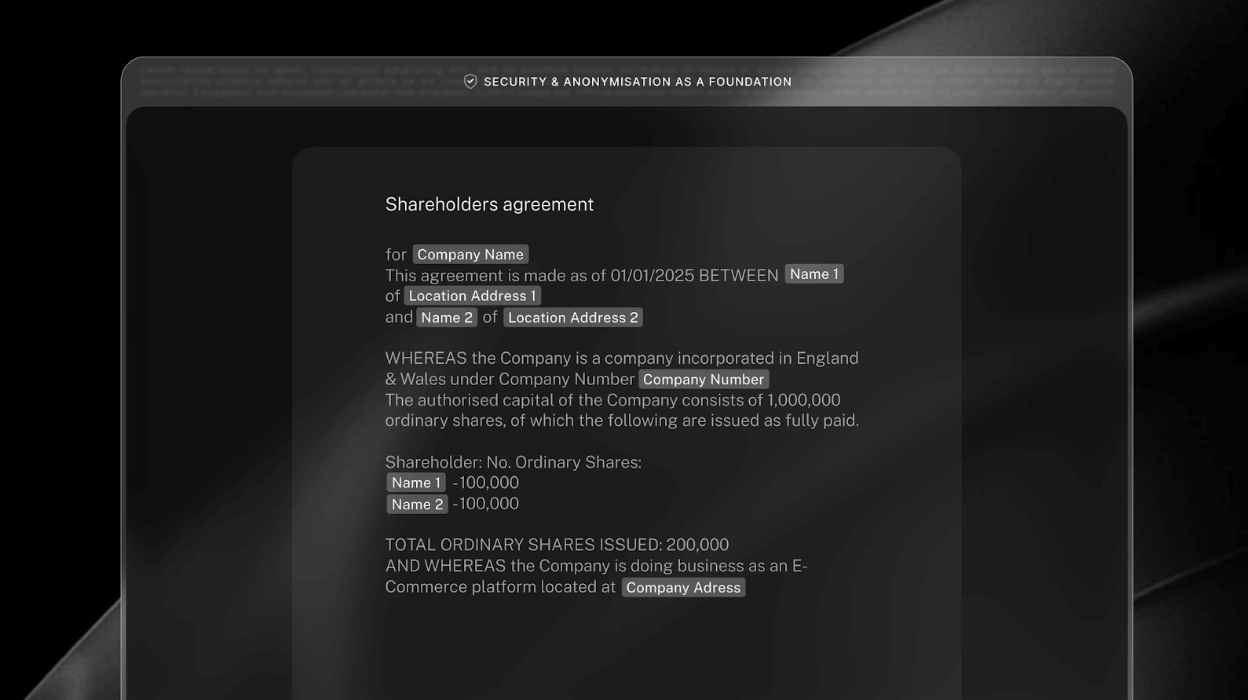
Your data never reaches an AI model in identifiable form
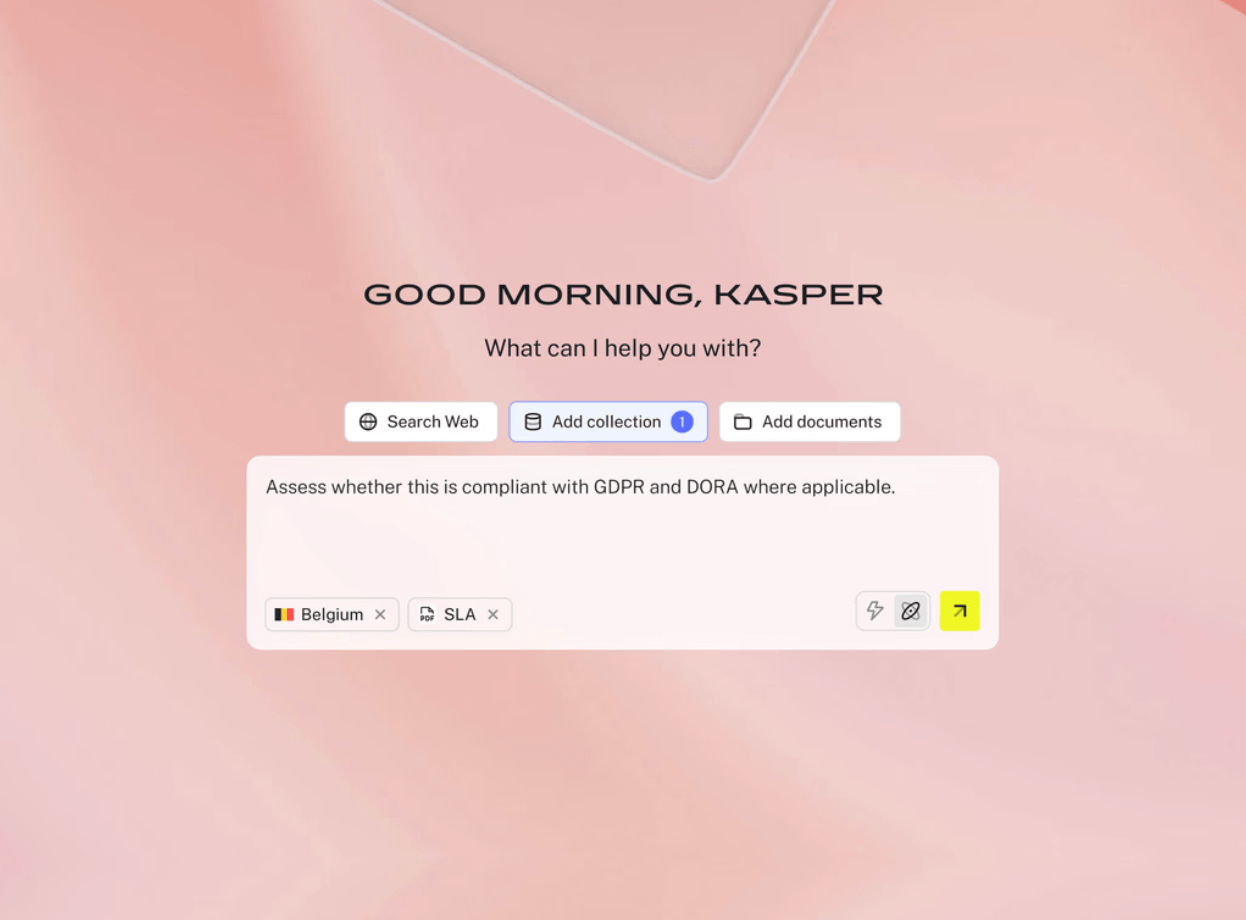
Every document processed through LEGALFLY is anonymised before any AI sees it, counterparty names, deal values, financial terms, and sensitive identifiers are stripped at the architecture level and reinstated after processing. This is not a configuration option. It is built into the core of how the platform works.
For in-house teams at regulated enterprises handling cross-border transactions, GDPR-sensitive material, or sector-specific compliance obligations, this is the standard that general-purpose AI tools cannot match. LEGALFLY is ISO 27001 and SOC 2 Type II certified, with on-premises deployment available for organisations with strict data residency requirements.
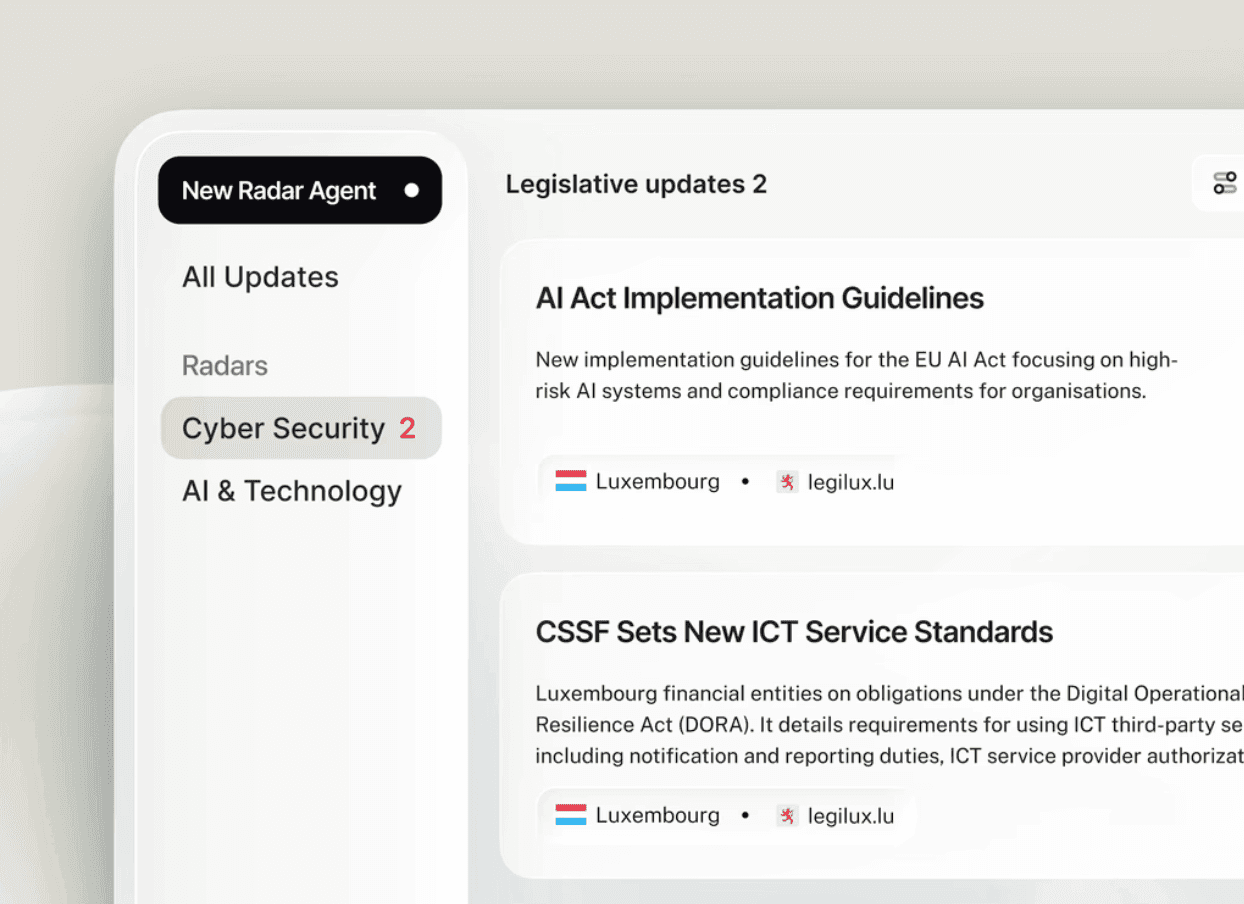
Stay ahead of regulatory change with Legal Radar
Knowing what regulations are changing, and understanding what they mean for your existing contracts before they take effect, is a research burden that never goes away. LEGALFLY's Legal Radar agent monitors regulatory and legislative updates across your jurisdictions of interest, delivering tailored impact assessments directly to your inbox. Compliance teams move from reactive to proactive without adding monitoring overhead.
How LEGALFLY contract review works: step by step
Here is how in-house legal teams move from receiving a contract to a reviewed, redlined, audit-ready output, without leaving Word or compromising on control.
Step 1: Import the contract
Open the document in Microsoft Word using the LEGALFLY add-in, or pull it directly from SharePoint, Outlook, or Teams. Sensitive data is anonymised automatically before any processing begins, no manual redaction required.
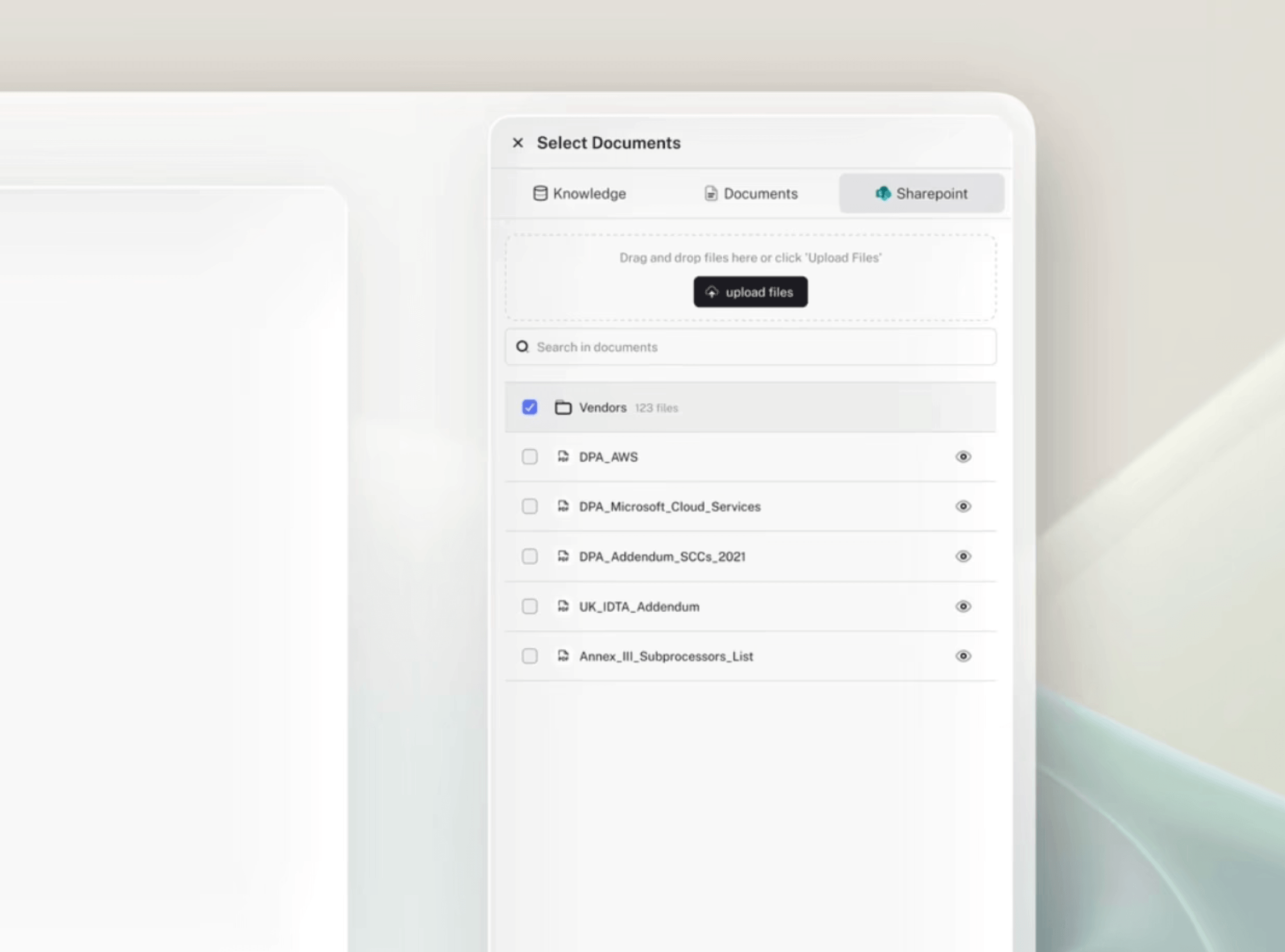
Step 2: Select your playbook
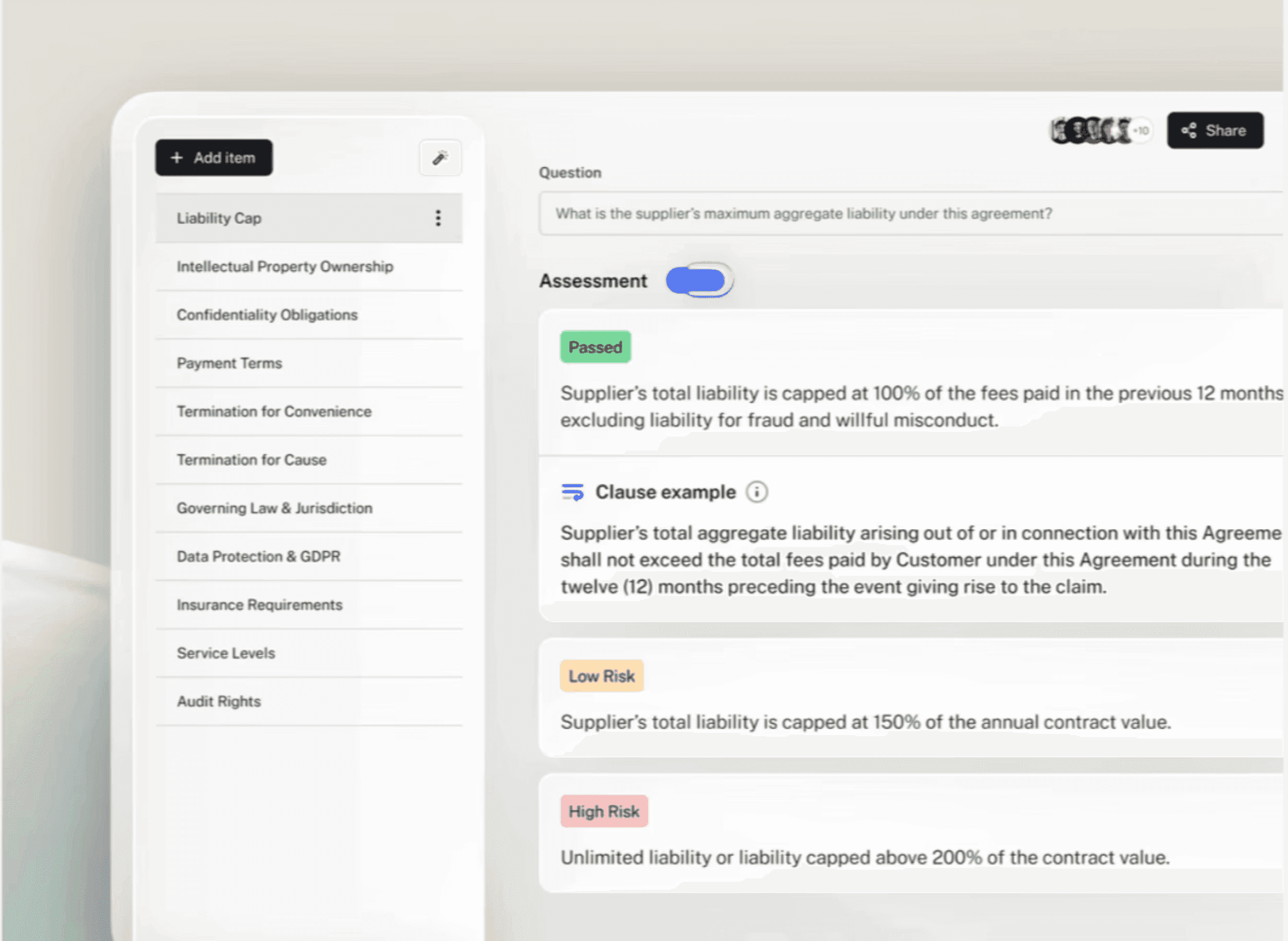
Choose from 120+ pre-built review playbooks, or apply a custom playbook built from your own approved contracts. Your fallback positions, risk thresholds, and escalation rules are applied from the start, before a single clause is analysed.
Step 3: Run the review
LEGALFLY analyses the contract clause by clause against your playbook. Deviations are flagged, risks are graded, and non-compliant clauses are redrafted in your approved language. Every output is mapped to your standards, not generic benchmarks.
Step 4: Review tracked changes with rationale
Every suggested edit appears as a tracked change in Word with a plain-language explanation tied to a specific playbook rule. Your lawyers accept, reject, or override each suggestion. Final judgment stays with you.
Step 5: Export with a full audit trail
Export a clean redline for negotiation or a finalised version for execution. Every session is logged, what was reviewed, what was flagged, and on what basis, meeting the compliance and explainability requirements of regulated industries.
Want to see how LEGALFLY works for your team's most common legal tasks? Book a demo with one of our experts.
Key features:
Rapid, intuitive drafting, reviewing, and discovery.
Custom Agents for tailored workflows and automation.
Jurisdiction-specific compliance checks to align with local laws.
Advanced data anonymisation.
On-premise and cloud storage options for flexible data management.
AI models trained on anonymised law firm data for contextual accuracy.
Harvey AI: Litigation support
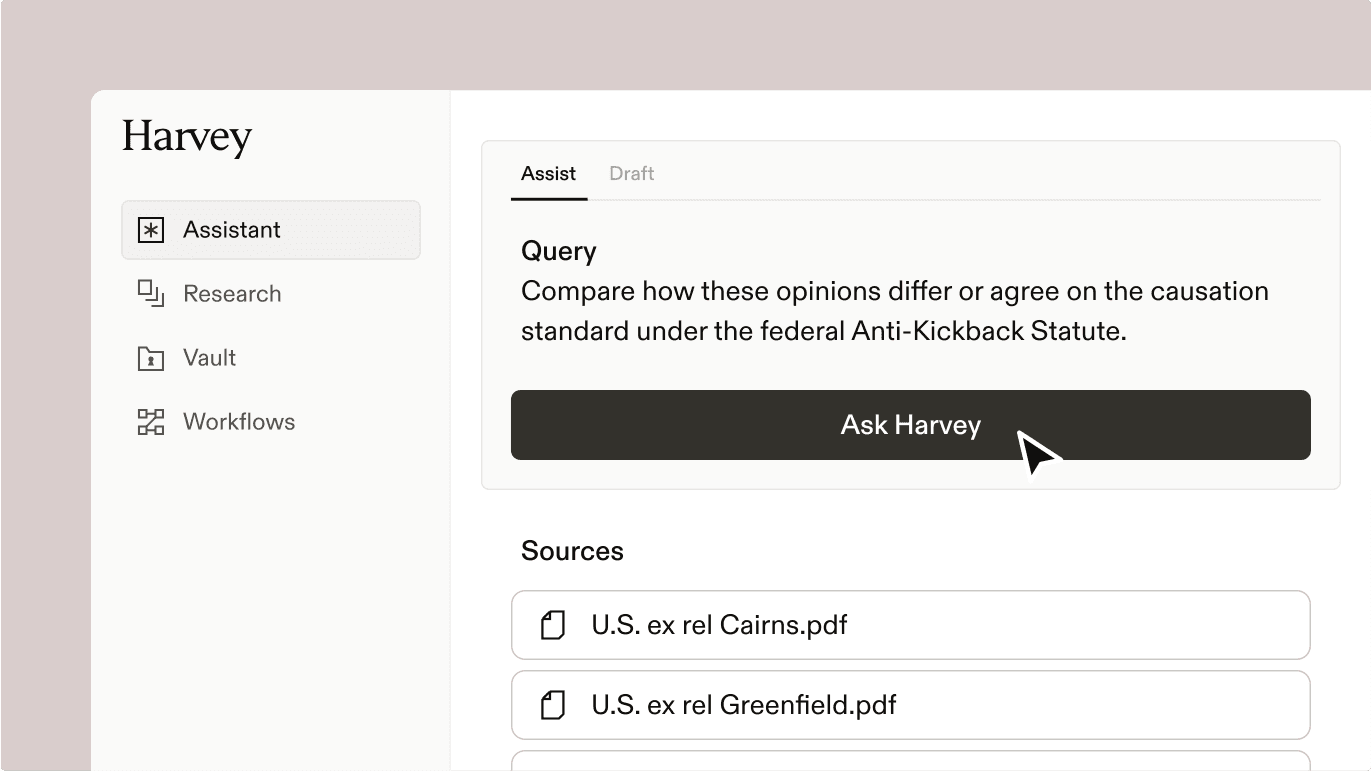
Harvey AI is designed to help litigation teams with case preparation and legal research. It offers comprehensive case law research and litigation analytics, providing lawyers with actionable insights that enhance their arguments and reduce preparation time.
One of Harvey AI's useful features is its ability to streamline document review, highlighting key points and potential issues within case files. It also offers custom workflows tailored to the litigation.
Key features:
Comprehensive case law research.
Litigation analytics to identify trends and support decision-making.
Streamlined document review to quickly identify relevant information.
Custom workflows.
Learn more about Harvey AI competitors.`
Luminance: Due diligence and compliance
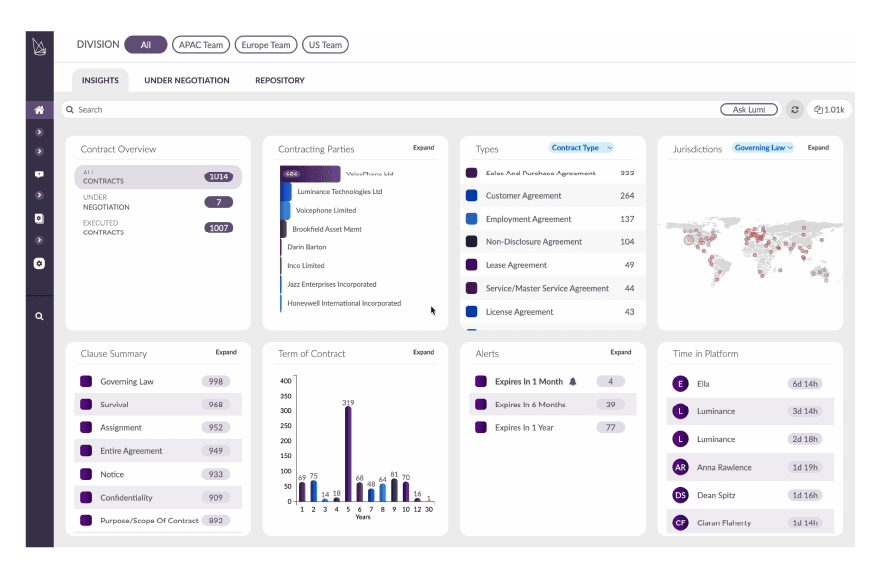
Luminance is an AI assistant focused on due diligence and regulatory compliance. It uses machine learning to automate the identification of risks. Its compliance monitoring helps organisations remain aligned with regulatory standards, while its document review capabilities are optimised for speed and accuracy. Review other Luminance AI options here.
Key features:
Automated risk analysis to identify vulnerabilities in contracts or transactions.
Compliance monitoring for real-time regulatory alignment.
Advanced document review for high-speed, high-accuracy processing.
Compare LEGALFLY vs Luminance directly to see which tool fits your stack.
Casetext CoCounsel: Legal Research
Casetext CoCounsel enhances legal research with context-aware search capabilities, delivering results tailored to the nuances of specific queries. The platform provides real-time updates on case law, ensuring lawyers always have the most current information.
Citation analysis and recommendations help streamline drafting by ensuring accuracy and relevance.
Key features:
Contextual search capabilities for more relevant results.
Real-time updates on case law to stay current with legal developments.
Citation analysis and recommendations to enhance drafting accuracy.
What in-house legal teams should look for in an AI legal assistant
An AI legal assistant is a software solution powered by artificial intelligence, designed to automate and optimise legal tasks. By streamlining operations, reducing the risk of human error, and freeing up time for higher-value work, AI legal assistants are transforming legal workflows.
These tools excel at handling routine but time-intensive activities such as document review, drafting, legal research, and compliance checks, enabling you to focus on strategic work. Here's what makes a good legal assistant.
1. Data security
The first consideration for any AI legal assistant is its ability to protect sensitive client information. Look for tools with robust data security measures, such advanced encryption and data anonymisation. Secure storage options, whether on-premise or cloud-based, are also important for ensuring confidentiality.
2. End to end automation
An assistant is just the beginning. Legal AI tools have moved on and can now offer end to end automation vs just the answer to a question. LEGALFLY's Agent Studio lets your legal team automate entire workflows, from intake through review to final approval, not just isolated tasks. You define the steps, the escalation logic, and who's involved at each stage. LEGALFLY executes the workflow automatically, while your team retains final approval at every step.
3. Verified data sources
The reliability of an AI legal assistant depends on its access to verified, jurisdiction-specific, and up-to-date legal data. Tools with built-in citation checks and real-time updates on case law ensure accuracy, avoids hallucinations and compliance with regional regulations.
4. Customisability
Every legal team has unique workflows, and customisability ensures the AI assistant adapts to these needs. Features like tailored workflows, personalised dashboards, and adaptable algorithms allow organisations to optimise the tool for maximum efficiency.
5. Integration flexibility
A top-tier AI legal assistant integrates easily with your existing systems, such as case management software, document repositories, and compliance platforms. This minimises disruptions and accelerates adoption within your organisation.
Conclusion
AI legal assistants are redefining how legal professionals work, offering unseen levels of efficiency, accuracy, and scalability. These tools have shifted from basic automation to acting as reliable associates capable of handling complex tasks. Whether it’s speeding up document review, enhancing compliance, or bridging resource gaps, AI legal assistants empower teams to focus on strategic, high-value activities.