





Legal AI increases output, but it can also increase the amount of material lawyers need to check before they can make a decision. The difference between platforms often shows up there: how much work is removed, and how much is sent back to legal?
Wordsmith Legal AI helps in-house teams move routine legal work faster and extend legal support across the business. LEGALFLY focuses on controlling how legal work is executed, using playbooks, approved positions, and governed workflows to keep decisions consistent across contracts, jurisdictions, and teams.
Both platforms support contract review, drafting, and legal research. But they differ in how much they resolve, how consistently they apply your standards, and how much they can automate around the legal task itself. Here’s how they compare.
If your team of legal professionals is managing high contract volume across multiple jurisdictions and needs contract review grounded in your legal positions and official legal sources, LEGALFLY is built for you. Book a demo.
What is LEGALFLY?
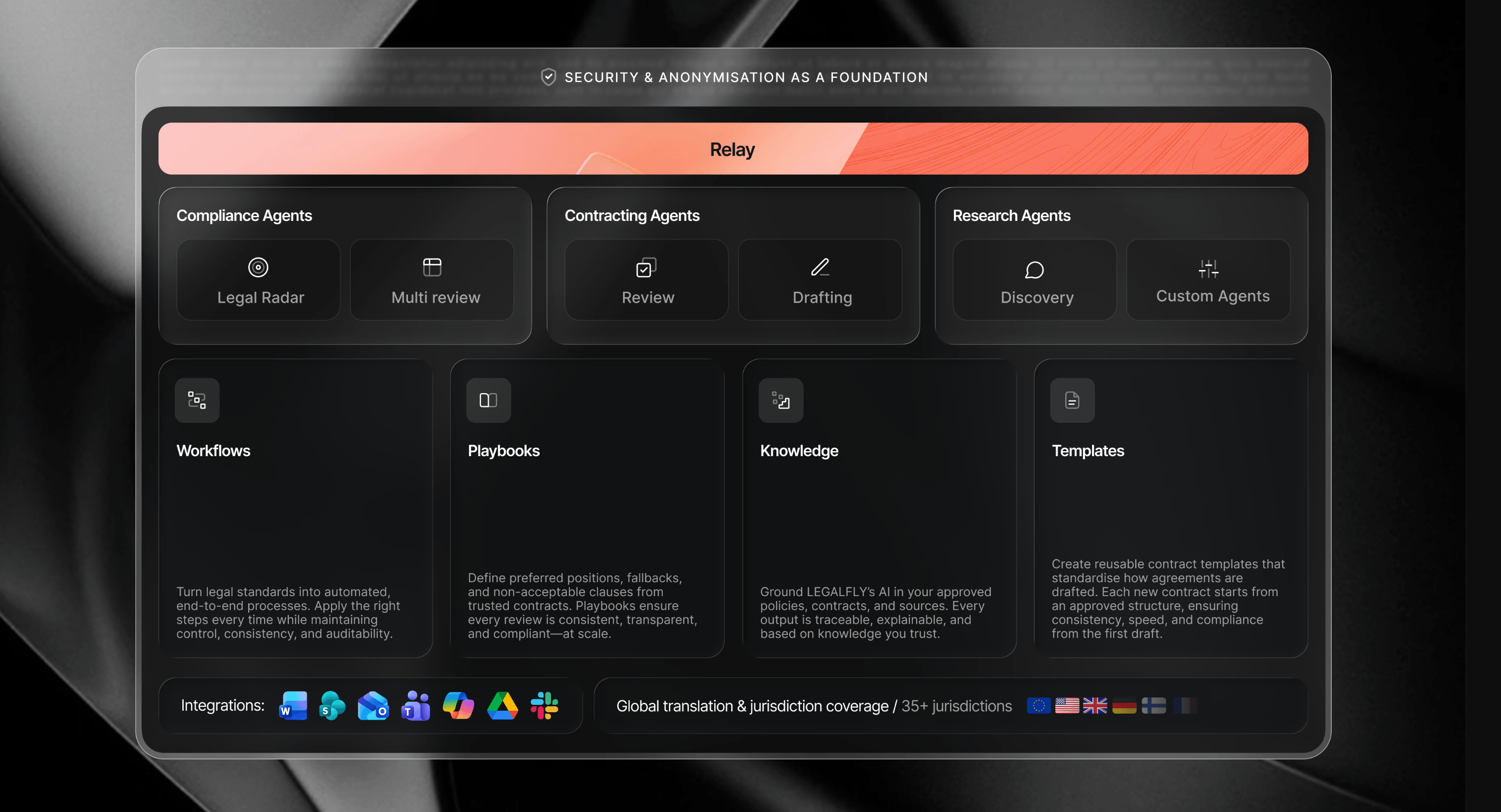
LEGALFLY is a leading legal AI software for enterprise in-house legal, compliance, and procurement teams. It runs inside the tools your team already works in, including Microsoft 365 and Slack. You can review contracts, draft documents, run due diligence, track regulatory change, and carry out legal research directly in Word, Teams, and SharePoint.
The platform combines playbooks, approved templates, internal legal knowledge, 500+ verified external legal sources, and workflow controls in one governed environment. It anonymises documents before any AI model processes them, applies your legal positions during contract review, and drafts from approved Word templates that reflect your negotiating standards.
Legal Radar tracks regulatory developments that may affect your contracts or policies, while Multi-Review allows you to analyse large batches of agreements at once so risk can be assessed across a portfolio rather than one document at a time. The Agent Studio lets legal teams configure automated workflows covering contract intake, approval routing, regulatory impact summaries, and recurring legal queries, with human oversight before the final result is shared across business teams.
LEGALFLY helps your team move faster: less time buried in contracts, more time on the work that actually matters. Book a call to see it in action.
What is Wordsmith AI?
Founded in 2023 and headquartered in Edinburgh, Scotland, Wordsmith AI is an AI platform aimed at in-house legal teams. It focuses primarily on contract review and document analysis, with the ability to answer routine internal legal questions. The platform allows business teams to handle standard requests and low value contract work without always involving legal directly, with optional legal approval setup.
It supports playbook-based contract review, basic drafting and key data extraction, and internal Q&A. Legal research is listed as a capability, though the depth and source coverage is not publicly documented.
Wordsmith Legal AI vs LEGALFLY: a direct legal AI software comparison
Here is how the two platforms compare across the areas that matter most for enterprise in-house legal teams.
Feature | Wordsmith Legal AI | LEGALFLY |
Contract review | Playbook-driven. Clause-level review against your legal positions. | Playbook-driven. Clause-level review. Includes fallback logic and escalation routing. |
Pre-built playbooks | Customized playbooks supported. No public library listed. | 120+ across 100+ document types |
Multi-document review | Report-based analysis and large-scale review across document sets. | Applies playbooks, runs risk analysis, and flags deviations for accuracy across batches. |
Contract drafting | Drafts and redlines in Word. | Drafts directly in Microsoft Word from approved templates in your house style. |
Legal research | 100+ sources, 130 jurisdictions | 500+ official legal sources, 60+ jurisdictions, 80 languages |
End-to-end automation | Needs third party tools such as Zapier | Built-in multi-step workflow configuration from intake to approval with Agent Studio |
Microsoft Word | Review, redline, draft, research, and translate in Word | Review, redline, draft, research, and translate in Word |
Microsoft Teams | Yes | Yes |
SharePoint | Yes | Yes |
Copilot integration | No | Yes |
Outlook integration | No | Yes |
Slack | Yes | Yes |
Data anonymisation | No | Yes, before data reaches any AI model |
Jurisdiction coverage | 130+ | 60+ jurisdictions, 500+ official sources |
Regulatory monitoring | No | Monitors and flags contracts |
On-premise deployment | No | Yes, for regulated industries |
Which platform is better for contract review?
Both platforms support playbook-driven contract review and let legal teams define positions and accepted clauses once, then apply them across contracts. The difference is how far each platform takes it.
Wordsmith Legal AI accelerates the first pass. It flags clauses, explains issues, and suggests redlines based on your playbook. For multi-contract review, it extracts key terms into a structured table. In both cases, legal still needs to work through the output, assess risk, and decide what to accept before the contracts move forward.
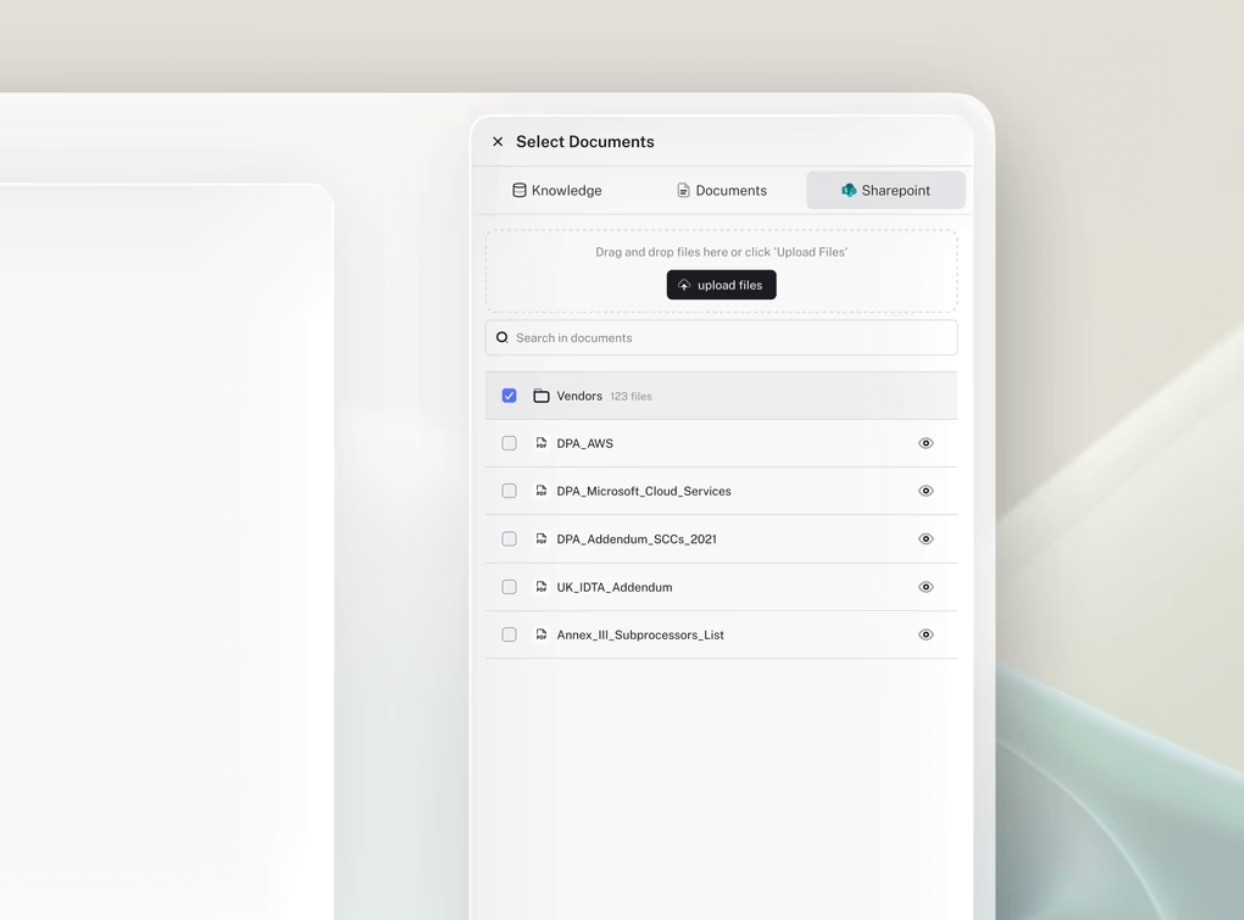
LEGALFLY goes further. It offers a larger library of prebuilt playbooks to help teams get started quickly, as well as a Playbook Builder that can generate a first-pass playbook from your own contract standards. Its playbooks include fallback language, redraft instructions, and escalation logic, so review outputs are closer to an approved legal position rather than a list of issues to interpret. LEGALFLY can also automate the complex workflow around contract review, including intake, routing, and escalation.
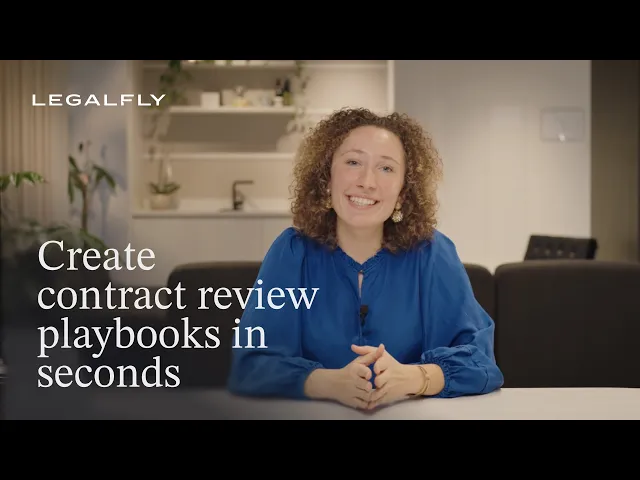
How to build a playbook in LEGALFLY
Creating a playbook in LEGALFLY starts with your own standards. You describe the contract type you want to cover and upload a reference document such as an approved agreement or internal guidance. The Playbook Builder asks a few clarifying questions and generates a structured review framework in seconds, including the clauses to check, the assessments to run, fallback positions, and suggested redraft wording.
From there, you refine the playbook to match how your team actually negotiates. You can add conditional rules, adjust preferred language, and define escalation triggers. Version history keeps a clear record of updates, and once approved the playbook can be published for use across teams. Each contract reviewed against it follows the same logic, which helps maintain consistency as volume increases.
Verdict: Wordsmith Legal AI speeds up first-pass review. LEGALFLY helps teams get started faster, automates more of the review workflow, and reduces more of the legal work that still needs to be done after review.
Which platform protects your data better?
Both hold SOC 2 Type II certification and are GDPR compliant. Neither uses client data to train AI models.
Wordsmith Legal AI operates zero data retention terms with its AI providers, offers UK and US data residency, and is built on Microsoft Azure, which means enterprise security protocols are inherited at the infrastructure level.
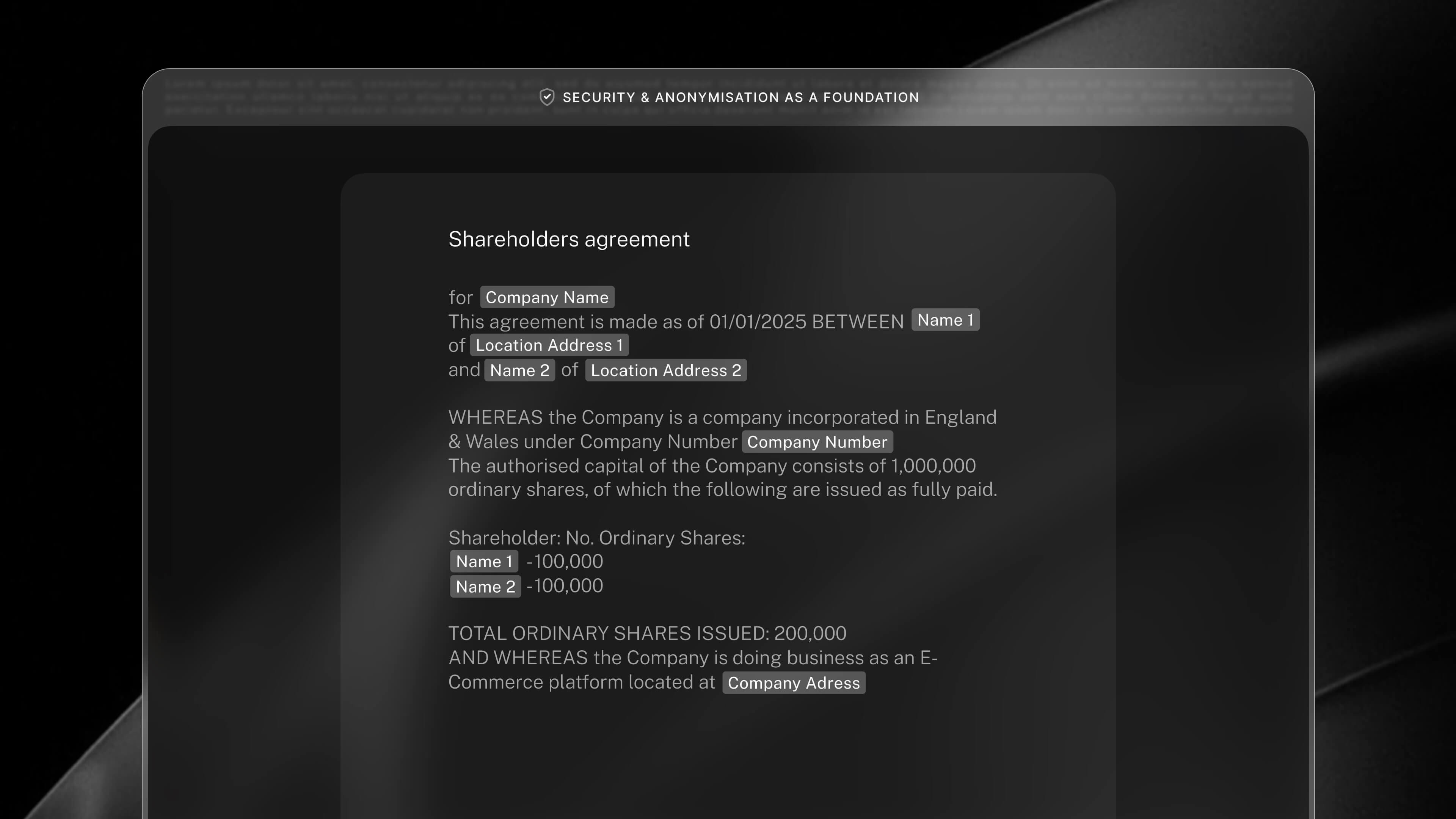
LEGALFLY anonymises every document before it reaches any AI model. Names, commercial terms, and identifiable details are stripped at import, automatically, as part of the architecture, not a configuration option. The data never reaches the AI models in identifiable form. It also holds ISO 27001 certification, and offers on-premises and single-tenant deployment for regulated industries.
Verdict: Wordsmith Legal AI protects your data. LEGALFLY removes identifiable data before it reaches any AI model.
Which platform is better for legal research?
Wordsmith Legal AI combines your internal contracts, policies, and data with hundreds of trusted sources across 130+ jurisdictions.
LEGALFLY draws from 500+ official legal sources across 60+ jurisdictions. It covers legislation, case law, and regulatory guidance sourced directly from government bodies and legal publishers, with translation across 80 languages. Legal Radar adds proactive horizon scanning with alerts from official regulators across 35+ jurisdictions, so you can track upcoming rules and see where contracts or policies may need updating without going looking for it.
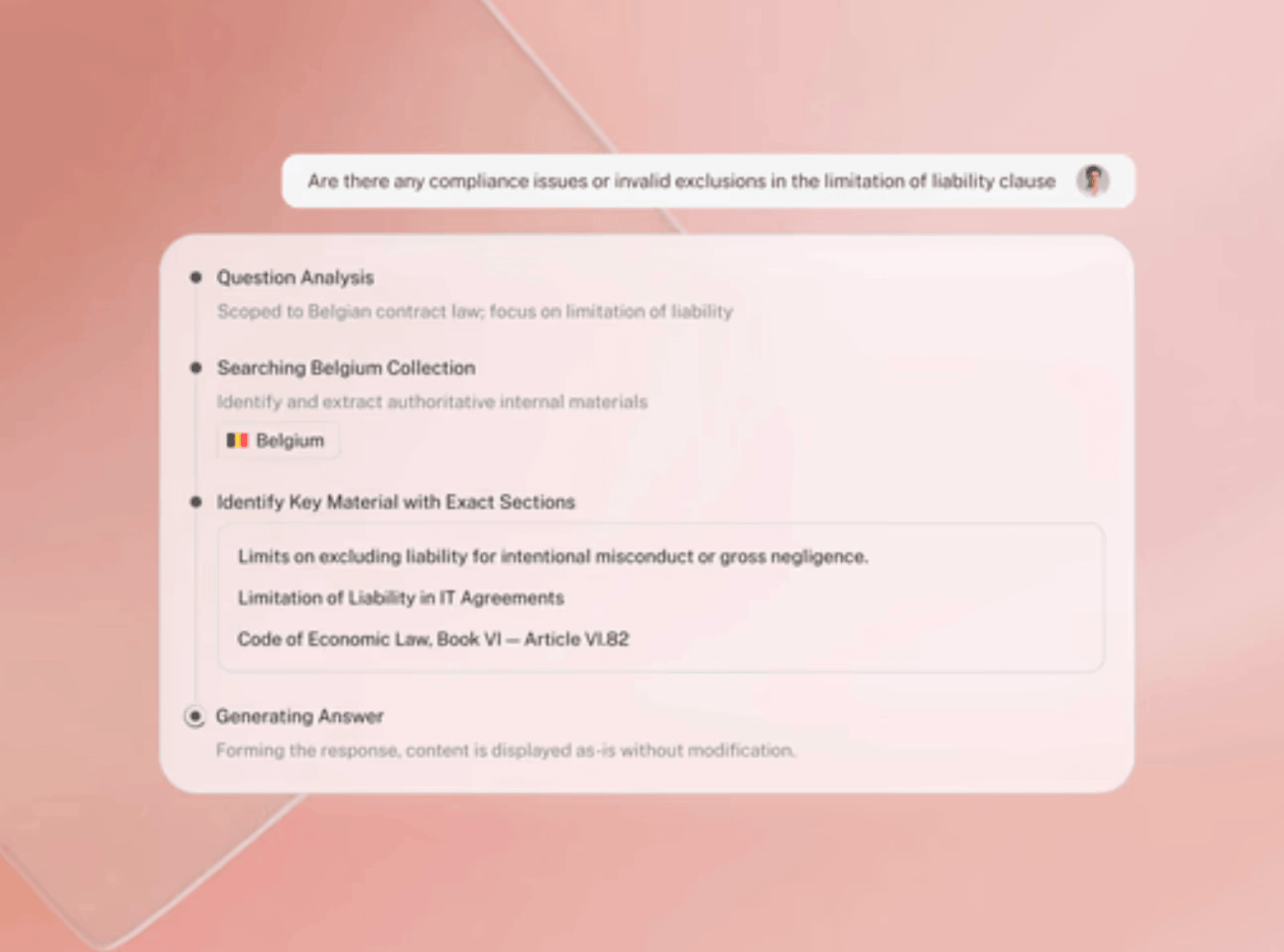
Verdict: LEGALFLY's sources are official and jurisdiction-specific, with proactive regulatory monitoring built in. Wordsmith Legal AI covers more jurisdictions by count but does not publish source detail.
Which AI fits more naturally into your workflows?
Both platforms are integrated with Microsoft 365 and available on the Microsoft Marketplace. Both work in Microsoft Word and SharePoint, support Slack and Teams, and are built to sit inside existing enterprise infrastructure rather than alongside it.
Wordsmith Legal AI also integrates with Notion, Google Docs, and Gmail.
LEGALFLY integrates the full Microsoft 365 stack including Copilot and Outlook. For teams already running on Microsoft infrastructure, legal work can flow from Outlook through Word and Teams to SharePoint without anyone leaving the Microsoft environment.
Verdict: Both platforms sit inside Microsoft 365. LEGALFLY adds Copilot and Outlook. Wordsmith Legal AI adds Notion and Google Docs.
Which platform handles volume better?
Wordsmith Legal AI extracts key terms across document sets and returns structured outputs in Word. It also supports multi-document review by pulling together contracts, terms of service, and statements of work submitted through any channel simultaneously.
As well as extracting key terms across multiple documents, LEGALFLY can apply playbooks and run risk analysis across the batch. Its Multi Review Agent shows which contracts fall outside your standards, how far they deviate, and which need attention first. LEGALFLY can also compare two documents directly to show differences in wording, position, or risk.
Verdict: Wordsmith Legal AI extracts data across document sets. LEGALFLY extracts data, compares documents, and applies playbook-based risk analysis.
How quickly can your team get started?
Wordsmith Legal AI's setup needs upfront investment. Custom playbook configuration takes time before reviews reach consistent quality, and the platform's performance depends on the quality of data inputs.
LEGALFLY's AI playbook builder generates a first-pass playbook from a golden contract you upload, cutting the configuration work before the first review runs. The 120+ pre-built playbooks mean your team can begin reviewing contracts before custom training is complete, and legal engineering support is included. Teams are typically reviewing live contracts within the first week.
Verdict: Both platforms require setup. LEGALFLY's playbook builder and pre-built library reduce time to first productive review.
Which should you choose?
Choose Wordsmith Legal AI if your main goal is to move routine legal work faster. It suits teams that want to reduce queue volume, give business teams faster answers, and speed up first-pass review.
Choose LEGALFLY if you want legal AI to do more than accelerate output. It is the stronger fit for teams that need contracts reviewed against approved legal positions, workflows routed automatically, risk assessed across large contract sets, and regulatory change tracked before it creates issues. Instead of sending more flagged material back to legal, LEGALFLY helps teams produce outputs that are closer to approval, easier to prioritise, and more consistent across jurisdictions, business units, and document types.
See how LEGALFLY works for enterprise in-house teams. Book a demo.
Note: this information was last updated in Q2 2026. For the most current feature information, check directly with each provider.