





The contract review process is one of the most time-intensive parts of in-house legal work. The same clauses get checked manually every time. Standards drift between reviewers. Deals sit in the queue while legal works through a backlog that grows faster than it shrinks.
LEGALFLY is built to change that. It reduces contract review from two hours to 15 minutes, applies your playbooks automatically on every contract, and delivers redlines with plain-language explanations inside Microsoft Word. In-house teams at SAP, Lufthansa, and AXA use it to review contracts 7x faster, without removing lawyers from decisions that matter.
Here is how the contract review process works, and how LEGALFLY accelerates every stage of it.
Note: Cut your contract review time by 87.5%. LEGALFLY delivers expert-level analysis across 60+jurisdictions.Book a demo to see what a faster contract review process looks like for your team.
Understanding the contract review process
The contract review process is a structured, multi-stage process in which legal and business teams analyse agreements to identify risks, ensure compliance, and protect organisational interests. A thorough contract review process is your first line of defence against potential legal and financial issues. It is not a legal formality - — it is a strategic business function that protects your interests and helps your team negotiate from a position of confidence.
An effective contract review combines legal review with business review, evaluating both compliance and commercial viability. Done well, it shortens deal cycles, accelerates revenue recognition, and reduces reliance on external counsel.
Key stages of the contract review process
A well-run contract review process follows a clear sequence of stages, each with defined objectives that guide legal and business teams from initial intake through to final approval. How efficiently each stage runs determines whether contract review accelerates your business or holds it back.
1. Initial contract intake and document gathering
The review process begins with collecting all relevant documents and confirming the contract type, the parties involved, and the business purpose. Standardised intake forms prevent bottlenecks by ensuring all necessary information is collected upfront. Establishing clear ownership at this stage ensures accountability and prevents delays later in the contracting process.
2. Preliminary review and issue spotting
The contract undergoes an initial review to identify missing information, incomplete sections, or obvious red flags. Reviewers highlight key business terms, note any non-standard contract clauses, and triage the request by urgency and complexity. This initial review sets the scope for the detailed analysis that follows.
3. Detailed clause-by-clause analysis
Each clause is examined for its legal, financial, and operational implications. Reviewers compare terms against internal playbooks, corporate policies, and compliance standards to identify potential risks and deviations. AI-powered contract review software accelerates this stage by identifying deviations, ensuring consistency across reviewers, and reducing manual effort significantly. AI-assisted contract review can reduce first-pass analysis from an average of 92 minutes to as little as 26 seconds.
Learn more about how and where to use AI for legal documents
4. Risk assessment and mitigation planning
After identifying potential risks, teams evaluate the likelihood and impact of each one. Where necessary, they propose alternative language or contract negotiation strategies to mitigate exposure. Risk allocation across parties is documented clearly. All findings and recommendations should be recorded to maintain a defensible record of how decisions were made and risks addressed.
5. Internal collaboration and stakeholder feedback
Contract review is rarely a solo task. The review and approval process involves legal and business teams sharing drafts with procurement, finance, compliance, and sales stakeholders for input and alignment. Version control across multiple rounds prevents confusion and ensures the final contract reflects agreed positions. Collaborative tools that work inside familiar platforms like Microsoft Word or Teams keep everyone aligned without adding friction.
6. Final approval and sign-off
The final stage involves obtaining formal approval from authorised signatories. Reviewers confirm that all changes are accurately incorporated before execution. Once signed, the final version is archived and relevant data is updated in the organisation's contract management system to maintain an accurate, accessible record.
How LEGALFLY speeds up the contract review process: step by step
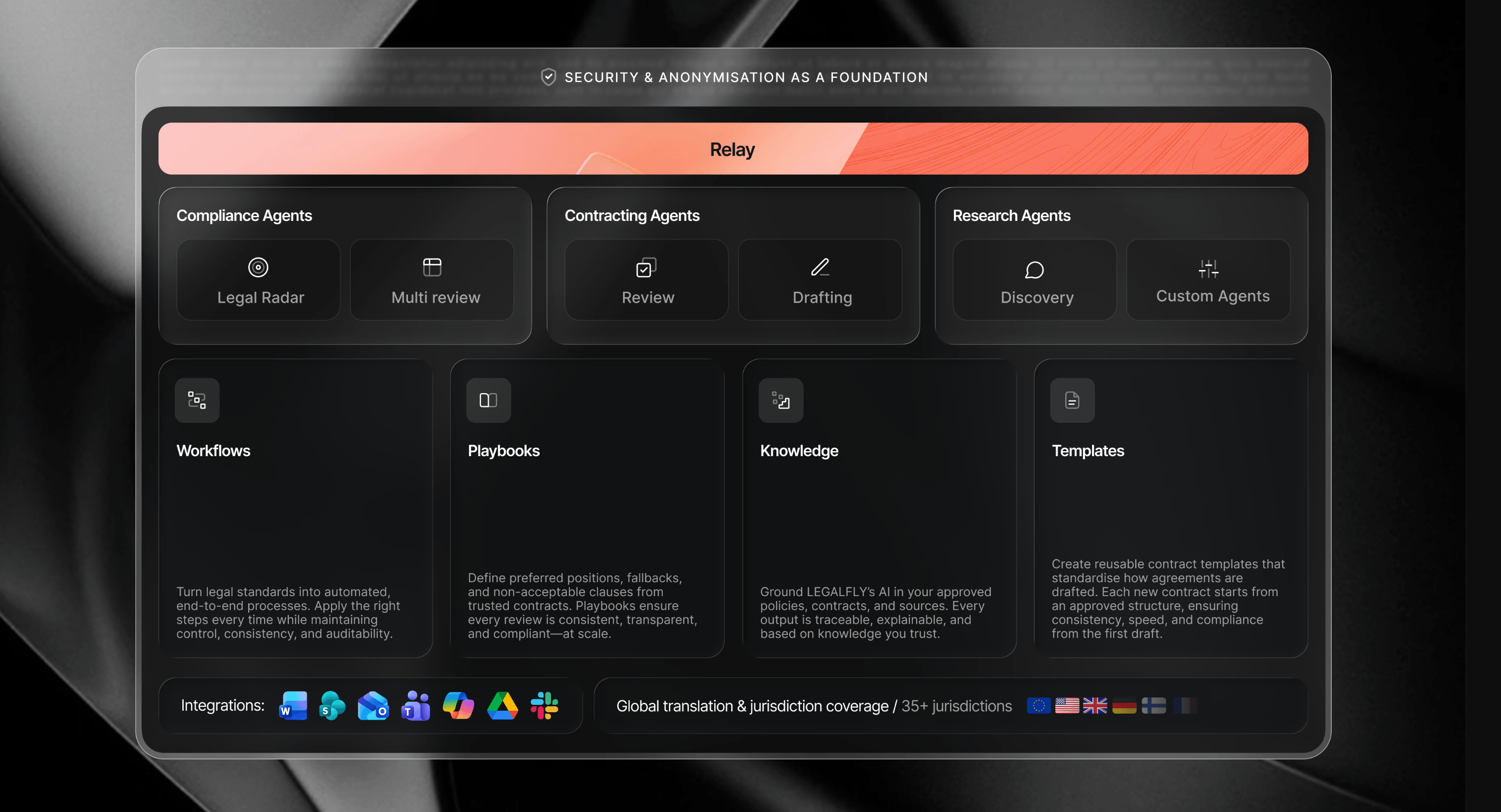
Here is how in-house legal teams use LEGALFLY to move from receiving a contract to a reviewed, redlined, audit-ready output.
Step 1: import the contract
Pull the document directly from SharePoint or Google Drive, open it in Microsoft Word, or trigger a review directly from Teams, Outlook or Slack. Sensitive data and confidential information is anonymised automatically before any AI processing begins, no manual redaction required. The platform detects the contract type, jurisdiction, language, and party roles so every review starts with the right context.
Most teams using LEGALFLY cut their contract review time in half within a few weeks of onboarding. Book a short demo to see how it works for your business.
Step 2: select your playbook
Choose from 120+ pre-built playbooks or apply one built from your own approved contracts. Your fallback positions, risk thresholds, and escalation rules are applied from the start. This is the stage where your organisation's standards get encoded into the review process, not checked for at the end.
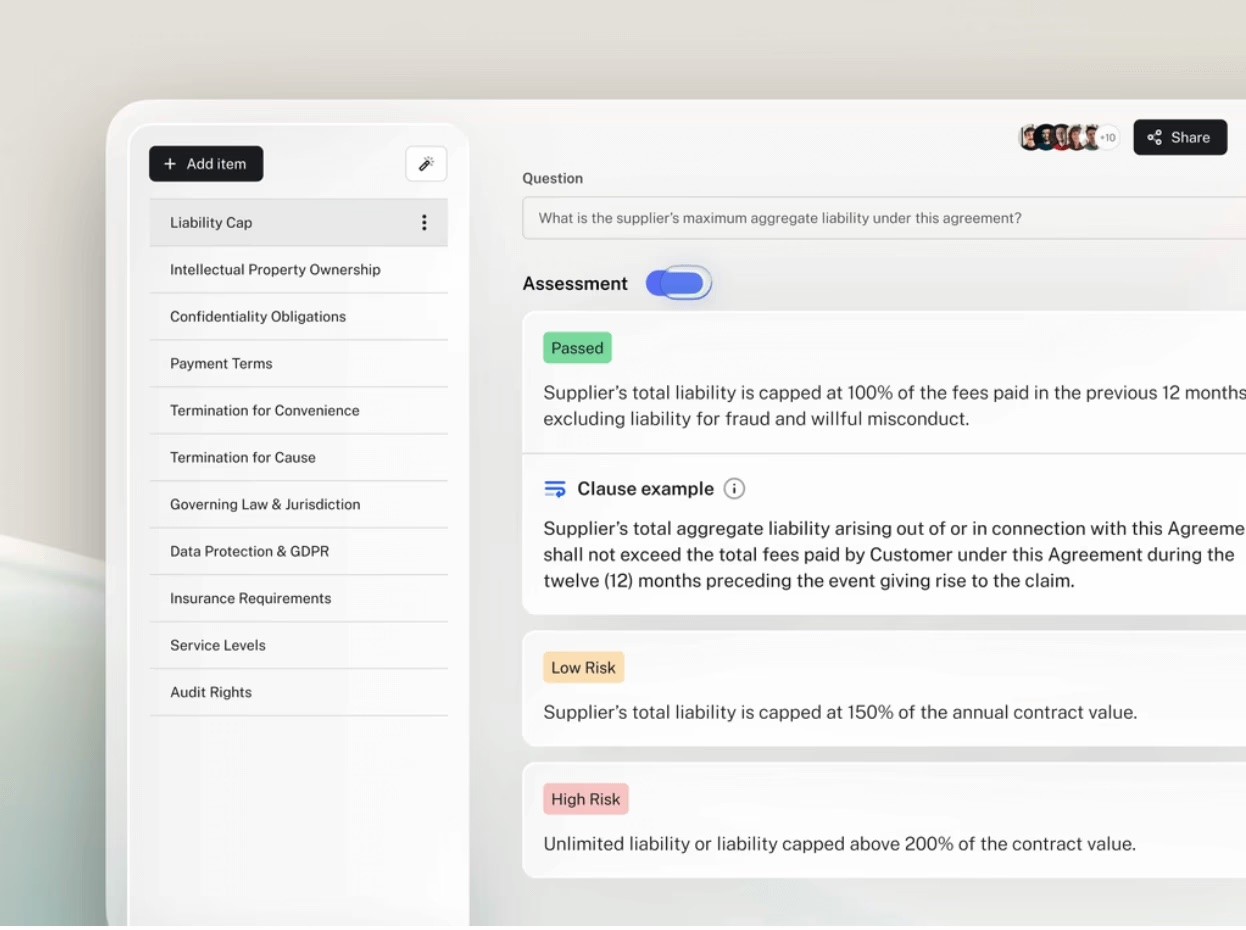
Step 3: run the AI review
LEGALFLY analyses the contract clause by clause against your playbook. It identifies potential risks, flags deviations from your approved positions, highlights missing provisions, and proposes redrafts in your approved language. Every output is mapped to your standards, not generic benchmarks.
Step 4: review tracked changes with rationale
Every suggested edit appears as a tracked change in Word with a plain-language explanation tied to a specific playbook rule. Your lawyers accept, reject, or adjust each suggestion. Human review remains central. Final approval stays with you.
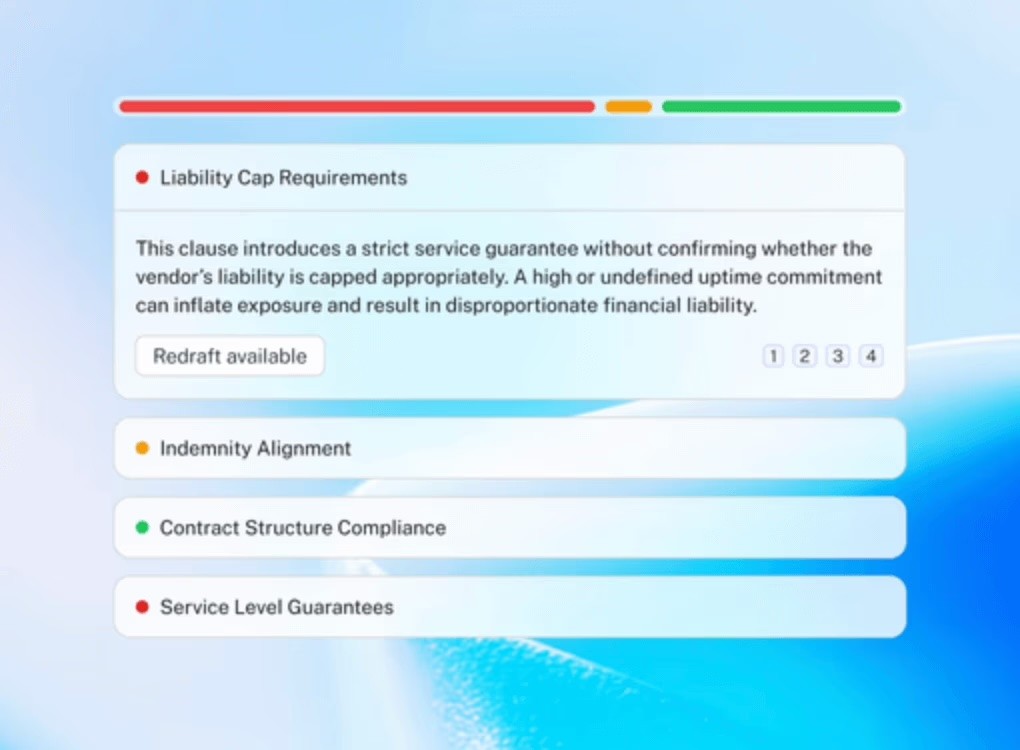
Step 5: route for approval or let teams self-serve
Using LEGALFLY’s Agent Studio you can trigger contracts meeting your risk thresholds to progress automatically through your approval workflow. Those exceeding defined risk levels are escalated to the right reviewer. For routine agreements, non-legal teams in procurement and sales can self-serve within guardrails legal sets once, reducing the volume of requests hitting the legal department.
Step 6: export with a full audit trail
You have the option to export a clean redline for negotiation, a finalised version for execution or an excel report of the risks and issues raised Every session is logged, what was reviewed, what was flagged, and on what basis. The audit trail meets the explainability and regulatory compliance requirements of regulated industries.
Building an effective contract review checklist
A contract review checklist ensures that all critical aspects of a contract are examined systematically before signing. A consistent contract review checklist helps verify that critical contract terms have been addressed and reduces the risk of issues being missed under time pressure.
Essential items to include
Every contract review checklist should verify the parties involved, contract scope, and term. Reviewers must confirm payment terms and payment schedules, check confidentiality and data protection clauses, review termination rights, renewal terms, and amendment provisions, and confirm dispute resolution mechanisms and applicable laws.
For more information on top AI contract review tools: see here.
Legal, financial, and operational considerations
Each agreement should be tested against practical questions. Are the right parties authorised to sign? Do payment terms align with business expectations? Are liability and indemnity clauses fair? Does data handling meet privacy obligations such as GDPR or CCPA? Are deliverables, notice periods, and review timelines clear and achievable?
Common red flags and deal-breakers
Reviewers should pay close attention to ambiguous terms, vague terms that could lead to disputes, one-sided termination rights, and disproportionate penalties. Missing provisions around dispute resolution or non-compliance with regulatory requirements are also major warning signs. Identifying these issues early protects the organisation from hidden risks and third party claims.
Tailoring checklists for different contract types
A contract review checklist ensures different document types get the scrutiny they require. NDAs require focus on confidentiality scope and duration. Procurement contracts need detailed attention to warranties, delivery terms, and service levels. Sales contracts should emphasise payment schedules, delivery timelines, and acceptance criteria. Customising by contract type makes the review process faster and more accurate.
Common pitfalls and how to avoid them
Even experienced legal teams fall into patterns that slow the contract review process or introduce unnecessary risk.
Ambiguous contract language
Clauses that appear clear until tested in practice are one of the most frequent problems. AI powered clause flagging helps identify ambiguous terms and vague terms early and prevents confusion later.
Missed deadlines and renewal terms
When contracts are scattered across email threads or spreadsheets, it becomes easy to lose track of key milestones. Automated alerts and centralised tracking keep obligations visible and ensure renewal terms are acted on in time.
Limited stakeholder involvement
Contracts affect finance, operations, and compliance teams, yet review processes often remain confined to legal. Collaborative tools that allow simultaneous commenting inside Microsoft Word or Teams keep legal and business teams aligned without adding steps.
Compliance oversights
As regulations evolve, missing a required clause or retention rule can lead to fines or reputational harm. Automating compliance checks against current playbooks ensures every agreement meets the latest regulatory requirements.
Poor version control
Multiple drafts, conflicting edits, and unclear approvals lead to confusion. Maintaining a single source of truth with automatic versioning and audit trails keeps the contracting process transparent and defensible.

When to involve in-house counsel or external experts
AI powered contract review software handles the routine layer effectively. Some situations still require legal expertise and specialist input:
High-value or high-risk contracts: Strategic partnerships, major transactions, or agreements with significant financial exposure
Cross-border or complex arrangements: Contracts spanning multiple jurisdictions, involving translation, or raising regulatory differences
Regulatory or compliance-heavy agreements: Matters subject to industry-specific laws such as finance, healthcare, or government contracts
Dispute-prone or sensitive negotiations: Situations with a history of conflict, unclear risk allocation, or contentious terms
Use internal teams and AI powered contract review tools for routine contracts, and escalate to experts when stakes or uncertainty are high.
Best practices for streamlining the contract review process
An effective contract review process requires a combination of technology, clear processes, and ongoing training.
Work inside familiar tools. Integrating AI powered contract review software directly into Microsoft Word allows legal and business teams to collaborate in real time without a platform switch. LEGALFLY uses AI to flag risky contract clauses, check regulatory compliance, and suggest alternative language so reviews move faster and stay consistent.
Standardise with contract templates. A central library of approved contract templates and clauses reduces drafting time and ensures every agreement aligns with the company's risk and compliance standards.
Automate approval workflows. Approval workflows based on contract type, value, or risk level keep the review process efficient while maintaining human oversight at the right points. See examples in The 10 Best Legal Workflow Automation Tools.
Invest in training. Teams that understand contract structure and key obligations can manage more reviews internally and give non-legal staff the confidence to handle routine contracts safely.
Next steps: improving your contract review process
Continuous improvement keeps a contract review process efficient, compliant, and aligned with business goals.
Audit your current process: Map each stage of the review process, identify bottlenecks, and collect feedback from users to understand where delays occur
Set clear performance indicators: Track metrics such as review timelines, error rates, and stakeholder satisfaction
Keep contract templates current: Update templates, playbooks, and checklists regularly to reflect evolving regulations and business needs
Invest in training and collaboration: Equip legal and business teams with ongoing training on both contract literacy and AI powered tools
Benchmark and adapt: Compare your review process against peer organisations to identify new opportunities for workflow automation and compliance improvements
Conclusion
A well-structured contract review process is not just a legal requirement, it is a competitive advantage. Effective contract review shortens deal cycles, ensures compliance, reduces reliance on external counsel, and gives legal teams the capacity to focus on work that requires their judgment.
LEGALFLY helps in-house legal teams achieve a comprehensive contract review process that is faster, more consistent, and fully auditable, inside the tools they already use.
Book a demo to see how your team could review contracts in minutes, not hours.