





Robin AI is a well-known legal AI startup backed by high-profile investors, including the founder of Revolut and global funds such as Temasek, SoftBank, and PayPal Ventures.
In late 2025, the company ran into financial difficulty after a major funding round fell through and made cuts to headcount. HMRC then issued a winding-up petition and the business entered a distressed sale process. Even if a buyer is found, there’s uncertainty over product continuity, engineering roadmap, and security investment.
If you use Robin AI, or were considering it, this may be the moment to review your options. Most teams rely on Robin AI to accelerate contract review, compare drafts, surface risk language, and support clause-level edits. The tools below can support the same work.
Note: If Robin AI's situation has put your contract review workflow at risk, now is the right moment to move to a platform built for long-term enterprise use. LEGALFLY covers everything Robin AI does for in-house teams, and goes further on anonymisation, playbook depth, and Microsoft 365 integration. Book a demo and we'll show you how quickly your team can get up and running.
The top Robin AI alternatives
Robin AI is a contract review and drafting assistant. It can analyse commercial agreements, highlight unusual clauses, and recommend redlines based on market norms. It also supports early drafting, clause suggestions, and contract comparisons.
Most teams use Robin AI to:
Run first-pass contract reviews
Check third-party paper against internal standards
Find outliers, risky language, or missing provisions
Generate suggested edits and clause alternatives
Produce summaries for internal stakeholders
That’s all still possible, but with Robin AI now in a distressed sales process, the immediate question is continuity. If you’re assessing your legal tech options, here are the top alternatives.
Read more: How to assess legal AI platforms in 10 minutes
—
LEGALFLY
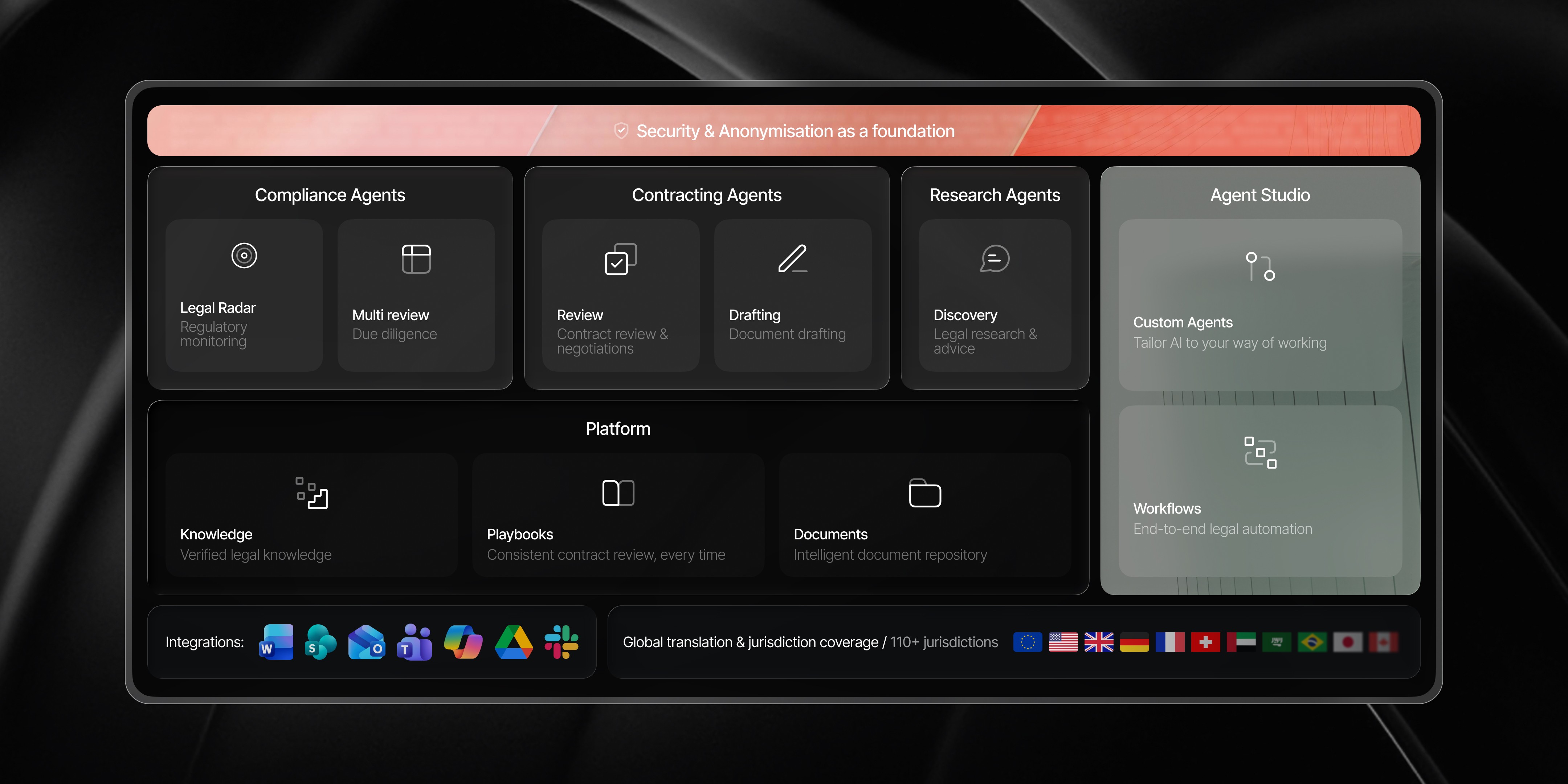
If you are moving away from Robin AI, LEGALFLY is the most complete like-for-like alternative for in-house legal teams, and goes further in several areas that matter for enterprise use.
LEGALFLY covers everything Robin AI is used for by in-house teams, with a stronger focus on security, and more capabilities. It brings contract review, clause analysis, drafting, due diligence, legal research, and regulatory monitoring together in a Microsoft-native environment.
To find out how LEGALFLY could work for you, schedule a call with one of our experts.
Repetitive legal work is automated, while counsel remains in full control of standards, oversight and final sign-off. LEGALFLY anonymises all sensitive information before any processing begins, making it safe to use in privacy-sensitive or regulated settings.
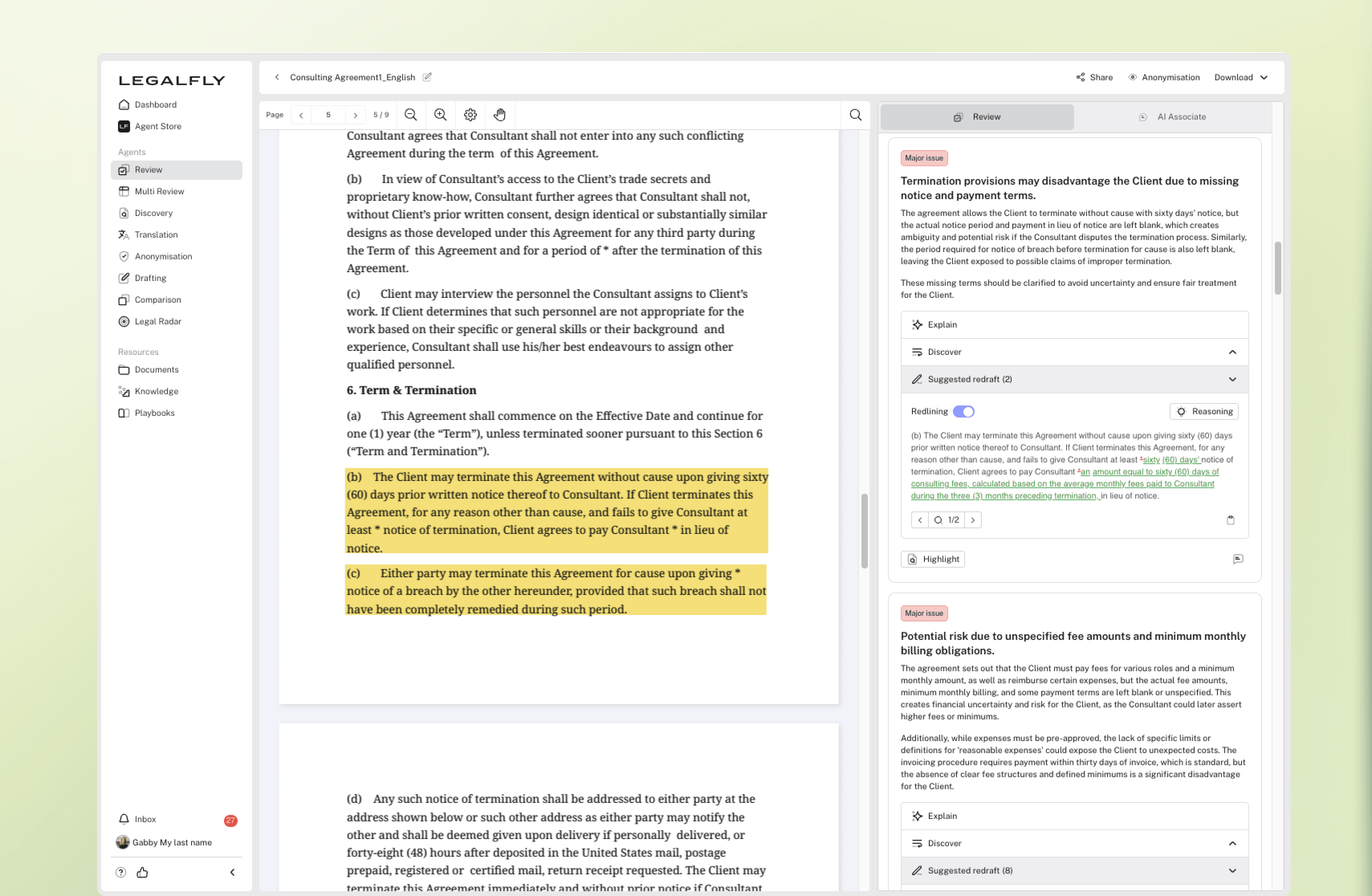
Why LEGALFLY is the strongest Robin AI alternative for in-house legal teams
Robin AI covered contract review and drafting. LEGALFLY covers that and the full scope of work that surrounds it.
Where Robin AI functioned as a single-task tool, LEGALFLY operates across the entire contract lifecycle, and beyond it. Contract review, drafting, due diligence, legal research, regulatory monitoring, and end-to-end workflow automation all sit in one platform. Legal teams at SAP, Lufthansa, AXA, Bosch, the European Commission, and KPMG use it to manage legal work at scale, across multiple jurisdictions, without compromising on consistency or control.
Playbook depth sets it apart at the review stage. 120+ pre-built playbooks across 100+ document types mean your standards are applied consistently, every time, with reasoning attached. Reviews are not just fast, they are traceable and aligned to your own positions.
And where most legal AI tools stop at the task, Agent Studio automates the entire workflow around it, from intake to approval, with human sign-off built in at the points that matter.
Who is LEGALFLY for?
In-house legal teams working across multiple jurisdictions
Anyone involved in contracting and compliance processes, from procurement, to compliance managers to legal operations
Enterprises that need full control of data location and processing
Regulated or confidentiality-sensitive sectors
Teams that want automation with clear reasoning, governance and auditability
What can you do with LEGALFLY?
Review contracts directly in Microsoft Word, with redlines aligned to your playbooks and internal standards. The platform detects the contract type, jurisdiction, language, and party roles automatically, so every review starts with the right context. Contract review time reduces from 2 hours to 15 minutes, a 7x improvement. In fact, we are ranked among the top ai contract review tools.
Spot missing clauses, unusual language, and compliance issues, with short explanations that show why they matter.
Run analysis across hundreds of contracts at once using the Multi-Review agent, and extract key data points such as renewal dates, fees, obligations, and liability terms
Let non-legal teams handle routine reviews themselves, guided by legal’s playbooks and guardrails
Turn existing contracts into templates that autofill key fields and adapt automatically to the governing law
Track legal and regulatory updates and see which clauses or contracts need updating as rules change
Ask legal questions and get answers from trusted sources and your own internal policies
Find out more: schedule your personalised LEGALFLY demo
How to run an end-to-end workflow in LEGALFLY with Agent Studio
Most legal AI tools automate one task at a time. Agent Studio automates the entire workflow and the tasks inside it, built around your organisation's logic, playbooks, and approval flows.
Here is how a typical contract review workflow runs from intake to approval.
Step 1: Trigger the workflow
A legal request comes in via email, Slack, Microsoft Teams, or manually through the platform. Wherever your business teams work, that is where the workflow starts. No separate intake form or re-entry of information required.
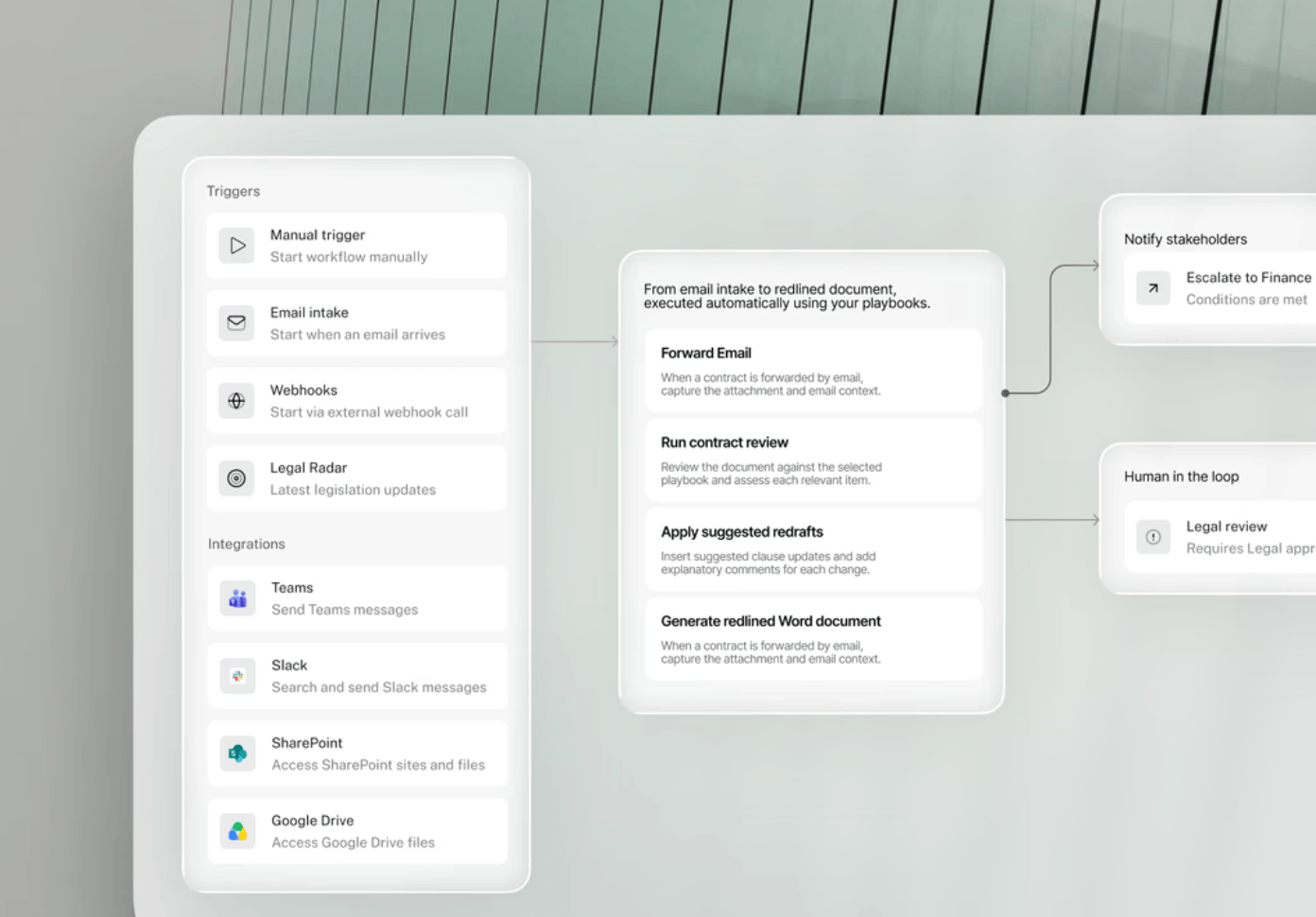
Step 2: Route to the right agent
Conditional logic analyses the incoming request and routes it to the appropriate agent based on contract type, department, or risk level. A standard NDA follows a different path to a complex vendor agreement. The routing happens automatically, based on rules you define.
Step 3: LEGALFLY agents execute the work
The assigned agent, whether contract review, due diligence, legal research, or a custom agent built for your organisation, runs the task. Sensitive data and confidential information is anonymised automatically before any AI processing begins. The platform applies your playbooks, flags deviations, and produces suggested redlines with clear reasoning.
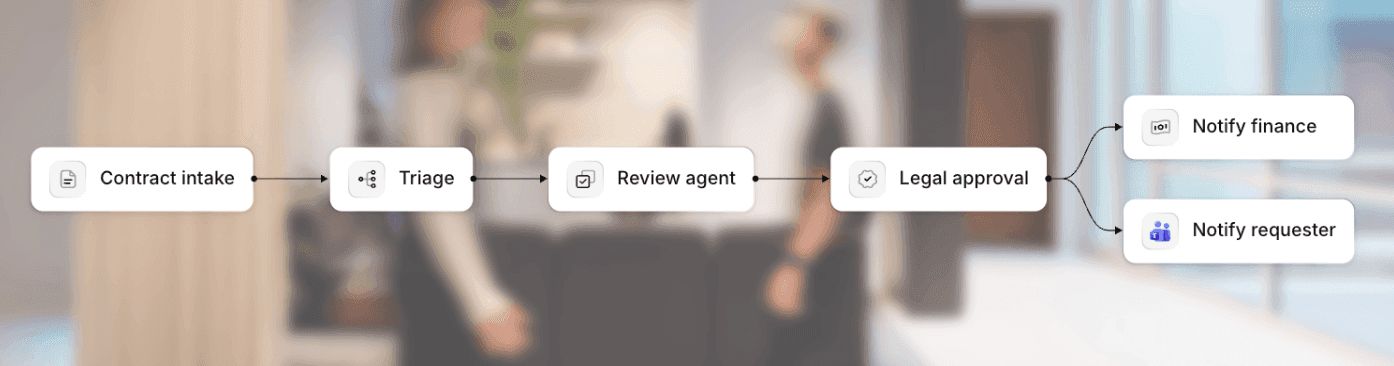
Step 4: Human review and approval
The output is surfaced to the right person in legal for review and sign-off. You set the approval steps. Legal stays in control without having to manage every step of the process manually.
Step 5: Stakeholders notified automatically
When the review is complete or needs attention, the right people are notified automatically, whether that is legal, sales, procurement, or anyone else involved in the contracting process. Nothing falls through the cracks.
Step 6: Full audit trail
Every action is logged. Reasoning is transparent, with source links attached. Role-based access controls who can see and action each step. You have a complete record of what was reviewed, what was flagged, and who approved it.
Agent Studio is built for enterprise legal complexity. If you want to see it in action, book a demo.
—
Harvey
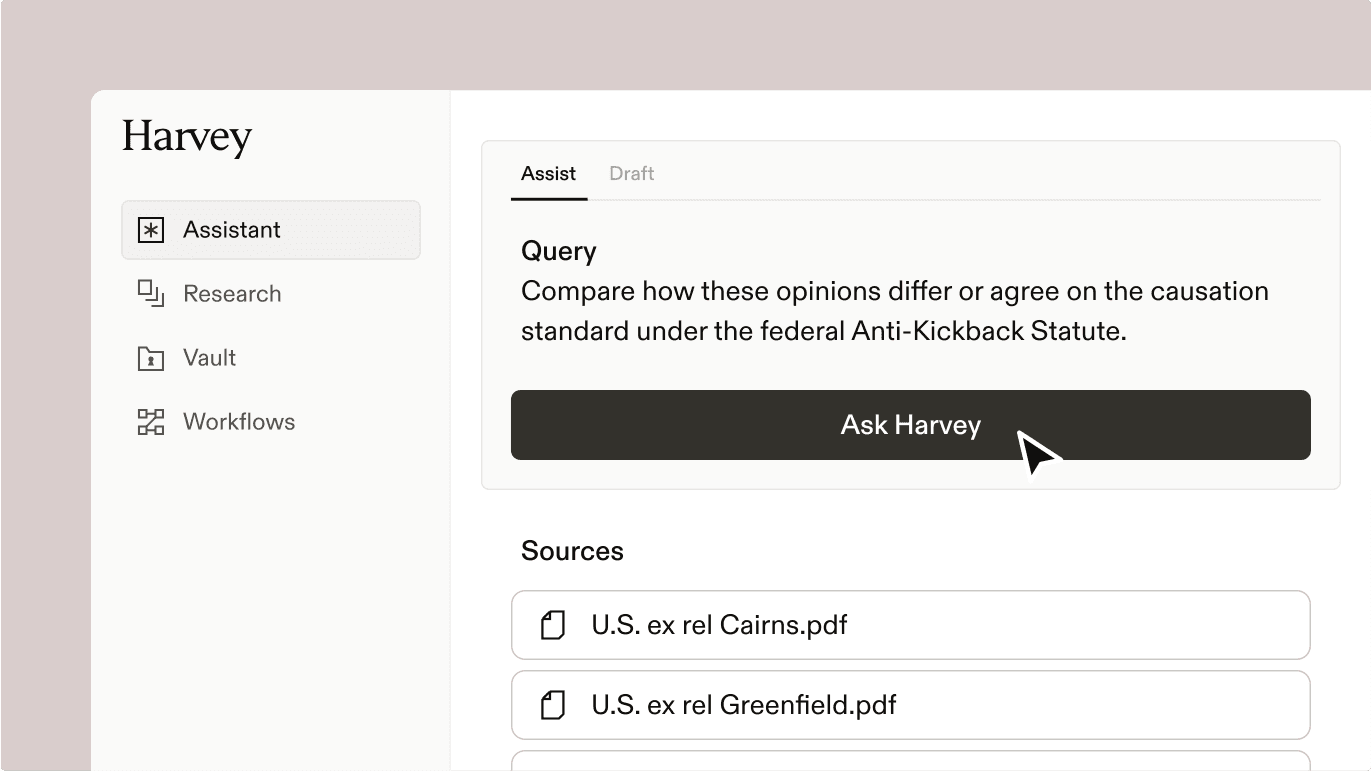
Harvey is a general legal AI assistant. It supports research, drafting, and interpretation of legal materials, making it useful for advisory work that spans beyond contracts. However, it doesn’t provide the same pre-processing anonymisation other options like LEGALFLY do.
Who is it for?
Law firms
In-house legal functions with varied advisory responsibilities
Teams that primarily need assistance with drafting, analysis, summaries, or internal interpretation
Fast-moving environments that want quick research support
What can you do with it?
Draft documents, memos, and contracts
Summarise legal texts and long documents
Early reasoning and interpretation
Regulatory reading and internal policy guidance
Read more: Top Harvey AI alternatives for legal teams
—
Juro
Juro is primarily a contract lifecycle management (CLM) platform. Its focus is on making contracting smoother and more organised, particularly in growing companies that handle recurring routine agreements. It brings drafting, negotiation and storage into one workspace. However, it isn’t built to perform detailed legal review, enforce playbooks, or provide clause-level reasoning. If your main challenge is managing volume and keeping contracting efficient, Juro could work for you.
Who is it for?
Mid-sized or scaling in-house legal teams
Contract-heavy functions in procurement, sales and vendor management
Businesses that want a central location for drafting, approvals and signatures
Teams looking for more structure around basic contract processes
What can you do with it?
Draft contracts from templates and standardise wording
Manage negotiation, approvals, signature and storage in one workflow
Keep a version history and audit trail
Collaborate with business teams during reviews
Track upcoming renewals and contract status
—
Kira (by Litera)
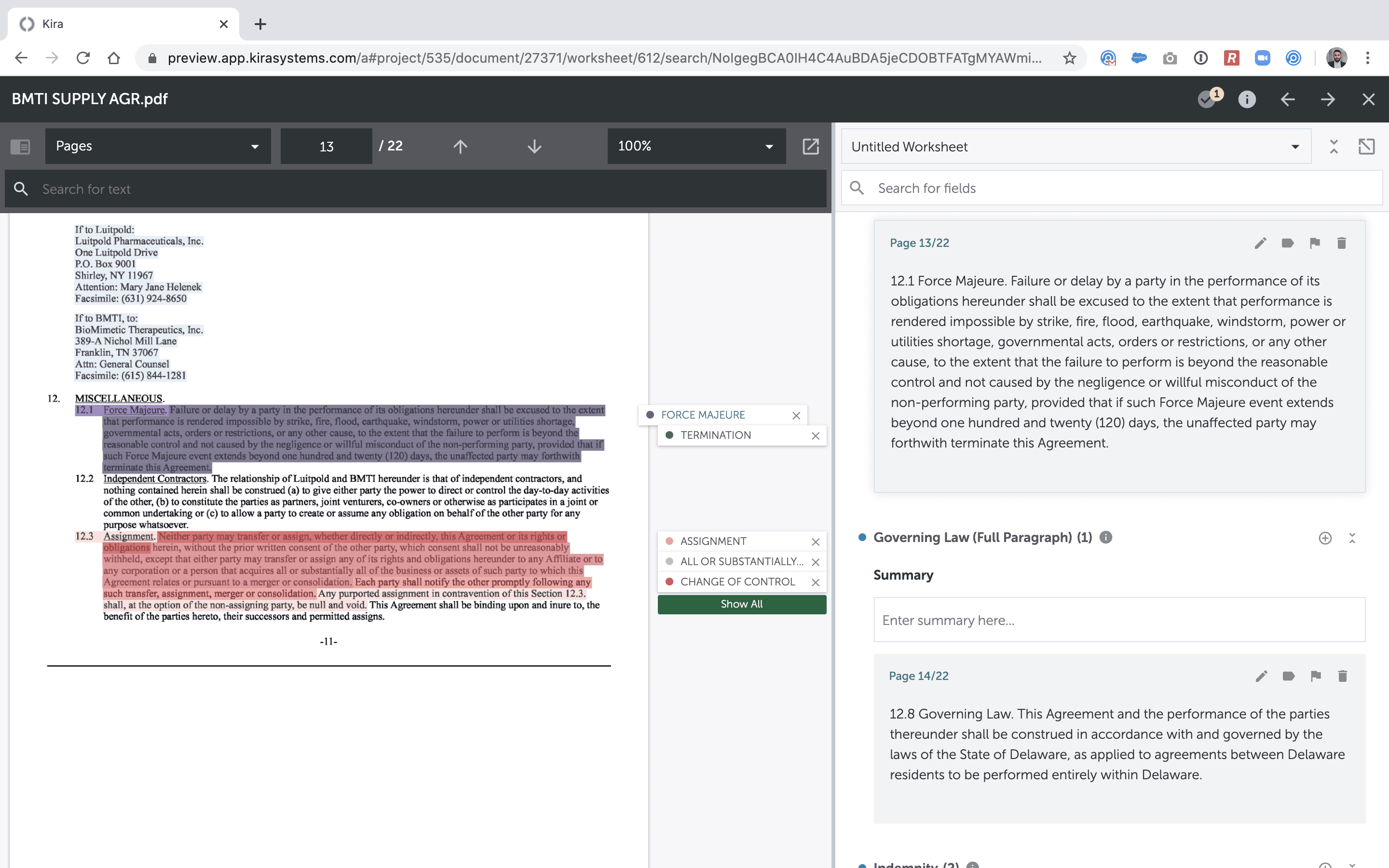
Kira is best known for high-volume contract analysis, clause extraction, and data classification. It is used for due diligence, vendor assessments, and audit exercises where teams need to pull structured information from large sets of agreements quickly. Its focus is on accuracy at scale, helping legal and compliance teams find key terms, track exceptions, and standardise reporting across many documents.
Who is it for?
Law firms
Teams managing high volumes of agreements
M&A and compliance functions
Groups that need data points extracted from large portfolios
What can you do with it?
Extract clauses and key terms
Identify deviations across many contracts
Due-diligence and vendor audits
Find risks at scale
—
Spellbook
Spellbook is a drafting assistant inside Microsoft Word. It focuses on clause suggestions and basic review support. It’s not designed for enterprise-grade review controls, jurisdiction aware checks, anonymisation, playbooks, multi-document workflow, research integration, or regulatory monitoring.
Compare LEGALFLY vs Spellbook legal AI.
Who is it for?
Law firms
Small teams drafting routine agreements
Functions with low volume standard NDAs or vendor contracts
Users who want suggestions in Word without wider system change
What can you do with it?
Basic drafting with clause suggestions
Find risks or missing terms
Light redlining in Word
Compare other Spellbook options here.
Which platform is right for you?
Robin AI’s situation is a reminder of how important stability, security and trust are when adopting AI into legal work. Contract handling, legal reasoning and regulatory interpretation aren’t areas where you can tolerate uncertainty over continuity, product quality or data handling.
All five alternatives can help you with review and drafting. The key differences are how they handle security, playbooks, internal policy alignment, audit trails, and real cross-border legal work. LEGALFLY is the closest like-for-like option in scope, while going further on anonymisation, Microsoft-native review, regulatory mapping and explainability.
When evaluating options, you might want to focus on:
Where the data lives
How documents are anonymised
How suggestions are justified
How well the platform mirrors your own standards
How safely business teams can self serve
If you want to keep the same contract workflows you had with Robin but raise the bar on security and capacity, speak to us at LEGALFLY.