





Artificial intelligence (AI) is the engine driving this shift. For procurement leaders, the question is no longer “if” but “how fast” to adopt AI-powered solutions.
This guide covers how AI in procurement is reshaping workflows, where it delivers real value, and how platforms like LEGALFLY are helping procurement and legal teams work together without the bottlenecks.
Note: If your procurement team is still spending hours on contract review, chasing legal sign-off, or manually tracking vendor obligations across a growing supplier portfolio — then LEGALFLY can give that time back. Book a demo and see how procurement teams at regulated enterprises are cutting contract review from two hours to fifteen minutes.
What is the state of Generative AI use in Procurement in 2026?
Generative AI has swept through the procurement function with remarkable speed, and the industry is now moving from early experimentation into a more focused, results-driven phase.
As the AI landscape continues to evolve, procurement teams are increasingly turning to specialist AI tools, such as LEGALFLY, designed specifically for procurement tasks, moving beyond generic solutions to technology that truly understands the nuances of supplier management, contract management, strategic sourcing, and supply chain management.
According to Gartner, GenAI for procurement has officially entered the "trough of disillusionment." It is past the initial hype, but many organisations are yet to achieve scale and fully demonstrate ROI. Trends towards adoption, however, persist. 49% of procurement teams piloted generative AI in 2024, and 80% of CPOs plan to deploy it within three years.
Core use cases: how AI is transforming procurement workflows
According to ArtofProcuremen's recent poll of Chief Procurement Officers, top AI use cases in procurement are converging around 3 areas: spend analytics and dashboarding (53%), RFP/RFQ generation (42%), and contract summarisation and key terms extraction (41%)
Contract summarisation and key terms extraction
Procurement teams deal with an enormous volume of contracts, from supplier agreements to service-level commitments. Each packed with dense legal languagethat demands significant time and expertise to interpret. AI systems cut through that complexity using natural language processing to automatically read and distil contracts down to their most critical elements: payment terms, renewal clauses, liability caps, termination rights, and compliance obligations. Rather than spending hours on manual tasks that are prone to human error, procurement professionals get an instant, structured overview of what they've signed up for, reducing both risk and administrative burden across procurement operations.
Unlike general-purpose AI technology, the best procurement AI platforms are trained on legal knowledge and can do more than extract basic facts. They can analyse risk, detect patterns across large contract portfolios, and draw on historical data to benchmark terms, delivering the kind of deeper insights that support smarter procurement strategies and stronger supplier relationships.
How this works in LEGALFLY:
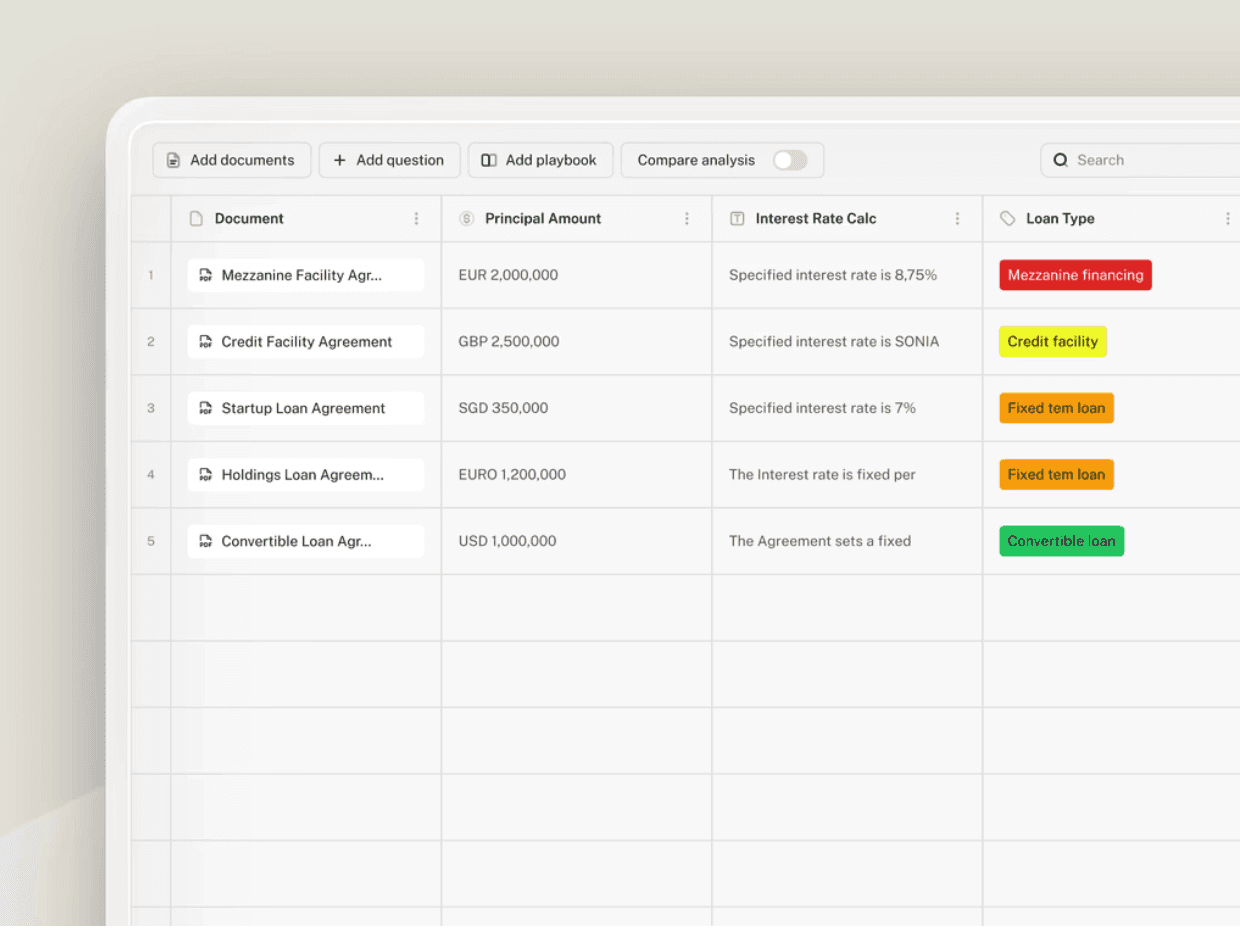
LEGALFLY’s multi review agent allows you to extract and analyse information from up to 100 documents at once.
It is directly connected with SharePoint and Google Drive, so that you can select the documents you want to review without uploading them to a new system.
Simply paste in a list of questions or create a set playbook with a list of checks you want to ask.
LEGALFLY helps your team move faster: less time buried in contracts, more time on the work that actually matters. Book a call to see it in action.
Unlike many tools, LEGALFLY is trained on legal knowledge and nuance, and so can analyse risk in contracts and compare them against each other for favourable terms, as well as simply extracting basic facts. SEE IT IN ACTION.
RFP/RFQ generation
Drafting a Request for Proposal or Request for Quotation is a time-intensive process that typically involves pulling together requirements from multiple stakeholders, ensuring legal and compliance standards are met, and tailoring language to specific supplier markets. These are exactly the kinds of repetitive tasks that slow procurement teams down and pull focus away from higher-value strategic activities. Procurement AI accelerates this process by generating first-draft RFP/RFQ documents based on a team's inputs, existing templates, and market trends, freeing procurement teams to concentrate on supplier selection, negotiation, and strategic sourcing rather than document production.
How this works in LEGALFLY:
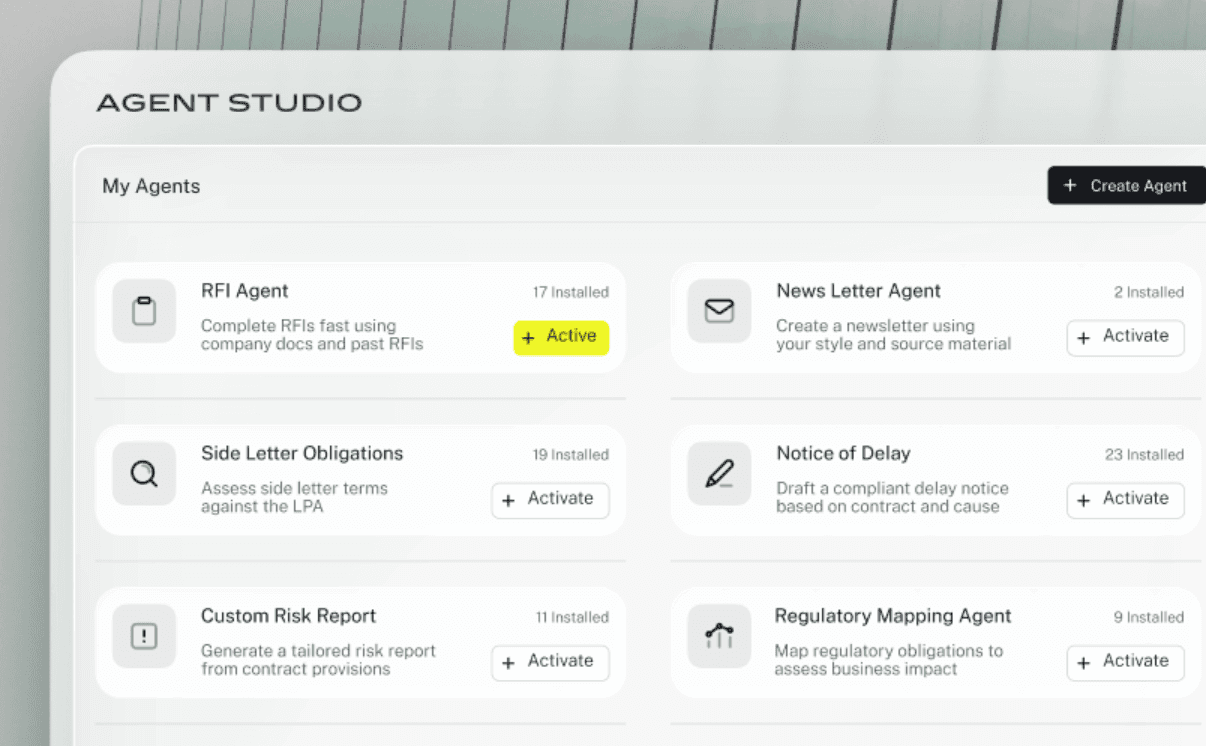
LEGALFLY’s Discovery agent enables you to draft legally sound documents with simple plan language instructions.
You can create knowledge collections of your internal documents so that the AI can draw from and replicate previous templates.
Prompts can be saved and shared with your team, to create consistency across the organisation
For complex requirements, you can even create a custom, RFP generation agent, for results at the click of a button. SEE IT IN ACTION.
Spend analytics and dashboarding
Understanding where money is going across a complex supply chain has traditionally required significant data wrangling across disparate ERP and finance systems. AI-powered spend analytics platforms change this by automatically categorising purchasing data, surfacing maverick spending, identifying cost optimisation opportunities, and flagging supplier risk, all visualised through intuitive dashboards.
By applying machine learning algorithms to procurement data from multiple sources, these tools help procurement leaders recognise patterns in spending behaviour, monitor supplier performance, and make more informed decisions around cost savings and procurement strategies. Some of the leaders in this space include Coupa and Vertice.
Contract management and review
With constraints around legal resources, procurement teams are increasingly being asked to handle more of the contract review process. As well as simply summarising terms and extracting information, they are expected to check legal terms and identify business risks.
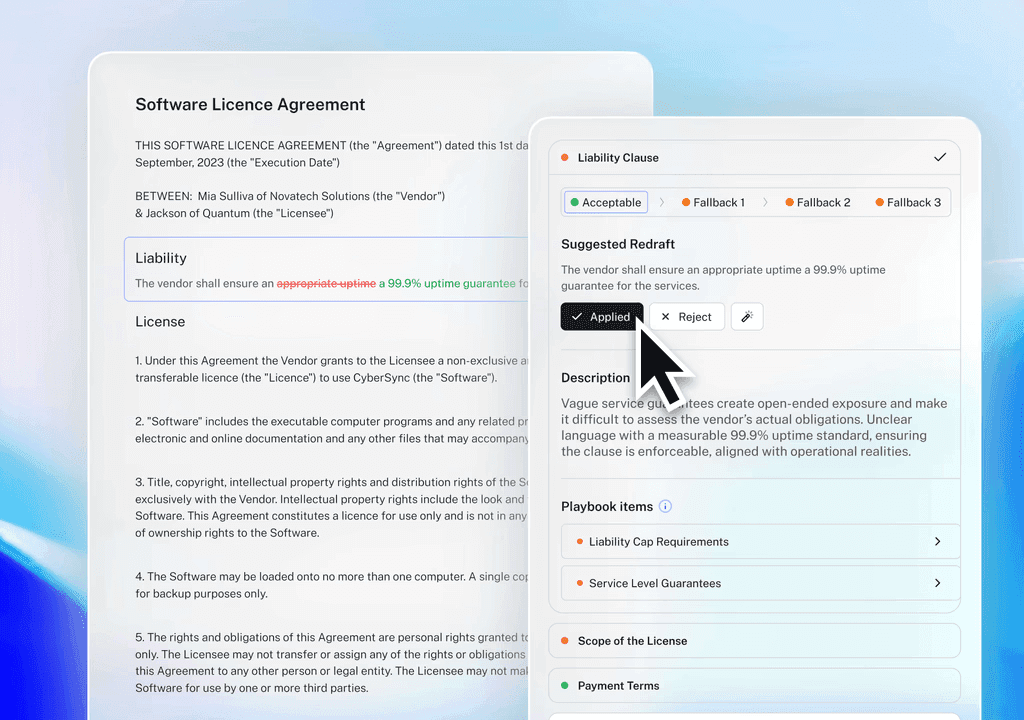
LEGALFLY enables Procurement teams to take on more of the contract review process, while saving time and acting within the Legal team’s guardrails.
Trained on thousands of legal documents, the Review agent conducts checks and flags risks according to your personalised playbooks, approved by Legal. SEE IT IN ACTION.
For a deeper dive into how to operationalize this at scale across your supplier base, see how leading procurement teams are managing contracts with legal AI.
Key insight:
“Procurement teams using AI report up to 60% faster contract cycles and 30% reduction in supply risk exposure.”
Source: LEGALFLY client benchmarks, 2025
Predictive analytics and supplier risk management
Beyond streamlining day-to-day procurement processes, the most sophisticated procurement AI platforms are now enabling procurement organisations to get ahead of problems rather than simply react to them. Predictive analytics, powered by machine learning and trained on large volumes of historical data and supplier data, allows procurement managers to predict demand, anticipate supply chain disruptions, and proactively mitigate risks before they affect business operations.
Supplier risk management is one of the most compelling applications. AI systems can continuously monitor supplier financial health, delivery performance, and external signals such as geopolitical shifts or market trends, flagging supply chain risks in real time and at a scale that would be impossible through manual intervention alone. For procurement teams managing large or globally distributed supplier bases, this kind of always-on intelligence is a significant operational upgrade. It supports more confident supplier selection decisions, reduces exposure to supply chain disruptions, and helps build stronger supplier relationships grounded in transparency and data quality.
Inventory management is another area where predictive analytics is proving its value. By drawing on purchasing data, seasonal patterns, and supplier performance history, AI algorithms can help procurement teams predict future demand with greater accuracy, reducing both overstock and shortfall, and contributing directly to cost savings and operational efficiency across the supply chain.
The foundation for all of this, however, is clean and reliable procurement data. Predictive models depend on data quality to function effectively, which means procurement organisations investing in AI implementation must prioritise standardising data from legacy procurement systems and disparate data sources. Where this groundwork is done well, procurement artificial intelligence can deliver transformative results, shifting procurement from a transactional function into a genuinely strategic one.
Evaluating AI capabilities of vendors
Choosing the right AI procurement platform is a strategic decision. What should you look for?
Key features to prioritise:
Explainable AI outputs and audit trails: Select solutions that make AI recommendations transparent and maintain complete audit histories for accountability and compliance reviews. Procurement leaders need to be able to trust and explain the outputs their AI systems produce.
Multi-review capabilities for bulk contract analysis: Look for tools that can review multiple contracts at once, apply consistent rules, and highlight deviations efficiently, which is essential for procurement organisations managing high document volumes.
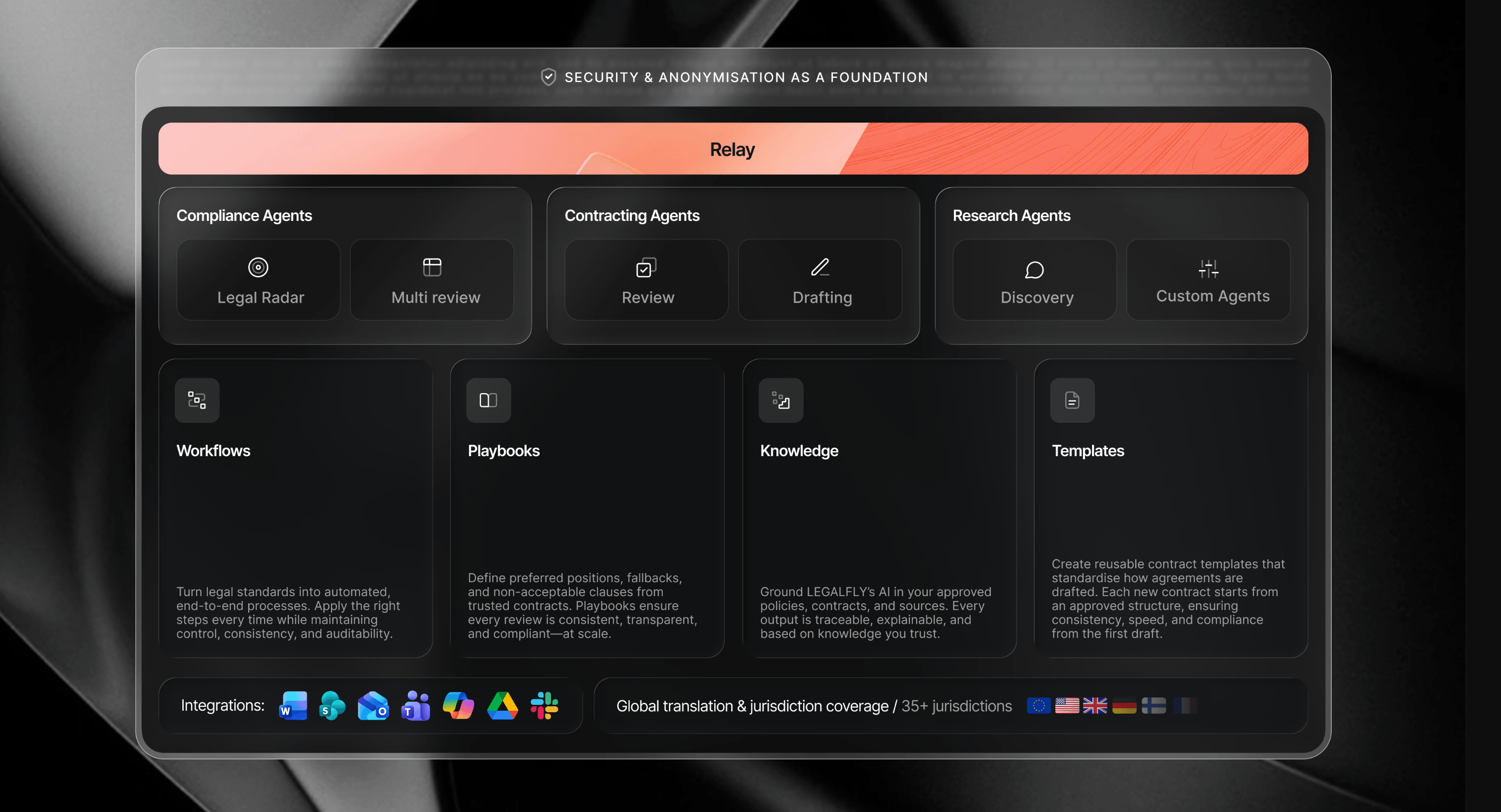
Customisable agents or playbooks: The platform should allow configuration based on your organisation's specific policies, risk thresholds, and clause preferences, encoding your procurement strategies into scalable, repeatable workflows.
Seamless integration with existing systems: Prioritise compatibility with existing systems such as Microsoft Word, SharePoint, and Outlook, and ensure scalability across ERP and CLM platforms. The ability to connect with legacy procurement systems without disrupting existing workflows is critical for successful AI implementation.
Integration with existing systems and data governance:
Ensure the platform operates smoothly within your current workflows.
Prioritise strong data protection, including anonymisation, encryption, and access controls.
Confirm compliance with relevant regulations and data retention policies.
Vendor evaluation criteria:
Demonstrated experience in your industry and jurisdiction
Transparent pricing and measurable ROI evidence
Proven change management and user training support
Reference clients or documented implementation outcomes
Questions to ask solution providers:
How does the AI handle sensitive data and ensure compliance?
Can the platform adapt to our specific contract types and risk tolerances?
What onboarding, training, and support resources are available?
How is ROI measured, tracked, and reported over time?
When evaluating AI procurement platforms, look for transparent, model agnostic systems with clear audit trails. Solutions built with explainable architecture, such as LEGALFLY, support scalability and regulatory compliance without sacrificing control.
AI implementation in procurement & change management
A successful AI rollout requires more than technology. It depends on clear objectives, stakeholder buy-in, and a structured plan for data, process, and change management. Each stage should deliver measurable progress and build confidence across the organization.
Step-by-step approach:
Build the business case: Define what success looks like. Quantify potential savings, efficiency gains, and risk reduction to secure executive sponsorship and funding.
Secure stakeholder alignment: Involve legal, IT, procurement, and finance early to ensure alignment on priorities, governance, and data-sharing protocols.
Prepare your data: Clean and standardize procurement data from contracts, suppliers, and spend systems. Accurate, structured data is critical for reliable AI performance.
Map current processes:Document existing workflows to identify where automation adds the most value and where human oversight remains essential.
Pilot and iterate: Start with a focused use case such as supplier onboarding or NDA review. Gather feedback from end users, refine the workflow, and measure results against initial KPIs.
Scale and optimise: Expand to additional categories, regions, or document types once the pilot proves value. Monitor performance continuously, track ROI, and update processes as the AI models evolve.
Practical tip:
Start small. Pilot with a single contract type or supplier segment, validate results, and use early wins to build momentum for broader adoption.
Real world examples: AI in procurement success stories with LEGALFLY
1. Agristo: Faster Supplier Contracting
Sector: Food manufacturing (Belgium)
Challenge: Rapid expansion created a backlog of supplier contracts across multiple jurisdictions.
Solution: LegalFly’s AI contract review automated supplier agreement checks directly in Microsoft Word.
Results: Review time was reduced from two hours to fifteen minutes, enabling faster supplier onboarding without additional headcount.
Procurement impact: AI eliminated contract cycle bottlenecks and improved collaboration between procurement and legal teams.
Source: Mini webinar: Legal AI for Manufacturing & Transportation
2. Major European Bank: Smarter Vendor Compliance
Sector: Financial services
Challenge: Thousands of vendor agreements required compliance verification ahead of the DORA regulation deadline.
Solution: A custom AI compliance agent automatically reviewed contracts and generated audit-ready reports.
Results: Review cycles were shortened from weeks to days, and the bank achieved full regulatory alignment ahead of schedule.
Procurement impact: Enabled continuous vendor risk monitoring with minimal manual effort.
Source: DORA Compliance after January: What’s Next
3. GEOxyz: Efficient Technical Contracting
Sector: Marine surveys and offshore services
Challenge: A small legal team needed to manage lengthy, high-risk supplier contracts.
Solution: LegalFly AI identified recurring risks and automated the first pass of contract reviews.
Results: Reviews became faster and more consistent, improving the quality of supplier communication.
Procurement impact: Enhanced control and efficiency in complex vendor agreements.
Source: Webinar: How Legal Teams Are Using AI Today
The future of AI in procurement: what’s next?
AI’s evolution in procurement is just beginning. What should leaders anticipate?
Emerging technologies:
Autonomous procurement agents, blockchain-enabled contract tracking, and predictive scenario modeling will make sourcing and supplier management more proactive and data-driven.
Evolving roles and skills:
Procurement professionals will increasingly need data literacy, analytical capability, and change management expertise to manage and interpret AI-driven insights.
Future-proofing strategies:
Invest in flexible, model-agnostic platforms that can adapt as technology evolves. Encourage a culture of continuous learning and experimentation to sustain long-term value.
Next steps: getting started with AI in your procurement function
Ready to see what AI can do for your procurement team?
Start transforming manual contract and supplier workflows into measurable business impact with LegalFly.
Here’s how to begin:
Download the Legal AI Vendor Checklist to evaluate the capabilities, security, and ROI of different AI solutions and identify the best fit for your procurement function.
>>> Download the legal AI vendor checklist
Book a personalized demo to see how LegalFly’s AI agents accelerate contract cycles, strengthen compliance, and streamline supplier management.
Book your Demo
Explore expert insights to learn from leading organizations already using LegalFly to modernize procurement and reduce operational risk.
Ready to lead the future of procurement? LEGALFLY is your partner for secure, explainable, and high-impact AI solutions.